
Te Puia Geothermal Valley Guided Day Tour Rotorua
- Duration1.5 hours
- Daily
- Group
Some images are AI-generated for illustration. While we confirm your booking, just ask and we will send you the original photos.
- Fair, honest prices
- Real people, not bots
- Confirm, then pay
- Secure payment

Overview
The Te Rā guided day tour is a 90-minute shared walk through Te Puia, the geothermal and cultural heart of Rotorua. A Māori guide (kaiārahi) leads you through Te Whakarewarewa Geothermal Valley to Pōhutu Geyser, the largest active geyser in the Southern Hemisphere, past bubbling mud pools and native bush. You then meet New Zealand's national bird in the nocturnal Kiwi Conservation Centre and watch students at work in the carving and weaving schools of the New Zealand Māori Arts and Crafts Institute. Entry to Te Puia is included, with three start times a day. There is no hotel pickup: you meet at Te Puia, about five minutes' drive from central Rotorua. It suits families, couples and first-time visitors.
Highlights
- Stand close to Pōhutu Geyser, the largest active geyser in the Southern Hemisphere
- Walk past boiling mud pools, steaming vents and silica terraces
- See kiwi in a specially designed nocturnal enclosure
- Watch carvers and weavers at the New Zealand Māori Arts and Crafts Institute
- Hear ancestral stories from a Māori guide (kaiārahi) in English
- Browse contemporary Māori art at the Āhua Gallery
- Entry to Te Puia included, with morning, midday and afternoon starts
- Compact 90-minute format that fits easily into a Rotorua day
Full Description
Te Whakarewarewa Geothermal Valley
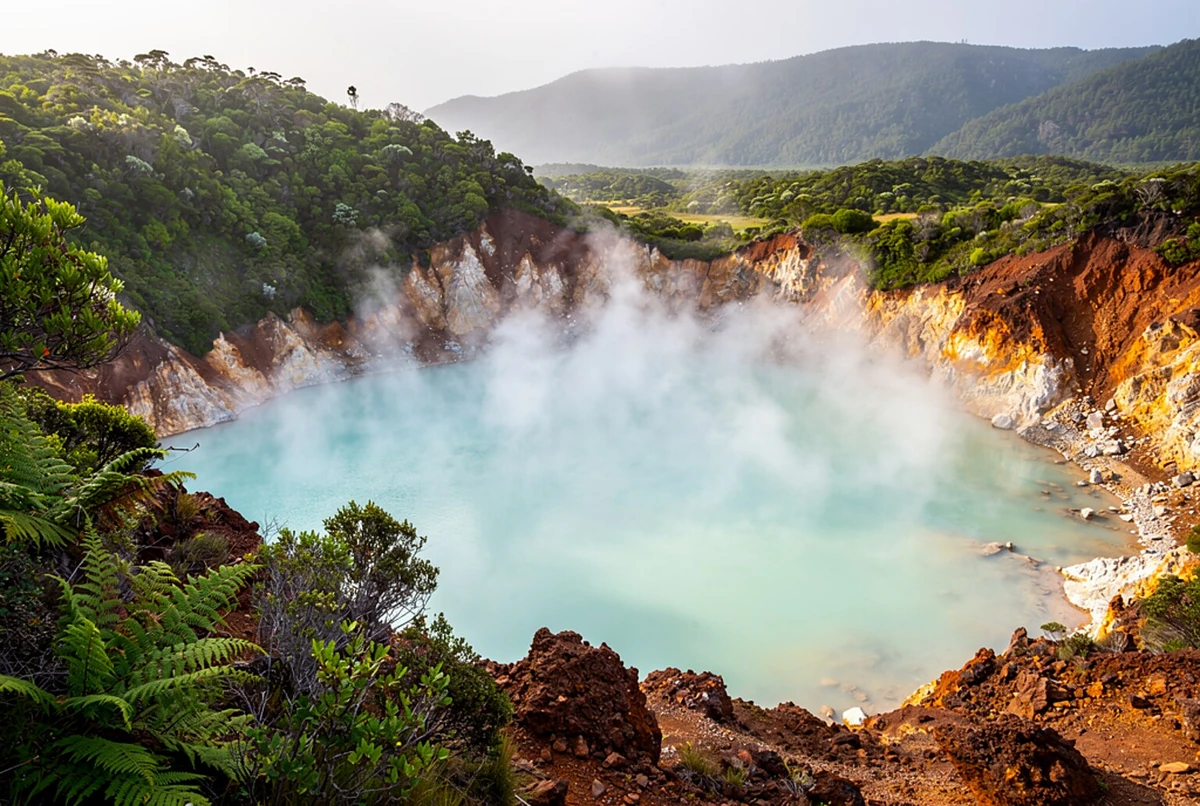
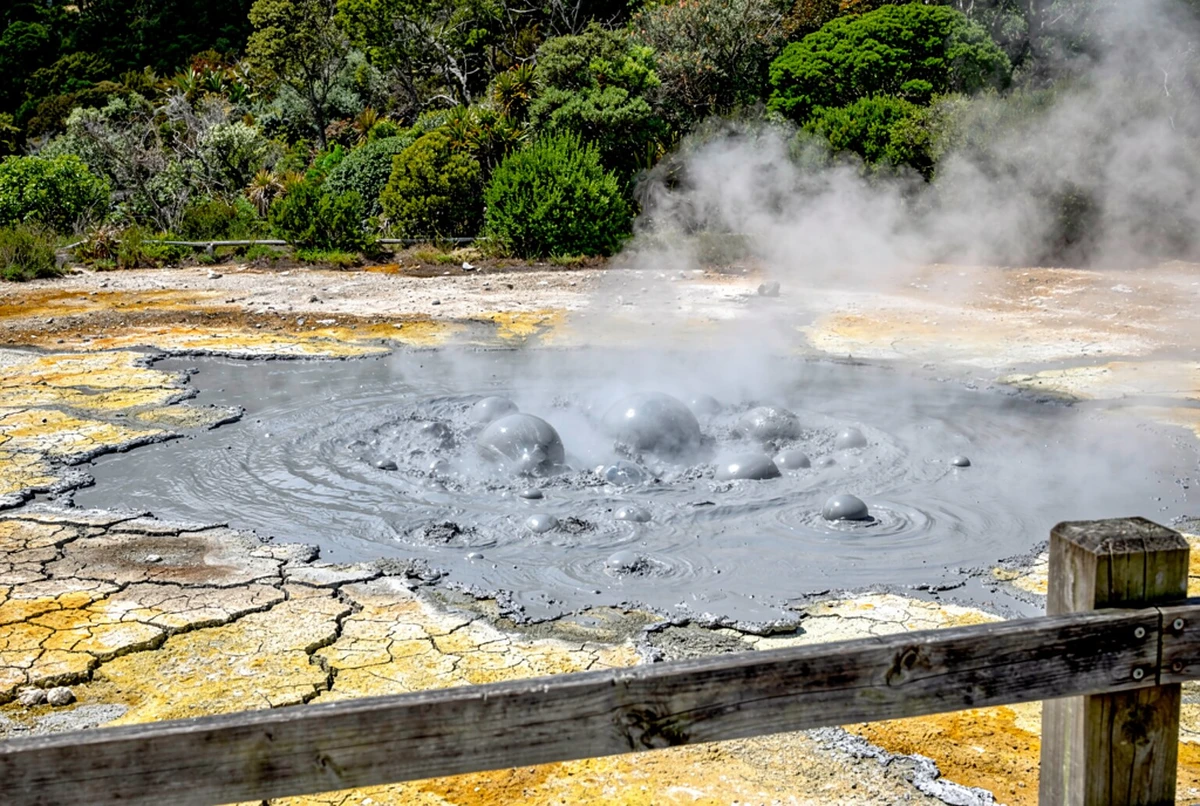
Te Whakarewarewa is one of the most active geothermal fields in New Zealand, a valley of about 60 hectares on the southern edge of Rotorua where hot springs, steam vents, mud pools and silica terraces sit side by side. The Māori people have lived beside these springs for centuries, cooking in the hot pools and using the warm ground for bathing, and the valley remains a living cultural landscape rather than just a park. On the Te Puia guided tour you follow boardwalks and paths through native bush, with steam drifting across the trail and the smell of sulphur reminding you that the earth here is alive.
Your guide explains how the geothermal system works, why the mud bubbles in some pools and the water boils in others, and how local families traditionally used the heat. Is Te Puia worth visiting? For most travellers it is the clearest introduction to Rotorua's geothermal story, because you see geysers, mud and culture in a single visit.
Pōhutu Geyser and the silica terraces
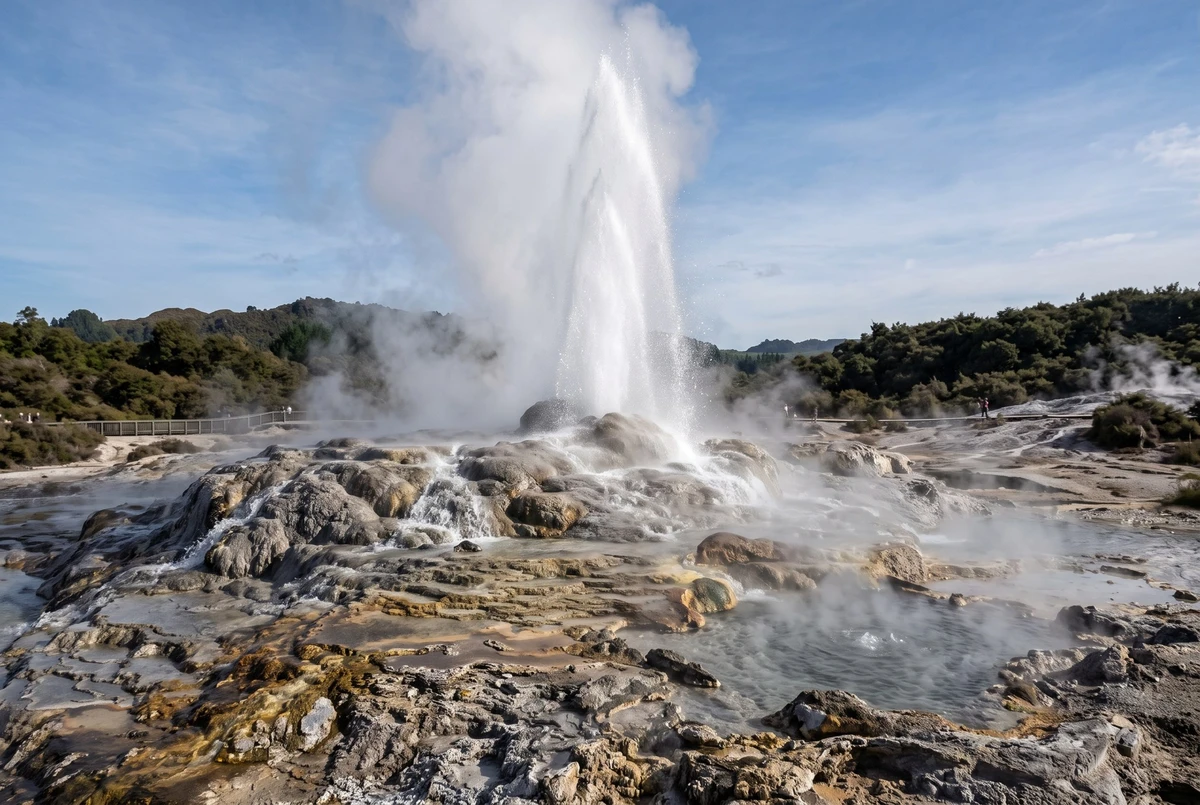
Pōhutu, meaning "big splash" or "explosion" in Māori, is the largest active geyser in the Southern Hemisphere. It erupts many times a day, often around once an hour, sending boiling water and steam up to about 30 metres into the air. A smaller neighbouring geyser usually starts first, a sign that Pōhutu is about to perform. The cream and orange terraces around the vents are formed by silica deposited by the hot water over thousands of years.
Because the geyser is natural, no one can promise an eruption at a set minute, but the tour route brings you to the viewing areas long enough for most visitors to see steam or a full play. Bring a camera with a fast setting and stand upwind for the clearest photos. Morning starts often give softer light and more visible steam on cool days.
Kiwi Conservation Centre
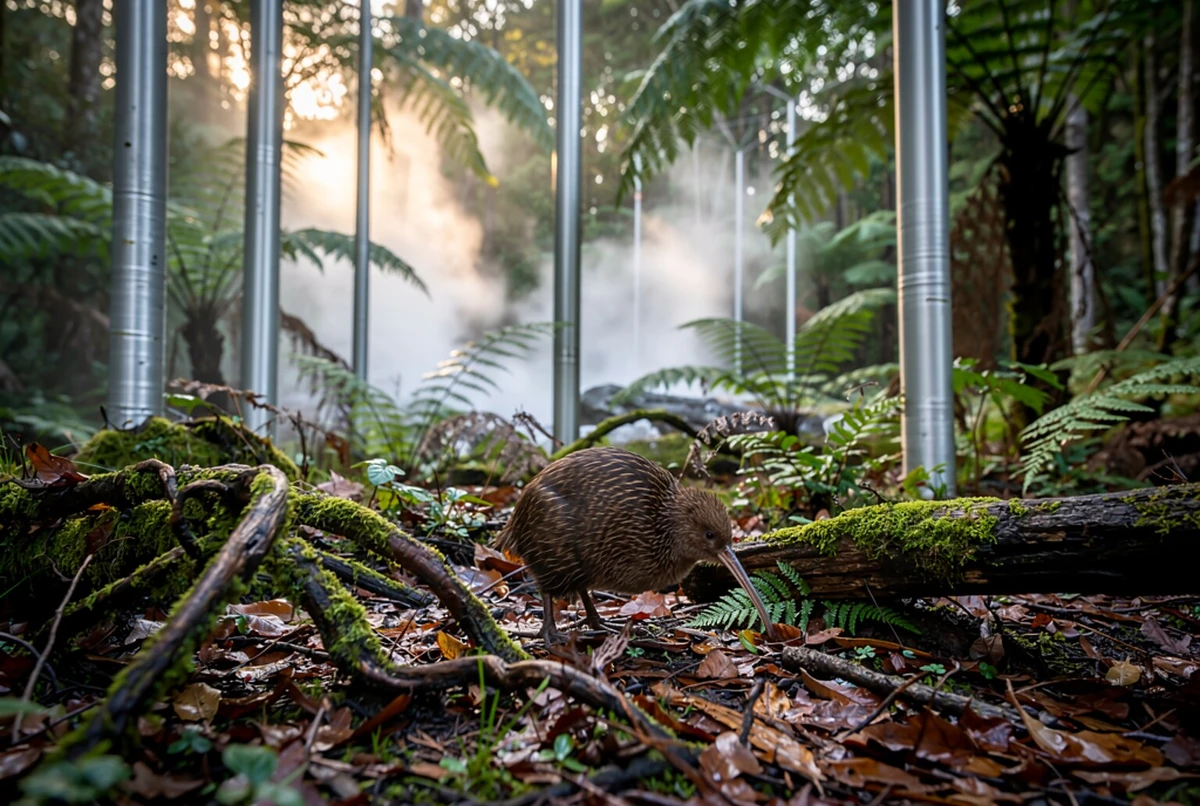
The kiwi is New Zealand's national icon, a flightless, nocturnal bird that is rarely seen in the wild. At Te Puia's Kiwi Conservation Centre the birds live in a specially designed enclosure where day and night are reversed, so they are active while you visit. Your eyes need a minute to adjust to the dim light; once they do, you can often watch a kiwi probing the leaf litter with its long beak, searching for insects and worms.
The centre is part of a national effort to protect kiwi, whose numbers have fallen sharply because of introduced predators. Your guide shares how the birds are cared for and why they matter so much to Māori and to all New Zealanders. Photography and flash are not allowed in the kiwi house, so enjoy the moment with your own eyes. It is a highlight for children and a quiet contrast to the geothermal valley.
New Zealand Māori Arts and Crafts Institute and Āhua Gallery
Te Puia houses the New Zealand Māori Arts and Crafts Institute, founded by an Act of Parliament in 1963 to keep traditional skills alive. Its national schools of wood carving, weaving, and stone and bone carving train young Māori artists, and on the tour you can watch students at work, chiselling detailed patterns into large timber panels or weaving flax into cloaks and baskets. The institute is a wānanga, a place of learning, and its graduates carve meeting houses and canoes across the country.
The tour also passes through the Āhua Gallery, where contemporary and traditional Māori art is displayed, from carved pieces to woven work. Your kaiārahi explains the meaning of patterns and symbols, linking them to ancestral stories. This cultural part of the Te Puia tour is what many travellers remember most, because it shows Māori culture as something living, practised every day in Rotorua.
Planning your visit: tickets, timing and how to get to Te Puia
Te Puia sits on Hemo Road at the southern end of Rotorua, about five minutes by car or taxi from the city centre, and there is parking on site. Te Puia tickets for this tour include entry and the guided walk, which starts at 09:00, 12:00 or 15:00 and lasts about 90 minutes. Please arrive 15 minutes early to check in at the entrance. Paths are mostly level boardwalks with some slopes, so comfortable shoes make a big difference.
After the guided part you are welcome to stay on and wander at your own pace, take more photos of the geysers or browse the shop and café. The best time to visit Te Puia is early morning, when there are fewer visitors and the steam is most dramatic, especially in the cooler months from May to September. The tour runs in light rain, so bring a jacket in changeable weather.
Itinerary
- Check-in at Te Puia, RotoruaArrive 15 minutes before your start time and meet your Māori guide at the entrance.
- Te Whakarewarewa Geothermal ValleyWalk the boardwalks through native bush past steaming vents, hot springs and bubbling mud pools.
- Pōhutu Geyser viewing areaWatch for an eruption of Pōhutu and its smaller neighbour and hear how the geothermal system works.
- Kiwi Conservation CentreStep into the nocturnal enclosure to see kiwi foraging and learn about their protection.
- New Zealand Māori Arts and Crafts InstituteWatch students carving wood, stone and bone and weaving flax, and visit the Āhua Gallery.
- End of the guided tourThe tour ends at Te Puia after about 90 minutes; you may stay on to explore at your own pace.
What's included
- Entry to Te Puia
- Guided tour with a Māori guide in English
- Te Whakarewarewa Geothermal Valley and Pōhutu Geyser
- Kiwi Conservation Centre
- New Zealand Māori Arts and Crafts Institute
- Āhua Gallery
Not included
- Food and drinks
- Hotel pickup and drop-off
Is this right for you?
Great for
- Families with children — a child price for ages 5–15
- Nature and wildlife lovers
- A short visit — about 1.5 hours
- Travellers who want a proven choice — rated 4.6/5 by past travellers
Think twice if
- You want a private tour — this one is shared with other travellers
Not suitable for
- People with mobility impairments
Meeting point
The tour starts and ends at Te Puia, Hemo Road, Rotorua, about five minutes from the city centre by car or taxi. Please arrive 15 minutes before your chosen start time (09:00, 12:00 or 15:00) to check in at the entrance. Hotel pickup is not included, but parking is available on site.
Important information
- Wear comfortable walking shoes; paths include boardwalks and gentle slopes
- Arrive 15 minutes before the start time
- Food and drinks are not included
- Flash photography is not allowed in the kiwi house
- Bring a light jacket: the tour runs in most weather
- Stay on marked paths: the water and mud are boiling hot
- Children aged 5 to 15 have a child price; children under 5 must be with an adult
Good to know
Frequently Asked Questions
Straight answers to what travellers ask us most, before they book.
Is this a shared or a private experience?
It is a shared guided tour in a small group led by a Māori guide in English.
How long does the Te Puia guided tour take?
The guided part lasts about 90 minutes. You can stay longer afterwards to explore on your own.
Is hotel pickup included?
No. You meet at Te Puia on Hemo Road, about five minutes from central Rotorua by car or taxi, with parking on site.
What is included?
Entry to Te Puia, the guided tour, Te Whakarewarewa Geothermal Valley with Pōhutu Geyser, the Kiwi Conservation Centre, the New Zealand Māori Arts and Crafts Institute and the Āhua Gallery.
Is the price per person or per group?
The price is per person, with a lower child price for ages 5 to 15. The booking panel on this page shows the current price of each option.
Is it suitable for children and reduced mobility?
Children love the geysers and the kiwi, and ages 5 to 15 have a child price. The route has slopes and uneven sections and is not recommended for people with mobility impairments.
Will I see Pōhutu Geyser erupt?
Pōhutu erupts many times a day, often about once an hour, so most visitors see it, but as a natural geyser its timing cannot be guaranteed.
Will I see a real kiwi?
Yes, the Kiwi Conservation Centre has live kiwi in a nocturnal enclosure. They are wild animals, so activity varies, and photography is not allowed inside.
What should I bring?
Comfortable shoes, a light rain jacket, a camera and water. Food and drinks are available to buy on site.
What is the best time of day to visit Te Puia?
The 09:00 start is quieter with the most visible steam on cool mornings; midday and afternoon starts work well too.
What happens in bad weather?
The tour runs in most weather, including light rain. Wear a jacket and good shoes.
How do I book and confirm?
Choose your date and start time in the booking panel and send your request. Our team confirms your booking on WhatsApp within minutes.
More in Rotorua
Popular across New Zealand
-
-
-
-
-
-