
Classic Inca Trail 4-Day Trek with Panoramic Train from Cusco
- Duration4 days, 3 nights
- Daily
- Group
- Pickup available
Some images are AI-generated for illustration. While we confirm your booking, just ask and we will send you the original photos.
- Fair, honest prices
- Real people, not bots
- Confirm, then pay
- Secure payment

Overview
This small-group trek, limited to 16 hikers, follows the Classic Inca Trail over four days from Km 82 near Ollantaytambo to Machu Picchu. It includes hotel pickup in Cusco or the Sacred Valley, permits, a bilingual guide, chefs and porters, three nights in comfortable campsites and all meals from breakfast on day 1 to breakfast on day 4. You cross Dead Woman's Pass, the highest point of the trail, visit the Inca sites of Runkuraqay, Sayacmarca, Phuyupatamarca, Intipata and Wiñaywayna, and reach the Sun Gate at dawn for your first view of Machu Picchu. After a guided visit of Circuits 1 and 3, you ride the bus to Aguas Calientes and return on the panoramic train, with drop-off at your hotel in Cusco.
Highlights
- Hike the Classic Inca Trail, about 42 km of original Inca paths
- Reach the Sun Gate at sunrise for your first view of Machu Picchu
- Guided visit of Machu Picchu on Circuits 1 and 3
- Cross Dead Woman's Pass, the highest point of the trail
- Explore Runkuraqay, Sayacmarca, Phuyupatamarca and Wiñaywayna
- Porters, chefs, tents, mats and all meals on the trail
- Return on the panoramic train with hotel drop-off in Cusco
- Small group of up to 16 hikers
Full Description
Classic Inca Trail from Km 82
The Classic Inca Trail is the most famous trek in South America: about 42 km of stone paths, stairways and tunnels built by the Incas to link the Sacred Valley with Machu Picchu. Permits are strictly limited each day and must be booked months ahead with passport details, and the trail closes every February for maintenance. Our trek begins with an early pickup in Cusco and breakfast in Ollantaytambo, the living Inca town at the end of the Sacred Valley.
From the checkpoint at Km 82 the first day is a gentle warm-up along the Urubamba river, passing farming villages and the large Inca site of Patallacta, also called Llactapata, with its terraces above the valley. The day ends at Ayapata campsite, where tents, a dining tent and toilets are already set up by the porters. It is the best introduction to an Inca Trail tour from Cusco.
Dead Woman's Pass, Runkuraqay and Sayacmarca
Day 2 is the hardest. The trail climbs steadily through cloud forest and high grassland to Dead Woman's Pass, or Warmiwañusca, at about 4,215 metres, named for the shape of the ridge seen from below. Reaching the top is the proudest moment of the trek, with views back over the valleys and ahead to the next pass. Your guide sets a steady pace, and porters carry the heavy gear.
After a steep descent, the path rises again to Runkuraqay, a round Inca lookout and rest house, then crosses a second pass before reaching Sayacmarca, a fortified site perched on a rocky spur, whose name means the inaccessible town. The day ends at Chaquicocha campsite with a warm dinner and, on clear nights, a sky full of stars far from any city lights.
Phuyupatamarca, Intipata and Wiñaywayna
Day 3 is often called the most beautiful on the Inca Trail. The path follows the ridge on original Inca paving, passing through a short Inca tunnel and changing from high Andean grassland to dense cloud forest full of orchids, bromeliads and hummingbirds. Phuyupatamarca, the town above the clouds, has a chain of ritual baths still fed by spring water and wide views of snowy peaks.
A long stone staircase then descends to Intipata, a broad sweep of farming terraces facing the sun, and to Wiñaywayna, whose name means forever young. Its curving terraces and stone houses cling to a steep slope above the Urubamba river, and many hikers say it rivals Machu Picchu itself. After lunch at camp you have time to rest before a special farewell dinner with the team of chefs and porters.
Sun Gate and Machu Picchu
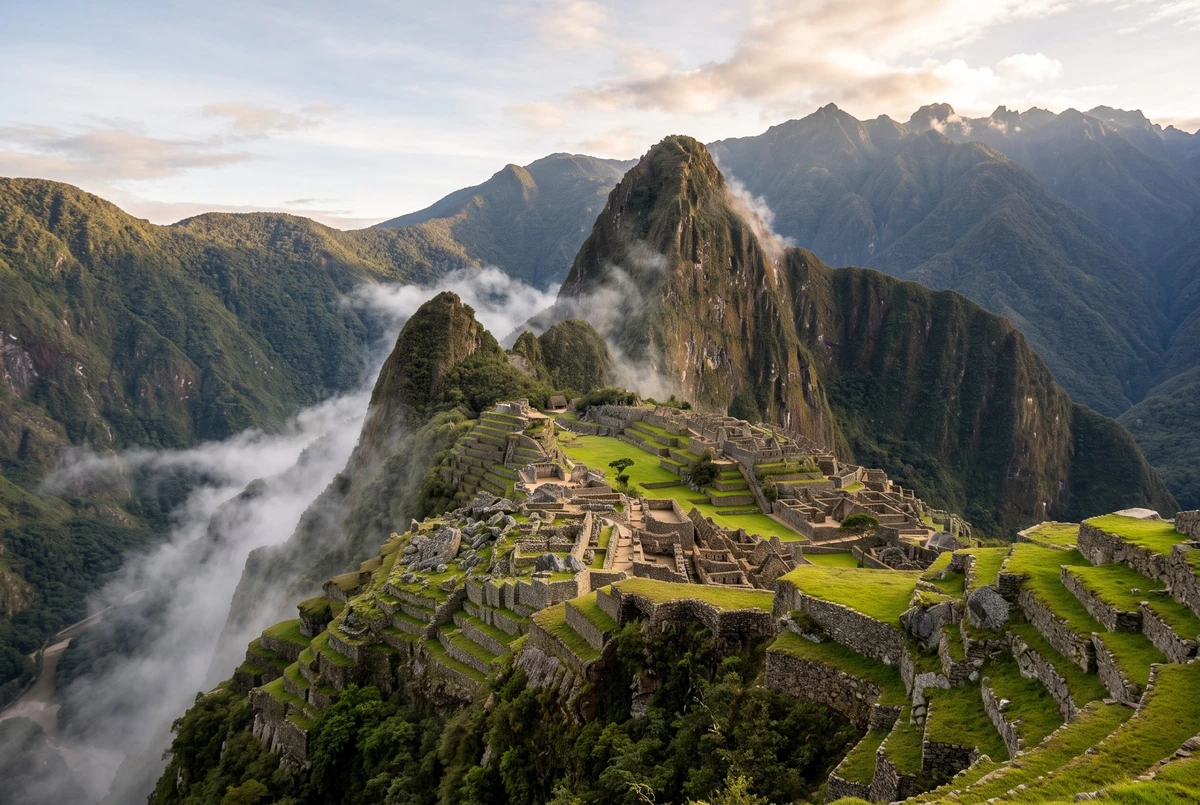
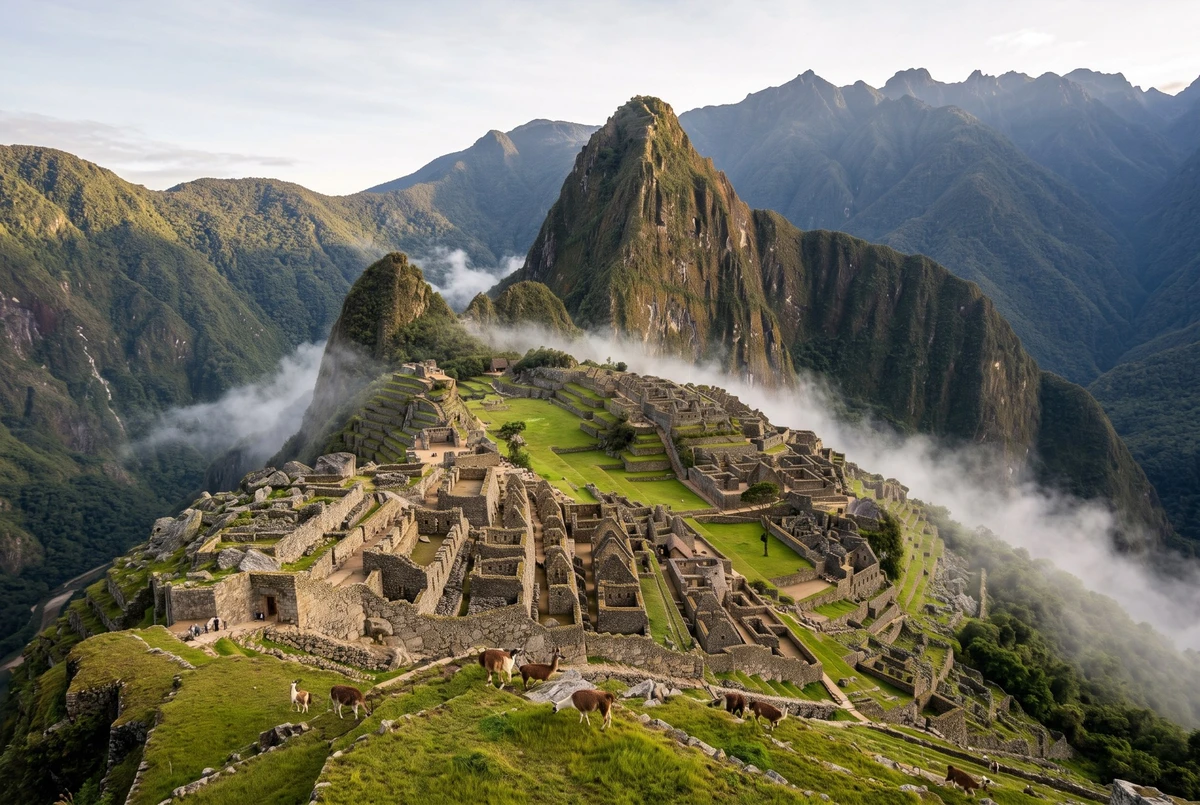
On day 4 you rise before dawn and walk to Inti Punku, the Sun Gate, the original Inca entrance to Machu Picchu. When the morning light breaks over the mountains, the citadel appears below with the green peak of Huayna Picchu behind it. Machu Picchu was built in the 15th century, became a UNESCO World Heritage Site in 1983 and is one of the New Seven Wonders of the World.
You follow Circuit 1 along the upper path, the classic postcard viewpoint, then enter through the main gate for a guided tour on Circuit 3 through other sectors of the citadel. Your guide explains the temples, the stonework and how the city was used. Entry to Huayna Picchu mountain is not included and must be booked separately well in advance. The best time to visit Machu Picchu is the dry season from April to October.
Aguas Calientes and the panoramic train
After the visit, a short bus ride of about 30 minutes winds down the mountain to Aguas Calientes, the small town at the foot of Machu Picchu, beside the Urubamba river. You have free time to rest and find lunch, which is not included on the last day. The town is full of cafés and markets, and many hikers enjoy simply sitting by the river after four days on the trail.
In the afternoon you board the panoramic train with large windows and roof glass, following the river canyon to Ollantaytambo while snowy peaks and the Sacred Valley pass by. From Ollantaytambo our driver takes you back to your hotel in Cusco, arriving in the evening. Many people ask how to get to Machu Picchu: this route combines the most rewarding way in, on foot, with the most comfortable way out.
Itinerary
- Day 1: Cusco, Ollantaytambo, Km 82 and AyapataEarly hotel pickup, breakfast in Ollantaytambo, start at Km 82 and hike past Patallacta to Ayapata campsite.
- Day 2: Dead Woman's Pass to ChaquicochaThe hardest day: climb to about 4,215 metres, visit Runkuraqay and Sayacmarca and camp at Chaquicocha.
- Day 3: Phuyupatamarca to WiñaywaynaCloud-forest ridge walk to Phuyupatamarca, Intipata and Wiñaywayna, lunch at camp and farewell dinner.
- Day 4: Sun Gate at sunrisePre-dawn start to reach the Sun Gate for the first view of Machu Picchu.
- Day 4: Machu Picchu guided visitCircuit 1 upper viewpoint, then a guided tour of Circuit 3, about 2 to 3 hours.
- Day 4: Aguas CalientesBus down to Aguas Calientes (about 30 minutes) and free time for lunch.
- Day 4: Panoramic train and drive to CuscoPanoramic train to Ollantaytambo, then about 2 hours by road to your hotel in Cusco.
What's included
- Safety briefing the day before and luggage storage
- Inca Trail permit and Machu Picchu entry (Circuits 1 and 3)
- Bilingual professional guide, chefs and porters
- Hotel pickup and drop-off in Cusco or the Sacred Valley and all tour transport
- Bus from Machu Picchu to Aguas Calientes and panoramic train ticket
- 3 nights camping with 4 breakfasts, 3 lunches, 3 dinners, daily snacks and purified water
- Porter carrying camping gear and up to 7 kg of personal items; duffle bag, sleeping pad, pillow and rain poncho
- Four-person tents shared by two, private portable toilets, first-aid kit, oxygen and satellite phone
Not included
- Sleeping bag, air mattress and trekking poles (available to rent)
- Lunch on the last day after the Machu Picchu visit
- Huayna Picchu mountain entry
- Travel insurance
Is this right for you?
Great for
- Travellers without a car — hotel pickup is included
- First-time visitors who want the highlights
- Travellers who want a proven choice — rated 4.9/5 by past travellers
Think twice if
- You prefer short outings — this takes 4 days
- You want a private tour — this one is shared with other travellers
- Walking is difficult for you — expect active parts
Not suitable for
- Pregnant women
- People with back problems
- People with mobility impairments
- People with heart problems
Meeting point
We pick you up from your hotel in Cusco or the Sacred Valley in the early morning of day 1 (around 04:30 in Cusco); the exact time is given at the safety briefing the day before, where you also receive your duffle bag and can leave extra luggage in storage. On day 4 you are dropped off at your hotel in Cusco in the evening after the train.
Important information
- Passport details for every hiker are needed at booking; permits are issued in your name
- Bring your original passport: it is checked at the trail entrance and on the train
- Bookings are non-refundable once permits are issued
- A moderate level of fitness is needed; spend 2 days in Cusco to acclimatise first
- Porters carry up to 7 kg of your personal items; sleeping bags and poles can be rented
- Bring hiking boots, rain gear, warm layers, a headlamp, sunscreen, insect repellent and cash
- Vegetarian, vegan and gluten-free meals are available on request
- The Inca Trail closes every February for maintenance
- Smoking, fires, feeding animals and littering are not allowed on the trail
Good to know
Frequently Asked Questions
Straight answers to what travellers ask us most, before they book.
Is this a shared or a private experience?
It is a shared small-group trek, limited to 16 hikers, with your own guide, chefs and porters.
How long is the Inca Trail?
The Classic Inca Trail is about 42 km over four days and three nights, finishing at Machu Picchu on day 4.
Is hotel pickup included?
Yes. Pickup is from your hotel in Cusco or the Sacred Valley on day 1, and drop-off is at your hotel in Cusco on day 4.
What is included?
Inca Trail and Machu Picchu entry, bilingual guide, chefs, porters, tents, sleeping pad, all transport, the bus to Aguas Calientes, the panoramic train, three nights camping and 4 breakfasts, 3 lunches and 3 dinners with snacks and purified water.
Is the price per person or per group?
It is per person. The booking panel on this page shows the current price.
How hard is the Inca Trail?
It is a moderate to challenging trek because of altitude and steep stone stairs. Day 2, crossing Dead Woman's Pass at about 4,215 metres, is the hardest.
Is it suitable for children and reduced mobility?
Older children who hike regularly can join with an adult. It is not suitable for people with mobility, back or heart problems, or for pregnant women.
When should I book the Inca Trail?
As early as possible: daily permits are limited and often sell out months ahead, especially from May to September.
What is the best time to hike the Inca Trail?
The dry season from April to October has the clearest skies. November to March is greener but wetter, and the trail is closed in February.
What happens in bad weather?
The trek goes ahead in rain with ponchos provided. Only official closures stop the trail, and in that case our team helps you with the options.
Is Huayna Picchu included?
No. Huayna Picchu mountain needs a separate ticket booked well in advance, subject to availability.
How do I book and confirm?
Send your date and passport details through the booking panel; our team confirms on WhatsApp within minutes and secures your permits.
More in Cusco
Popular across Peru
-
-
-
-
-
-