Magnificent and Mysterious History Guided Walking Tour Glasgow
- Duration2.5 hours
- Daily
- Group
Photos show the places you visit; the boat or vehicle on the day may differ. Photos: Stinglehammer (CC BY-SA 4.0) · No machine-readable author provided. Finlay McWalter assumed (CC BY-SA 3.0), via Wikimedia Commons
Some images are AI-generated for illustration. While we confirm your booking, just ask and we will send you the original photos.
- Fair, honest prices
- Real people, not bots
- Confirm, then pay
- Secure payment

Overview
This Glasgow history walking tour is a shared two-and-a-half-hour guided walk of about 3.5 miles led by an accredited local guide, starting on George Square at 10:30 and finishing at Glasgow Cathedral. On foot you follow the city's story from its sixth-century origins to the wealth of the nineteenth century, when Glasgow called itself the Second City of the Empire, past the City Chambers, the tobacco merchants' mansions and lanes of the Merchant City, Hutchesons' Hall, the Britannia Panopticon music hall, the Mercat Cross and the Ramshorn Church. Expect Georgian, Victorian and Edwardian architecture, a few scandals and darker secrets, and plenty of stops for photos. It suits curious travellers aged ten and over who are comfortable walking at a steady pace with one hill.
Highlights
- Guided walk of about 3.5 miles through the historic heart of Glasgow
- George Square and the magnificent Victorian City Chambers
- The Tobacco Merchant's House and the lanes of the Merchant City
- Hutchesons' Hall, the City Halls and the Old Fruitmarket on Candleriggs
- Trongate's Tron Theatre and the Britannia Panopticon, the world's oldest surviving music hall
- The Mercat Cross, Saltmarket and the medieval High Street
- Ramshorn Church and the finish at Glasgow Cathedral
- Accredited local guide with stories of merchants, workers, scandals and secrets
Full Description
George Square and the City Chambers
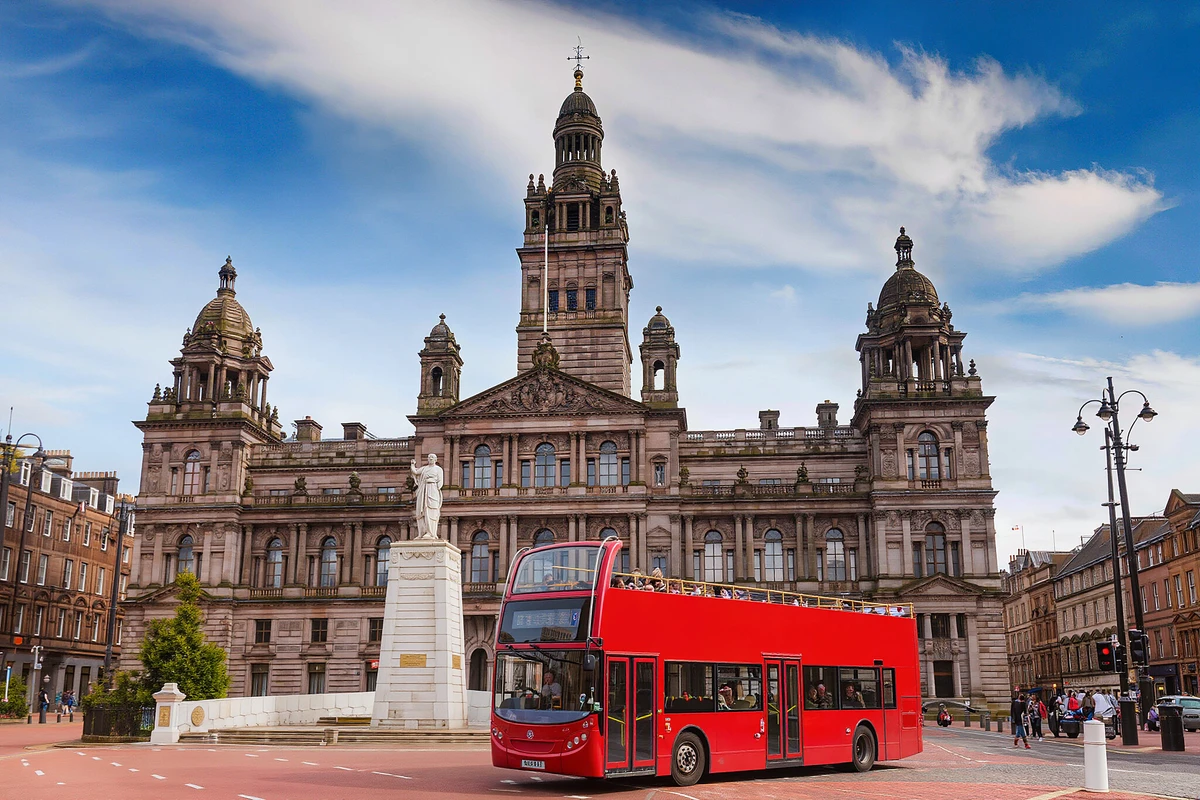
The walk begins on George Square, Glasgow's main civic square, laid out in the 1780s and lined with statues of Scottish writers, engineers and statesmen and the city's cenotaph. The east side is filled by the City Chambers, the seat of Glasgow City Council, opened in 1888 at the height of the city's industrial wealth. Its Italian Renaissance facade of carved sandstone, domes and towers was designed to announce that Glasgow was the Second City of the Empire, and the marble staircases inside are among the grandest in Britain.
Your guide uses the square to set the scene: how a small cathedral town on the River Clyde became a trading port, then a powerhouse of shipbuilding, engineering and textiles. You hear who the statues commemorate and why the square has been the stage for Glasgow's celebrations and protests. Allow about fifteen minutes here before heading down Queen Street into the Merchant City.
The Merchant City: Tobacco Merchant's House, Virginia Court and Hutchesons' Hall
South-east of George Square lies the Merchant City, the grid of streets built in the eighteenth century by the merchants who grew rich importing tobacco, sugar and cotton from the Americas. The Tobacco Merchant's House on Miller Street, built in 1775, is the last surviving mansion of the tobacco lords, and Virginia Court and Virginia Street still carry the names of the colonies that made their fortunes. The guide does not shy away from the darker side of that wealth and its links to the slave trade.
Further on, Hutchesons' Hall on Ingram Street, with its elegant spire and statues of the founding brothers, was built as a hospital and school for the poor, while the City Halls and the Old Fruitmarket on Candleriggs recall the Victorian markets and concert halls. Today the district is Glasgow's quarter of cafes, galleries and converted warehouses, and the walk threads through its lanes and courtyards.
Trongate: the Tron Theatre and the Britannia Panopticon
Trongate is one of Glasgow's oldest streets, named after the tron, the public weighing beam where goods were taxed. The Tron Theatre occupies a former church whose steeple dates from the 1590s, and across the street a plain upper floor hides the Britannia Panopticon, the world's oldest surviving music hall, opened in 1857. Shipyard workers once packed its benches to watch singers, comedians and early films, and the hall still stages occasional shows for visitors.
The guide explains how Trongate linked the medieval town to the merchants' new streets, and points out the murals of the city centre mural trail that have turned gable ends into giant artworks. From here the route passes the Sharmanka kinetic theatre and the Briggait, the former fish market by the river, before turning up the Saltmarket.
Saltmarket, the Mercat Cross and High Street
The Saltmarket and High Street are the spine of medieval Glasgow, the route that ran from the river up to the cathedral. At their junction stands the Mercat Cross, the symbol of the city's right to hold markets, rebuilt in 1930 on the site of the original. Glasgow Cross was the centre of town life for centuries, where proclamations were read, criminals punished and the tolbooth steeple, which still stands, kept the city's prisoners and clock.
Walking up High Street the guide traces the old university, founded here in 1451 before it moved to the West End, and the tenements that housed the workers of the industrial city. This is the section with the hill, and the pace is steady, with stops at the mural of local residents and at the Ramshorn Church on Ingram Street, whose graveyard holds some of the city's merchant families.
Glasgow Cathedral, where the walk ends
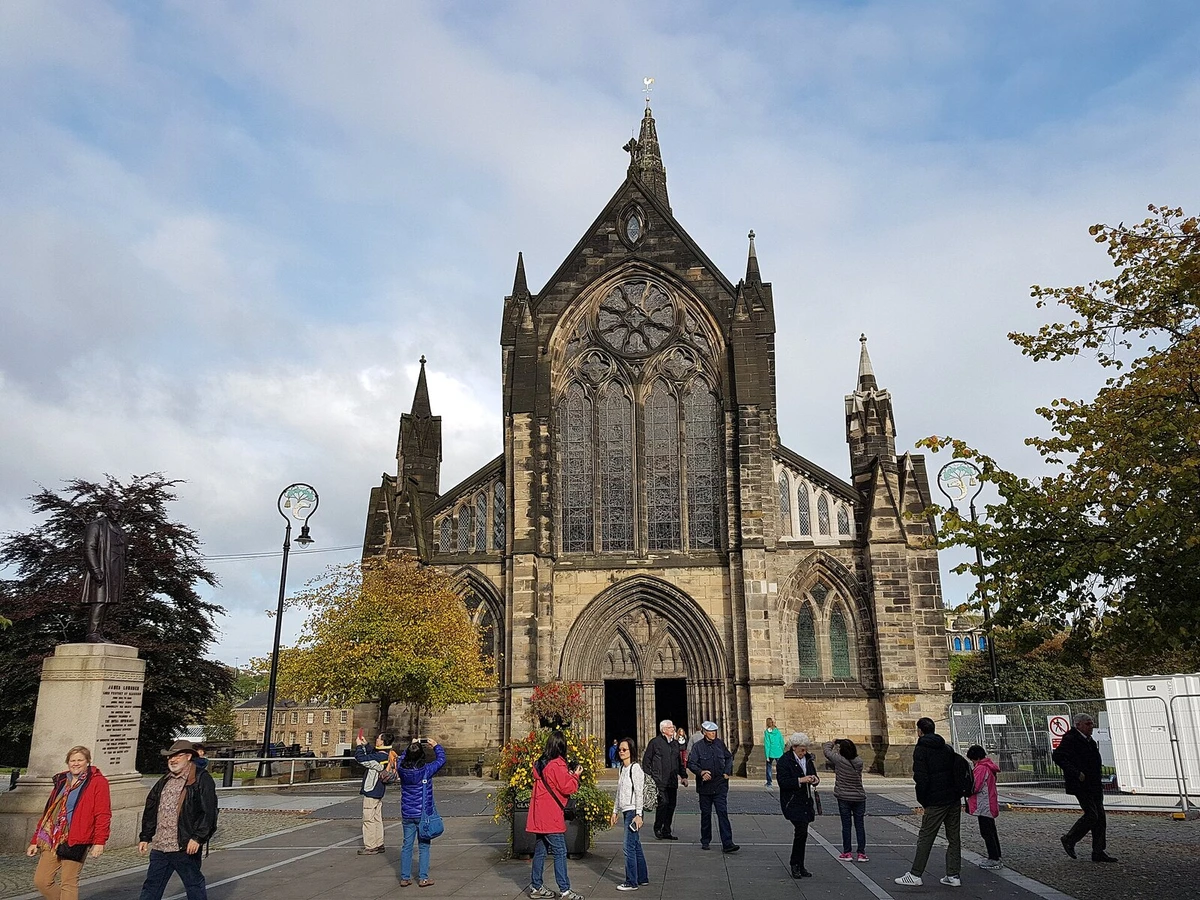
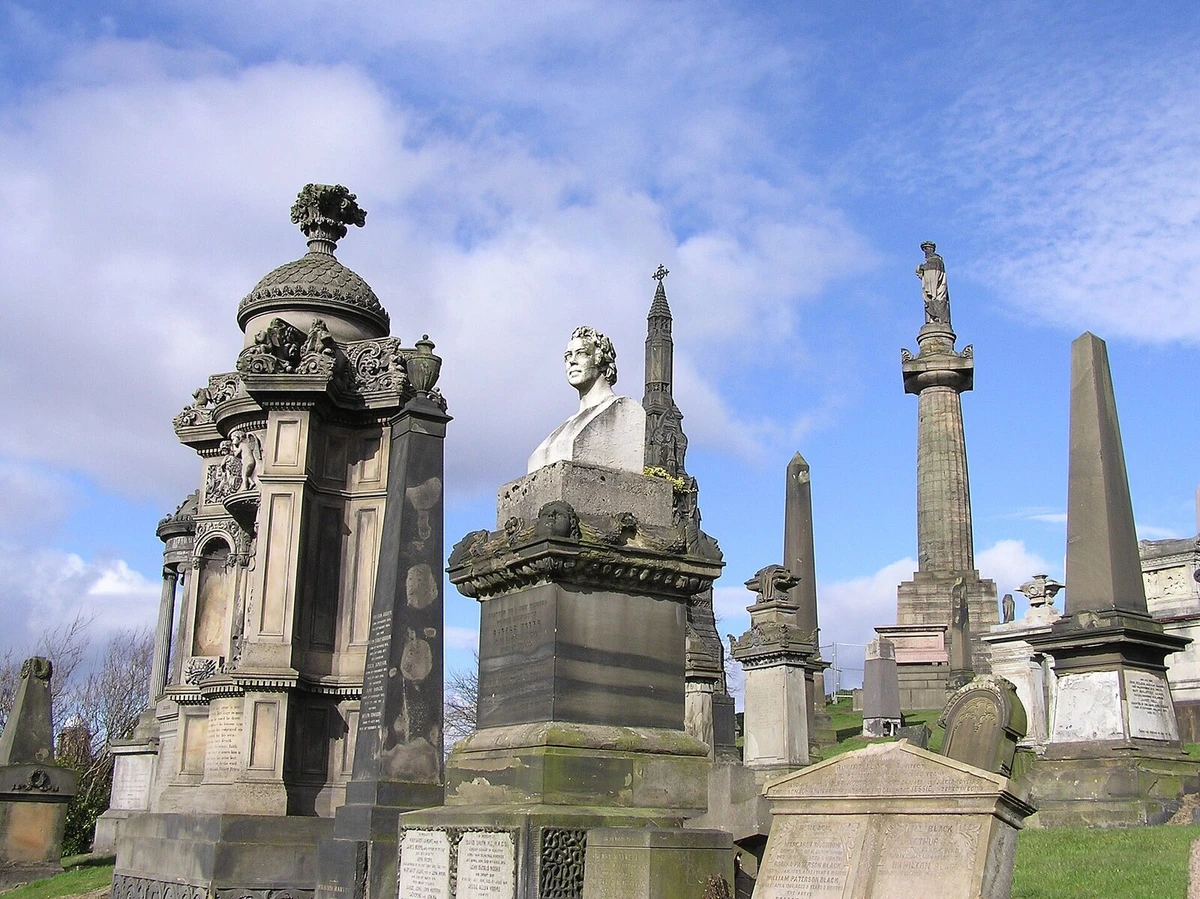
The tour finishes at Glasgow Cathedral, the only medieval cathedral on the Scottish mainland to have survived the Reformation almost intact. Built mainly in the thirteenth century on the site where the city's founder established his church in the sixth century, it is a dark, towering Gothic building with a remarkable lower church around the founder's tomb and some of the finest post-war stained glass in Scotland. Behind it rises the Necropolis, the Victorian garden cemetery on the hill, with its monuments and views over the city.
Entry to the cathedral is free and it is open daily, so most guests go inside after the walk; allow at least half an hour, and another thirty minutes for the Necropolis. The guide leaves you here with tips on what to see, and the city centre is a fifteen-minute walk or a short bus ride back down High Street.
Itinerary
- George Square and the City ChambersMeet the guide at 10:30 on the north side of the square for an introduction to Glasgow's story and the Victorian City Chambers.
- Queen Street and the Tobacco Merchant's HouseWalk into the Merchant City past the last surviving tobacco lord's mansion on Miller Street and Virginia Court.
- Hutchesons' Hall, City Halls and CandleriggsGeorgian and Victorian landmarks of the Merchant City with stories of the merchants and workers who built the district.
- Trongate and the Britannia PanopticonThe Tron Theatre, the world's oldest surviving music hall and the murals of the city centre mural trail; short walks of 3 to 5 minutes between stops.
- The Briggait, Saltmarket and the Mercat CrossDown to the old fish market by the river and up to Glasgow Cross and the tolbooth steeple.
- High Street and the Ramshorn ChurchThe medieval spine of the city with the hill section, the old university site and the Ramshorn graveyard.
- Finish at Glasgow CathedralThe walk ends at the cathedral after about 2.5 hours; entry is free if you want to go inside.
What's included
- Accredited English-speaking local guide
- 2.5-hour guided walk through the city centre, Merchant City and Trongate
- Stories of Glasgow from its medieval origins to today
- Stops at the City Chambers, Hutchesons' Hall, the Britannia Panopticon, the Mercat Cross and Ramshorn Church
- Finish at Glasgow Cathedral
Not included
- Hotel pickup and drop-off
- Food and drinks
- Entrance to any building
- Gratuities
Is this right for you?
Great for
- First-time visitors who want the highlights
- A half-day plan — about 2.5 hours
- Travellers who want a proven choice — rated 4.8/5 by past travellers
Think twice if
- You want a private tour — this one is shared with other travellers
- Walking is difficult for you — expect active parts
Not suitable for
- Children under 10 years
- People with mobility impairments
- People with a low level of fitness
Meeting point
There is no hotel pickup. Meet your guide at 10:30 outside the main entrance of the coffee shop on the north side of George Square, in front of Queen Street Station and a few minutes' walk from Central Station and Buchanan Street. Please arrive ten minutes early with your booking confirmation; the tour ends at Glasgow Cathedral, about fifteen minutes' walk from the start.
Important information
- Wear comfortable walking shoes: the route covers about 3.5 miles in 2.5 hours with uneven pavements and one hill
- Bring rain gear and weather-appropriate clothing; the tour runs in Glasgow weather
- The pace is moderate and steady, with 3 to 5 minutes of walking between stops; you should be comfortable walking continuously
- Minimum age 10; the tour is not suitable for wheelchair users or anyone with mobility impairments
- Luggage and large bags are not allowed on the walk
- No entrance tickets are needed; the cathedral at the end is free to enter
- Bring water and a camera; there is no scheduled cafe stop
- Have your booking confirmation ready on your phone for the guide
Good to know
Frequently Asked Questions
Straight answers to what travellers ask us most, before they book.
Is this a shared or a private experience?
It is a shared guided walk with other travellers, led by one accredited local guide. Contact us if you would like to ask about a private departure for your own group.
How long does it take?
About 2.5 hours, starting at 10:30 on George Square and finishing at Glasgow Cathedral around 13:00.
Is hotel pickup included?
No. The meeting point is on the north side of George Square in the city centre, next to Queen Street Station.
What is included?
An accredited English-speaking local guide and the full 2.5-hour walking tour with stops at the City Chambers, the Merchant City, Trongate, the Mercat Cross, the Ramshorn Church and Glasgow Cathedral. No entrance tickets are needed.
Is the price per person or per group?
Per person. The booking panel on this page shows the current price.
How far do we walk?
About 3.5 miles at a moderate pace, with steady walking of 3 to 5 minutes between stops, uneven pavements and one hill up High Street.
Is it suitable for children and for people with reduced mobility?
The minimum age is 10, and the distance and pace make it unsuitable for wheelchair users, people with mobility impairments or anyone with a low level of fitness.
What should I bring?
Comfortable shoes, rain gear, a layer for the wind, water and your camera. Large bags and luggage are not allowed.
What is the best time of year for the walk?
The tour runs year-round. Spring to early autumn is driest and brightest for photos; winter walks are quieter and the Christmas lights on George Square are a bonus.
What happens in bad weather?
The walk goes ahead in rain; bring a waterproof. Only in dangerous conditions such as high winds would the departure be moved, and we would tell you on WhatsApp.
Can I go inside Glasgow Cathedral at the end?
Yes. The cathedral is free to enter and open daily, and the Necropolis behind it is also free, so many guests spend an extra hour there after the walk.
How do I book and confirm?
Choose your date and number of walkers in the booking panel and send your request; our team confirms on WhatsApp within minutes with the exact meeting point.
More in Glasgow
Getting to & around Glasgow
Popular across United Kingdom
-
-
-
-
-
-