
Urban Coffee Farm Tour by Tram and Cable Car Medellin
- DurationAbout 4 hours
- Daily
- Group
Some images are AI-generated for illustration. While we confirm your booking, just ask and we will send you the original photos.
- Fair, honest prices
- Real people, not bots
- Confirm, then pay
- Secure payment

Overview
Most coffee farm tours from Medellin drive two hours out of the city; this one stays inside it. You meet your bilingual guide at San Antonio station in the centre, ride the electric tram east along Ayacucho and then the Metrocable up the slopes of Comuna 8 to Barrio La Sierra, a hillside community that has reinvented itself with the arrival of public transport. A local family walks you through the neighbourhood, shows you their coffee farm and museum, lets you pick ripe cherries and explains every step from seed to cup before a tasting. It is a shared half-day tour of about four hours, departing at 09:00 or 13:00, for travellers who want real coffee culture and a side of Medellin few visitors see.
Highlights
- A working coffee farm inside the city limits of Medellin, in Barrio La Sierra
- Ride the Ayacucho tram and the Metrocable with views over the whole Aburrá Valley
- Walk through the Comuna 8 community with a local family as your hosts
- Visit Casa Finca de La Sierra and its small museum of neighbourhood history
- Harvest ripe coffee cherries with your own hands
- Follow the whole process from seed to cup: pulping, drying, roasting and brewing
- Welcome refreshments, local snacks and plenty of freshly brewed coffee
- Bilingual guide, departures at 09:00 and 13:00
Full Description
San Antonio station and the Ayacucho tram
The tour begins at San Antonio, the busiest interchange of the Medellin Metro, where the two metro lines meet in the city centre and the Ayacucho tram leaves from a station at street level just below. Your guide waits at the main entrance of the tram station with a sign, and the first part of the Medellin coffee tour is the ride itself: the rubber-tyred electric tram climbs east along Ayacucho street for about half an hour through busy traditional neighbourhoods of two-storey brick houses.
The tram was opened in the last decade as part of the city's plan to connect the steep eastern hillsides to the centre, and the guide uses the ride to explain how Medellin's transport system became the symbol of its transformation. The tram line ends at Oriente, where the Metrocable begins. Fares for the tram and the cable car are handled by the guide, so you only need to bring your name and passport number registered in advance for the community visit.
The Metrocable over Comuna 8
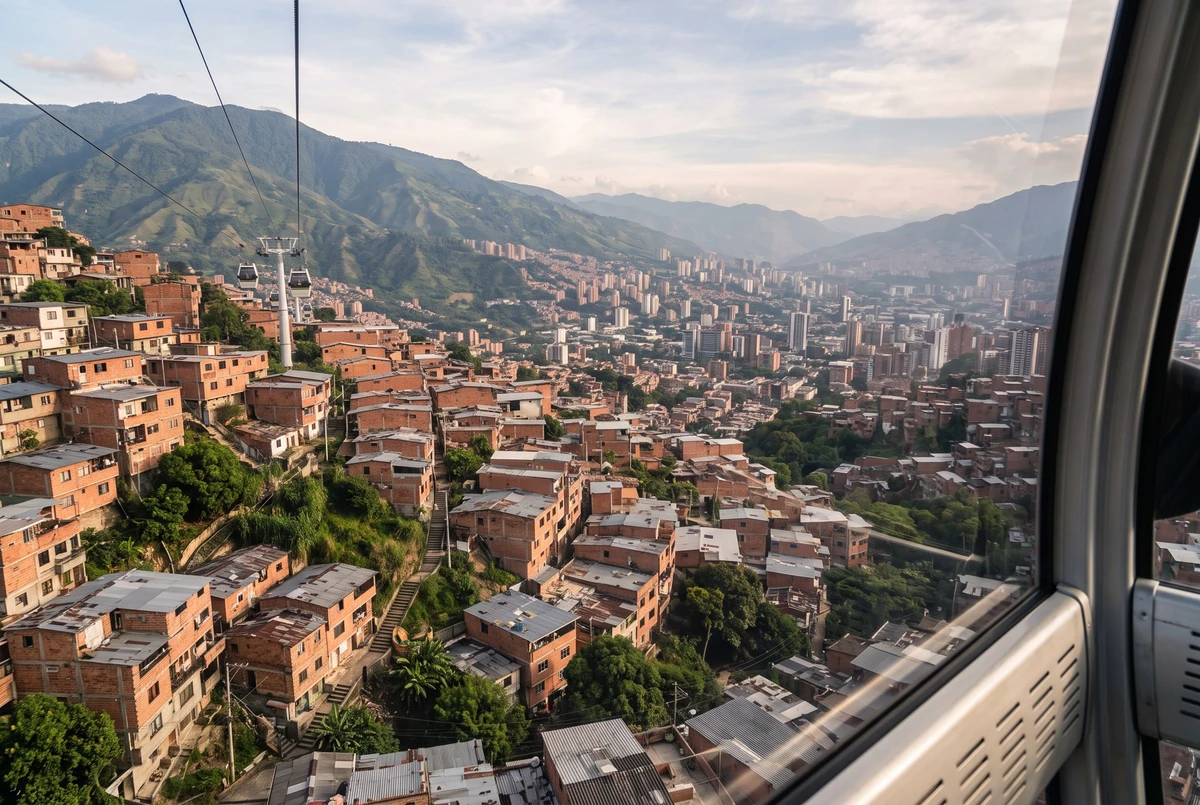
From Oriente the Metrocable gondola rises for about twelve minutes over the densely built slopes of Comuna 8, one of the sixteen districts of Medellin, with the red-brick houses stacked so closely that the stairways between them look like rivers. The cabin passes the intermediate stations and climbs towards Villa Sierra, and with each tower the view widens until the whole Aburrá Valley lies below: the centre, the river, the towers of El Poblado and the mountains on the far side.
A Medellin Metrocable tour is worth taking for the view alone, but here it is also the practical way up to a neighbourhood that was once reachable only by foot. The guide explains how the cable car lines, built from 2004 onwards, cut travel times for residents from hours to minutes and brought libraries, schools and visitors to the hillsides. Keep your camera ready: the best photos are taken on the ascent, looking back towards the city.
Barrio La Sierra community
Barrio La Sierra sits high on the eastern slope near the top of the cable car, a community that grew in the second half of the twentieth century as families arriving from the countryside built their houses up the hillside. Its name became known for the violence of the 1990s and 2000s; today the story is one of recovery, and your hosts, a local family, walk you through the steep lanes, greet neighbours and show how the barrio has changed since the Metrocable arrived.
The walk through La Sierra passes small shops, murals and viewpoints over the valley, and it is the part of the tour that turns coffee into context: the farm you are about to visit survived on this hill through the hard years. This is a Comuna 8 Medellin tour led by the people who live there, so questions are welcome and the pace is unhurried. Wear comfortable shoes, because the lanes are steep and the altitude is a little higher than the centre.
Casa Finca de La Sierra and the harvest
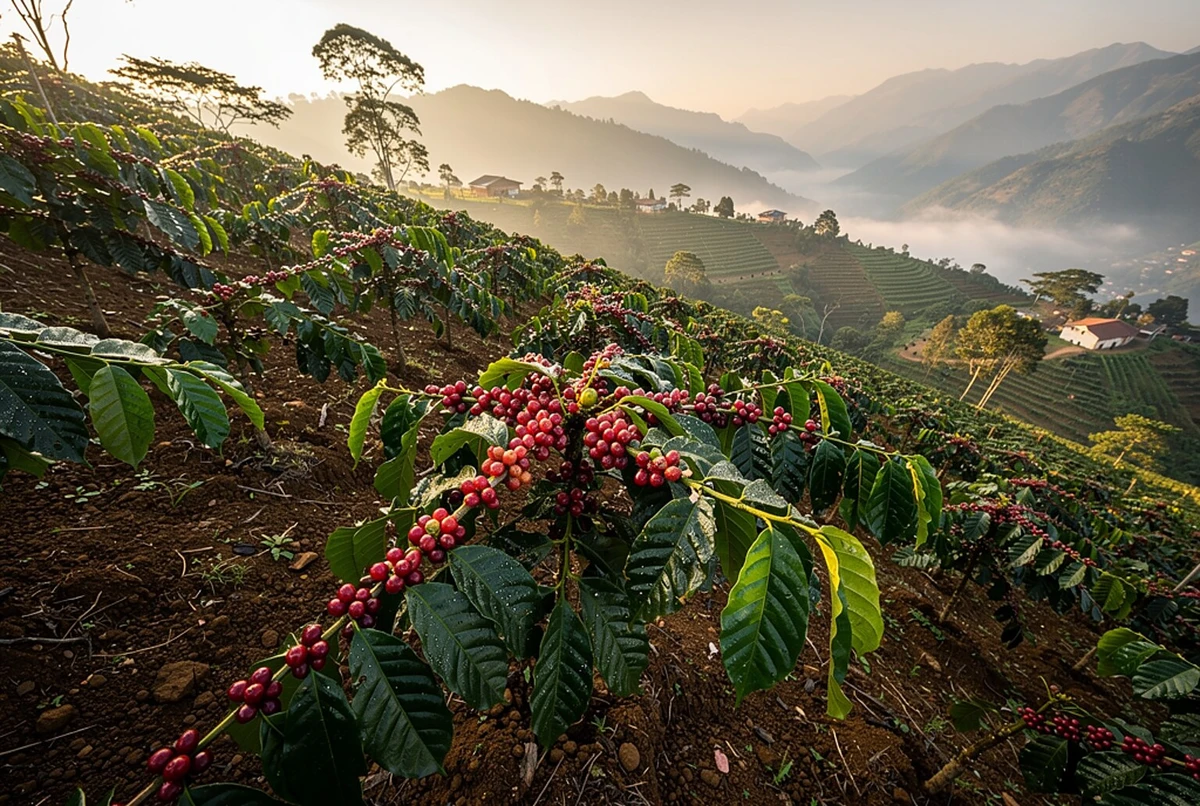
Casa Finca de La Sierra is the family's coffee farm, a cluster of plots planted with Arabica coffee bushes on terraces above the houses, with a farmhouse that doubles as a small museum of the neighbourhood's history and of coffee farming in Antioquia. The hosts explain how a farm exists at all inside the city and why the hillside, at roughly the same altitude as Colombia's famous coffee valleys, produces good beans.
Then you pick coffee. Each visitor takes a basket and learns to choose only the ripe red cherries, leaving the green ones for the next pass, exactly as pickers do across the country. It is a hands-on half hour that children and adults enjoy, and a highlight of any urban coffee farm visit in Medellin. The museum shows old grinders, sacks and photographs, and the family talk about the decades when harvesting here was dangerous and about the neighbours who kept the farm alive.
From seed to cup: processing and tasting
Back at the farmhouse the cherries you picked go through the stages that turn fruit into coffee: pulping to free the beans, fermenting and washing to remove the sticky layer, drying on the patio, hulling and finally roasting in small batches until the beans crackle and darken. The guide and the family explain each step and the difference it makes to the cup, and you see the tools used on a real small farm rather than a showroom.
The tour ends with a coffee tasting of several brews made from the farm's own beans, with the welcome refreshments and local snacks served along the way. It is the moment when you understand what a Colombian coffee farm experience really means: the cup in your hand was grown, picked and roasted within sight of where you sit. Coffee bags are sold separately if you want to take some beans back, and you return by cable car and tram to San Antonio with your guide.
Itinerary
- Meeting at San Antonio tram stationMeet your bilingual guide at the main entrance of the tram station below San Antonio metro station at 09:00 or 13:00.
- Ayacucho tramAbout thirty minutes east by electric tram through the traditional neighbourhoods of the city centre to Oriente.
- MetrocableAbout twelve minutes up the slopes of Comuna 8 with panoramic views over the Aburrá Valley.
- Walk through Barrio La SierraGuided walk with a local family through the lanes, murals and viewpoints of the community, with welcome refreshments and snacks; about one hour.
- Casa Finca de La SierraVisit the farm and its museum, then harvest ripe coffee cherries on the terraces; about an hour and a half with the walk.
- Seed to cup and tastingPulping, drying and roasting explained step by step, followed by a tasting of the farm's own coffee; about one hour.
- Return to San AntonioCable car and tram back to the meeting point with your guide, about four hours after the start.
What's included
- Bilingual guide (English and Spanish)
- Tram and cable car rides with the guide
- Guided walk through Barrio La Sierra
- Visit to Casa Finca de La Sierra and its museum
- Coffee harvesting and the seed-to-cup process
- Welcome refreshments and local snacks
- Coffee tasting
Not included
- Coffee bags for purchase
- Meals
- Hotel transfers
- Gratuities (optional)
Is this right for you?
Great for
- Food lovers
- Travellers who want the view from the air
- Travellers who want a proven choice — rated 4.9/5 by past travellers
Think twice if
- You need hotel pickup — you meet at the meeting point
- You want a private tour — this one is shared with other travellers
- You are afraid of heights
Not suitable for
- People with mobility impairments
Meeting point
Meet your guide in front of the main entrance of the San Antonio tram station, at street level underneath San Antonio metro station in the centre of Medellin; look for the station sign and the guide holding a tour sign. Departures are at 09:00 and 13:00, and the tour returns to the same spot about four hours later.
Important information
- After booking we need each visitor's full name and passport number for the community visit; do not bring the passport itself
- Wear comfortable walking shoes: the lanes of La Sierra are steep
- Bring sunscreen, a hat and a light rain jacket; Medellin weather changes quickly
- Coffee bags for purchase are not included; bring cash if you want beans to take with you
- No main meal is included; refreshments, snacks and coffee are
- The tour uses public transport and involves standing on the tram at busy times
- Photography of residents is welcome only with their permission
Good to know
Frequently Asked Questions
Straight answers to what travellers ask us most, before they book.
Is this a shared or a private experience?
It is a shared small-group tour with a bilingual guide and a local host family.
How long does it take?
About four hours including the tram and cable car rides each way.
Is hotel pickup included?
No. You meet the guide at the San Antonio tram station in the city centre, reachable on both metro lines from anywhere in Medellin.
What is included?
The bilingual guide, the tram and cable car rides with the guide, the walk through Barrio La Sierra, the farm and museum visit, coffee harvesting, the seed-to-cup demonstration, refreshments, snacks and the coffee tasting.
Is the price per person or per group?
Per person. The booking panel on this page shows the current price.
Why do you need my passport number?
The community registers every visitor's name and passport number in advance for security; you should not bring the passport itself on the day.
Is it suitable for children?
Yes, children who can manage steep lanes enjoy picking cherries; there is no separate child rate.
Is it suitable for people with reduced mobility?
No. The walk through La Sierra is steep and uneven and the tour is not suitable for people with mobility impairments.
What should I bring?
Comfortable shoes, sunscreen, a hat, a light rain jacket and cash for coffee bags if you want them.
Is Comuna 8 safe to visit?
The visit is organised with a resident family and follows a set route; visitors are expected and welcomed, and your guide stays with you throughout.
When is the best time for the tour?
The main harvests in Antioquia fall around April to May and October to December, when there are most ripe cherries, but the farm shows the process all year. Mornings are usually clearer for the cable car views.
How do I book and confirm?
Choose the date and time in the booking panel and send the request; our team confirms on WhatsApp within minutes and asks for the names needed for registration.
More in Medellin
Popular across Colombia
-
-
-
-