Private 4-Day Golden Triangle Tour of Delhi, Agra and Jaipur
- Duration4 days / 3 nights
- Daily (tours starting on Thursday run Delhi – Jaipur – Agra – Delhi because the Taj Mahal is closed on Fridays)
- Private
- Pickup available
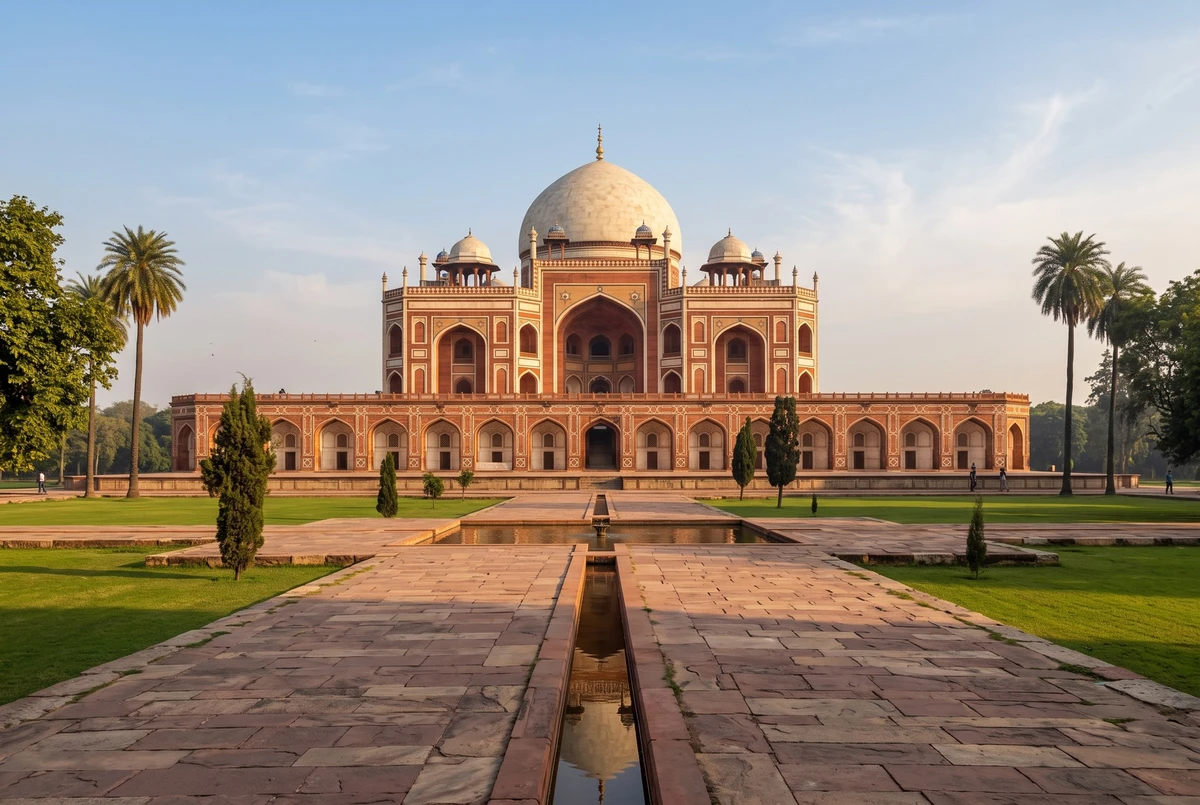
Some images are AI-generated for illustration. While we confirm your booking, just ask and we will send you the original photos.
- Fair, honest prices
- Real people, not bots
- Confirm, then pay
- Secure payment

Overview
The Golden Triangle is the classic first journey through north India, and this private four-day tour covers it properly: Delhi, Agra and Jaipur with your own air-conditioned vehicle, driver and local guides in each city. Day one takes in the Qutub Minar, the Lotus Temple, India Gate and the Agrasen ki Baoli stepwell before the expressway to Agra. Day two begins with the Taj Mahal at sunrise, then Agra Fort and the Tomb of Itimad-ud-Daulah. Day three is Jaipur: the Panna Meena ka Kund stepwell, Amber Fort, Jal Mahal, Gatore ki Chhatriyan, Hawa Mahal, Jantar Mantar and the City Palace. Day four returns you to Delhi. The default option includes three nights in 4-star hotels with breakfast; 3-star, 5-star and no-hotel options exist too.
Highlights
- Private air-conditioned vehicle with driver for all four days, from Delhi and back
- Local guides in Delhi, Agra and Jaipur, with the itinerary adjustable to your interests
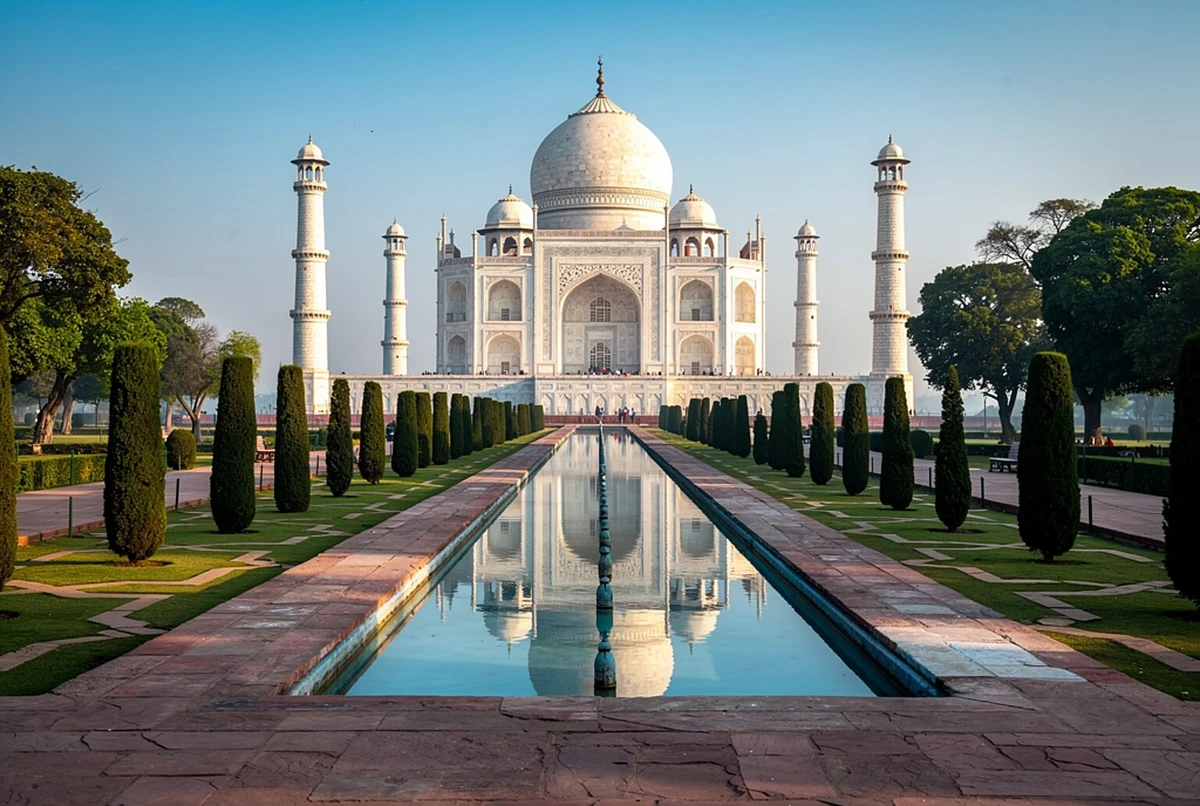
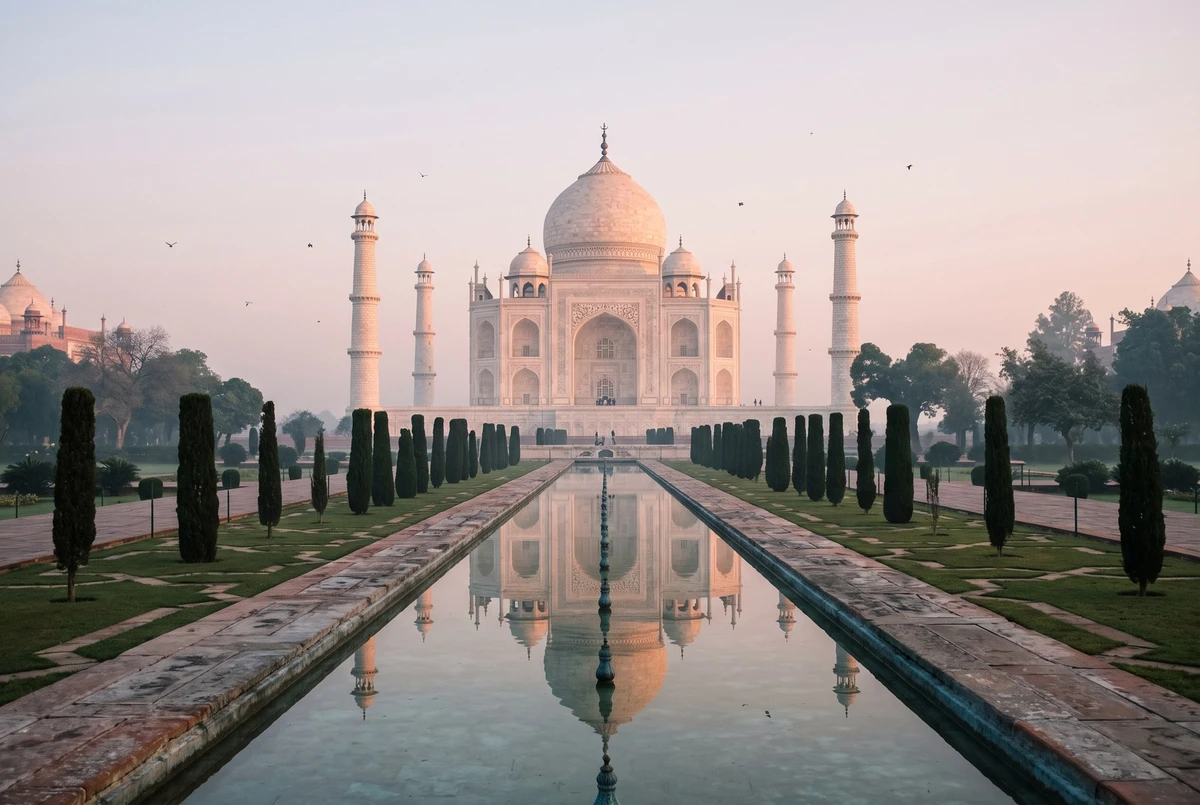
- Taj Mahal at sunrise on a two-hour guided visit before the crowds
- Agra Fort and the marble Tomb of Itimad-ud-Daulah, the Baby Taj
- Amber Fort, Hawa Mahal, Jantar Mantar and the City Palace of Jaipur
- Qutub Minar, Lotus Temple, India Gate and the Agrasen ki Baoli stepwell in Delhi
- Three nights in 4-star hotels with daily breakfast in the default option
- Pickup and drop-off at your hotel, the airport or the railway station in Delhi
Full Description
Delhi: Qutub Minar, Lotus Temple, India Gate and Agrasen ki Baoli
The tour opens with a half-day Delhi tour before the road to Agra. The Qutub Minar is the city's oldest landmark, a 73-metre red sandstone and marble victory tower begun in 1193 by Qutub-ud-din Aibak, the founder of the Delhi Sultanate, standing in a UNESCO-listed complex of arches, tombs and the famous rust-free iron pillar. From there the vehicle crosses south Delhi to the Lotus Temple, the Bahai house of worship whose twenty-seven white marble petals have become a symbol of modern Delhi.
India Gate, the war memorial arch at the end of the ceremonial avenue, is next, with a drive past Parliament House and the President's Palace. The last stop is Agrasen ki Baoli, a fourteenth-century stepwell hidden between office blocks, where 103 stone steps descend into the cool shade. This Delhi sightseeing takes about four hours; by early afternoon you are on the expressway, and the drive to Agra takes roughly three and a half hours.
Taj Mahal at sunrise
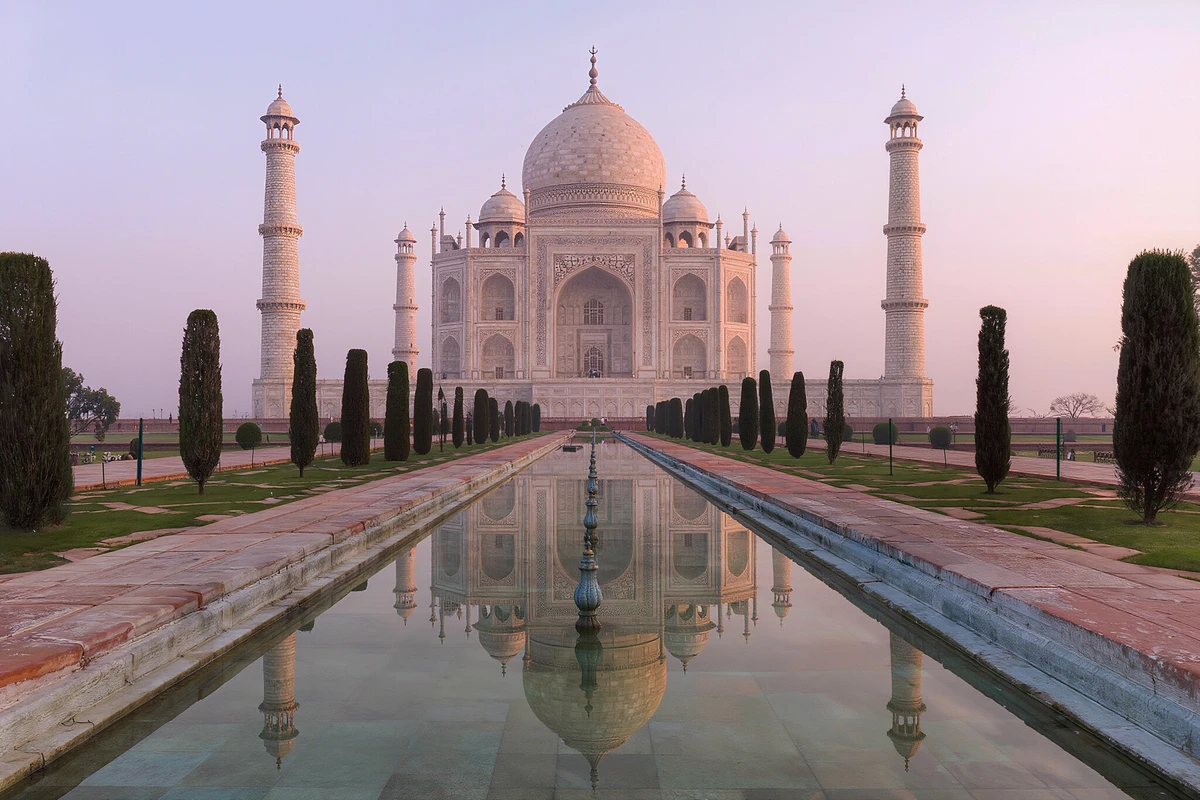
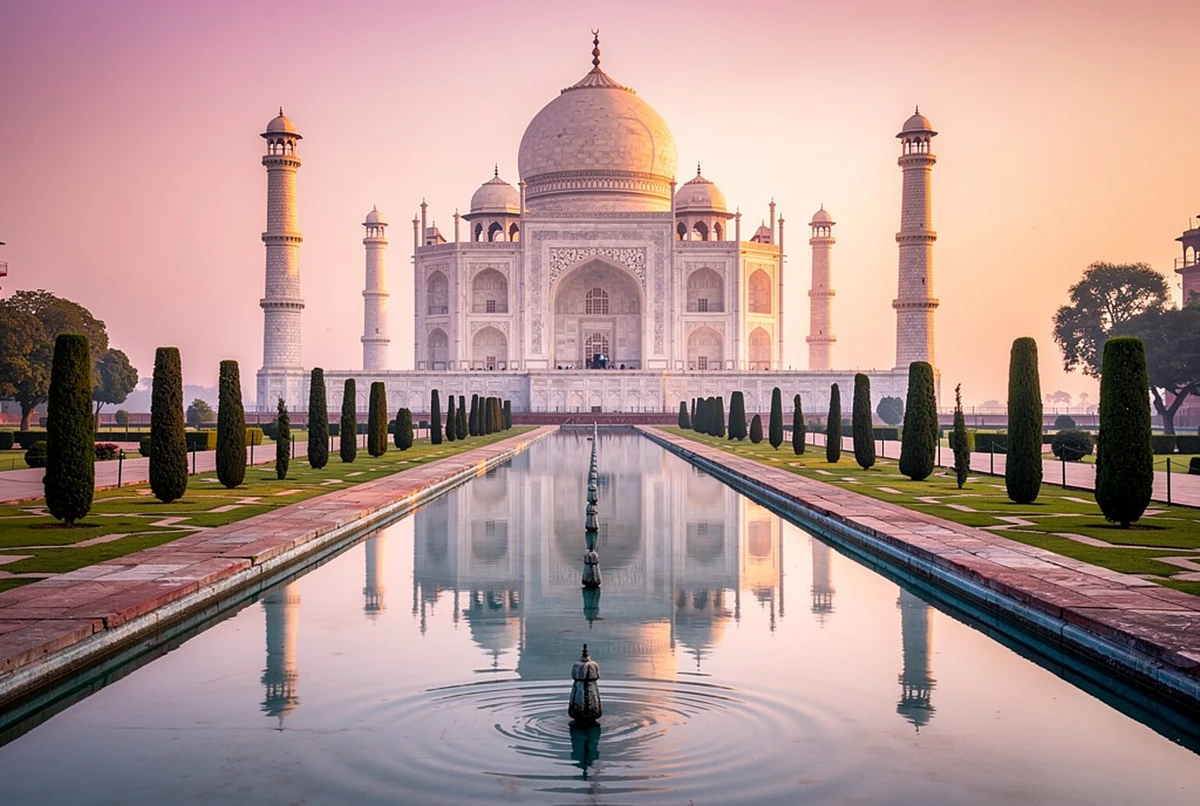
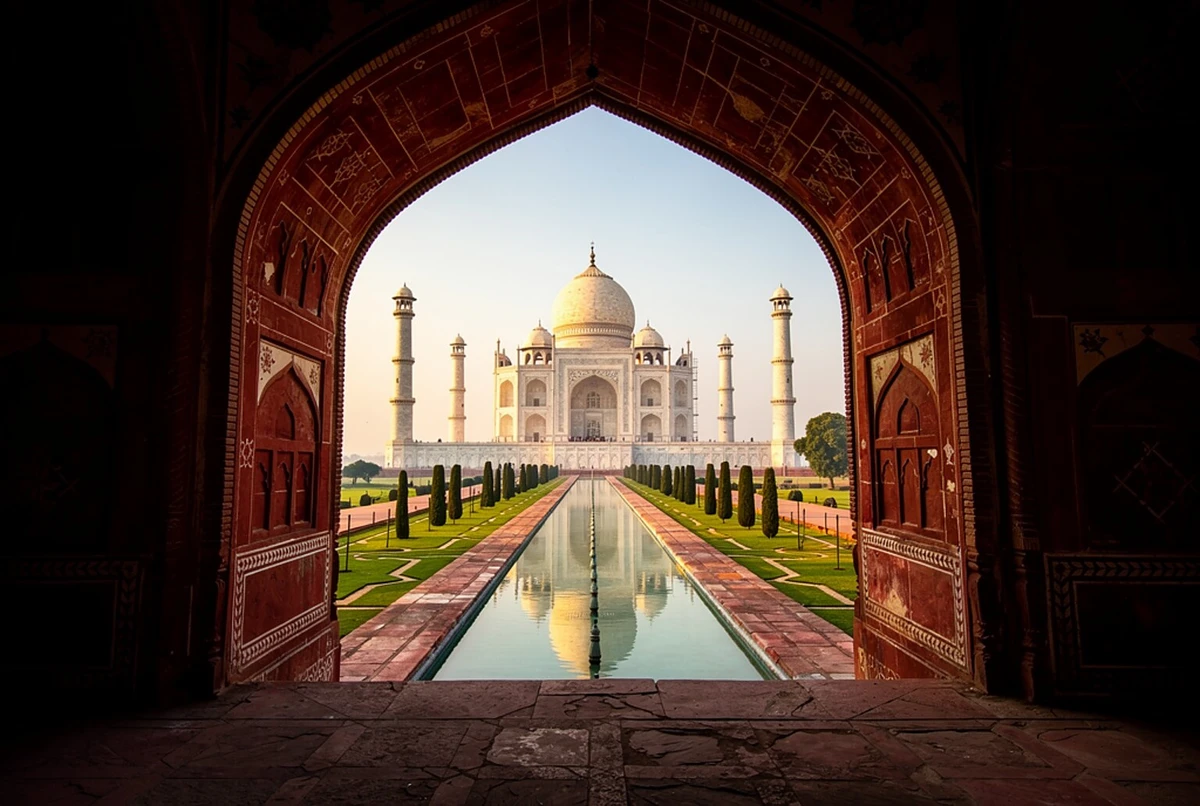
The Taj Mahal is why most travellers plan a Golden Triangle tour, and seeing it at sunrise is the best way to do it. Your guide takes you in through the gate as the gardens open, when the white marble turns from grey to pink to gold and the reflecting pool is still. The mausoleum was completed in the 1650s by the Mughal emperor for his wife Mumtaz Mahal, and the two-hour guided visit covers the gateway, the charbagh garden, the main tomb with its inlaid semi-precious stones, the mosque and the guest house.
Entry tickets are paid on site, and the battery bus between the parking area and the monument is included. The Taj Mahal is closed on Fridays, so tours starting on a Thursday follow the itinerary in reverse (Delhi, Jaipur, Agra, Delhi) to arrive in Agra on a day it is open. After the visit you return to the hotel for breakfast, which gives the morning a relaxed rhythm before Agra Fort.
Agra Fort and the Tomb of Itimad-ud-Daulah
Agra Fort is the second UNESCO site of the day, a red sandstone citadel on the Yamuna that served as the main residence of the Mughal emperors before Delhi. Inside the massive walls your guide shows you the Diwan-i-Aam and Diwan-i-Khas audience halls, the white marble Khas Mahal and the Musamman Burj, the octagonal tower from which the Taj Mahal is framed across the river. Plan about ninety minutes here; the fort opens daily from sunrise.
Across the river lies the Tomb of Itimad-ud-Daulah, built between 1622 and 1628 for a Mughal minister by his daughter, the empress. It is small, entirely of white marble and covered in pietra dura inlay and lattice screens, which is why it is nicknamed the Baby Taj: it was the first Mughal building in marble and a direct rehearsal for the Taj Mahal. After this visit the vehicle sets off for Jaipur, about five hours away, arriving in the evening at your hotel.
Amber Fort and the Panna Meena ka Kund stepwell
Day three begins outside Jaipur at Amber, the hilltop capital that preceded the city. Before the fort, your guide stops at Panna Meena ka Kund, a sixteenth-century stepwell beside the Anokhi Museum whose criss-crossing staircases form a perfect geometric pattern; it is one of the most photographed corners of Rajasthan and takes only fifteen minutes. The Amber Fort then rises above Maota Lake, a palace of yellow sandstone and marble built from 1592 onward around four courtyards.
Inside, the Diwan-i-Aam, the painted Ganesh Pol gate and the Sheesh Mahal mirror palace are the highlights, and the terraces give views over the lake gardens and the Aravalli hills. Allow about two hours. An Amber Fort tour is best early, before the heat and the crowds, which is how this itinerary is arranged. Entry tickets are bought on site with the guide's help; the fort is open daily from morning to evening.
Jal Mahal and Gatore ki Chhatriyan
Driving back towards the city you pass Man Sagar Lake for a stop at the Jal Mahal, the eighteenth-century Water Palace whose single visible storey appears to float on the water, with the Nahargarh hills behind. It cannot be entered, so this is a photo stop of about fifteen minutes with your guide explaining the restoration of the lake. The next stop is one many Jaipur tours skip: Gatore ki Chhatriyan, the royal cremation ground of the Jaipur maharajas at the foot of Nahargarh Fort.
Here a quiet garden holds a series of cenotaphs, or chhatris, in white marble and sandstone, the most ornate being the one built for Sawai Jai Singh II, the founder of the city, with twenty carved pillars and scenes from Hindu epics. It is peaceful, rarely crowded and usually takes thirty minutes. From here the vehicle enters the walled Pink City for the afternoon.
Hawa Mahal, Jantar Mantar and the City Palace of Jaipur
The afternoon covers the three monuments at the heart of the walled city. The Hawa Mahal, the Palace of Winds, is a five-storey pink sandstone screen of 953 latticed windows built in 1799 for the ladies of the court to watch the street; your guide takes you to the classic view from opposite. A short walk away, Jantar Mantar is the UNESCO-listed observatory of Sawai Jai Singh II, with nineteen giant stone instruments including the 27-metre Samrat Yantra sundial.
The City Palace completes the day: the Mubarak Mahal textile gallery, the Diwan-i-Khas with its giant silver urns, the courtyard of the four painted gates and the view of the seven-storey Chandra Mahal, still the residence of the former royal family. Together these three take about three hours. The evening is free in Jaipur, and on day four, after breakfast, you drive back to Delhi for drop-off at the airport, the railway station or your hotel.
Itinerary
- Day 1: Delhi pickup and city sightsPickup at your hotel, the airport or the railway station in Delhi, Noida or Gurgaon; guided half-day visit of Qutub Minar, Lotus Temple, India Gate and Agrasen ki Baoli with a drive past Parliament House and the President's Palace.
- Day 1: Drive to AgraExpressway drive of about three and a half hours; check in and relax at your Agra hotel.
- Day 2: Taj Mahal at sunriseTwo-hour guided visit as the gates open, with the battery bus from the parking area; return to the hotel for breakfast.
- Day 2: Agra Fort and Baby TajGuided visits of Agra Fort and the Tomb of Itimad-ud-Daulah, then the drive to Jaipur (about five hours) and check-in.
- Day 3: Amber and the lakePanna Meena ka Kund stepwell, Amber Fort, the Jal Mahal photo stop and the Gatore ki Chhatriyan cenotaphs.
- Day 3: The Pink CityHawa Mahal, Jantar Mantar and the City Palace with your Jaipur guide; evening at leisure and overnight in Jaipur.
- Day 4: Return to DelhiAfter breakfast, drive back to Delhi (about five hours) with drop-off at the airport, the railway station or your hotel.
What's included
- Private tour with your own vehicle and driver
- Transport in a private air-conditioned vehicle for 4 days
- Guided sightseeing with local guides in Delhi, Agra and Jaipur
- Sunrise visit to the Taj Mahal with the battery bus transfer from the parking area
- Pickup and drop-off at your hotel, the airport or the railway station in Delhi
- Bottled mineral water during the journeys and personal assistance throughout
- All taxes and service charges
Not included
- Monument entrance fees (paid on site; the guide helps you buy the tickets)
- Lunch and dinner
- Gratuities (optional)
- Hotel accommodation
Is this right for you?
Great for
- Travellers without a car — hotel pickup is included
- Couples, families and friends who want a private tour, just your group
- Food lovers
- Travellers who want a proven choice — rated 4.9/5 by past travellers
Think twice if
- You prefer short outings — this takes 4 days
Meeting point
Pickup on day one is included at your hotel, the airport or the railway station in Delhi, Noida or Gurgaon. You choose a start time between 07:00 and 11:00 when booking (the no-hotel option also offers 06:30), and our team confirms the exact pickup and the driver's details after booking. On day four the driver drops you at the airport, the railway station or your hotel in Delhi.
Important information
- Bring your passport; it is needed at hotel check-in and may be checked at the monuments
- Monument entrance fees are not included: pay them on site, where some counters accept cash only; your guide helps you buy the tickets
- The Taj Mahal is closed on Fridays; tours starting on a Thursday run Delhi – Jaipur – Agra – Delhi
- Hotel rooms are on a twin-sharing basis; three travellers share a triple room unless two rooms are requested
- The vehicle is a sedan for one or two travellers, a larger car for three or four and a minivan for five to ten
- Lunch and dinner are not included; daily breakfast is included in the hotel options
- Wear comfortable walking shoes and bring sun protection; bottled mineral water is provided in the vehicle
- Tell us your interests in advance and the guides adjust the itinerary in each city
Good to know
Frequently Asked Questions
Straight answers to what travellers ask us most, before they book.
Is this a shared or a private experience?
It is a private tour: the vehicle, driver and local guides are for your group only (up to ten travellers), and the itinerary in each city can be adjusted to your interests.
How long does the Golden Triangle tour take?
Four days and three nights: Delhi and the drive to Agra on day one, Agra and the drive to Jaipur on day two, Jaipur on day three, and the return to Delhi on day four.
Is hotel pickup included?
Yes. The driver collects you at your hotel, the airport or the railway station in Delhi, Noida or Gurgaon and drops you at any of these in Delhi on the last day.
What is included?
A private air-conditioned vehicle with driver, guided sightseeing with local guides in all three cities, the battery bus at the Taj Mahal, bottled water, taxes and personal assistance. The hotel options add three nights' accommodation with daily breakfast.
Is the price per person or per group?
Each option is priced by group size, from one traveller up to ten. The booking panel on this page shows the current price of every option for your number of travellers.
Are the monument tickets included?
No. Entrance fees to the monuments are paid on site; the guides help you buy them, and it is wise to carry some cash because not every counter accepts cards.
Which hotels are used?
The default option uses 4-star hotels in Agra and Jaipur; 3-star and 5-star options are available, and you can also book your own hotels and take the tour without accommodation. Rooms are twin-sharing with breakfast.
Is it suitable for children and for people with reduced mobility?
Yes for children, who travel in the same private vehicle. The vehicle is wheelchair accessible and most sites have level paths, but Amber Fort and Agra Fort involve ramps and steps; tell us about any needs when booking.
What should I bring?
Passport, comfortable walking shoes, sun protection, a light scarf for temple visits and cash for tickets and meals.
What is the best season for the Golden Triangle?
October to March, when days are mild and skies are clear for the sunrise at the Taj Mahal. April to June is very hot, and July to September brings monsoon rain, though the monuments stay open.
What happens if the Taj Mahal is closed on my date?
The Taj Mahal closes every Friday. If your tour starts on a Thursday, the route is reversed to Delhi, Jaipur, Agra and Delhi so that you reach Agra on an open day.
How do I book and confirm?
Select your option, date and number of travellers in the booking panel and send the request; our team confirms your booking on WhatsApp within minutes and sends the hotel and pickup details.
More in Delhi
Popular across India
-
-
-
-
-
-