Etna Summit Craters Trekking at 3350 m with Volcano Guide
- Duration6 hours
- Daily, conditions permitting
- Group
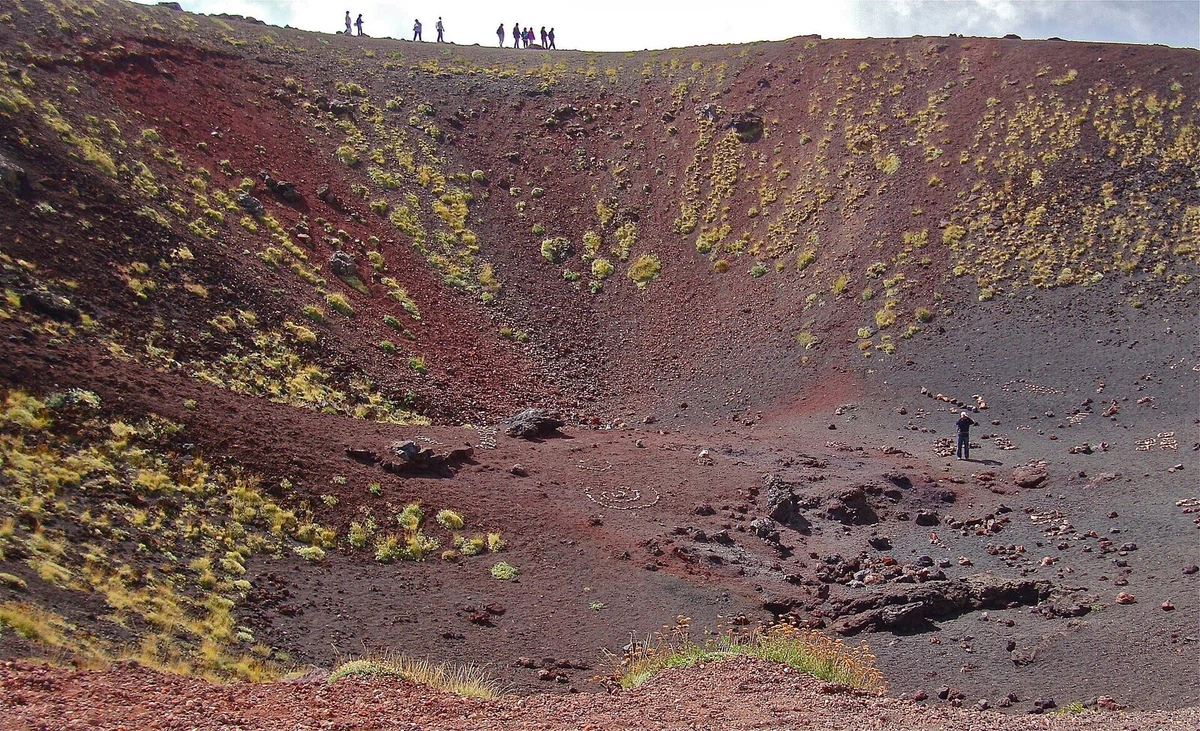
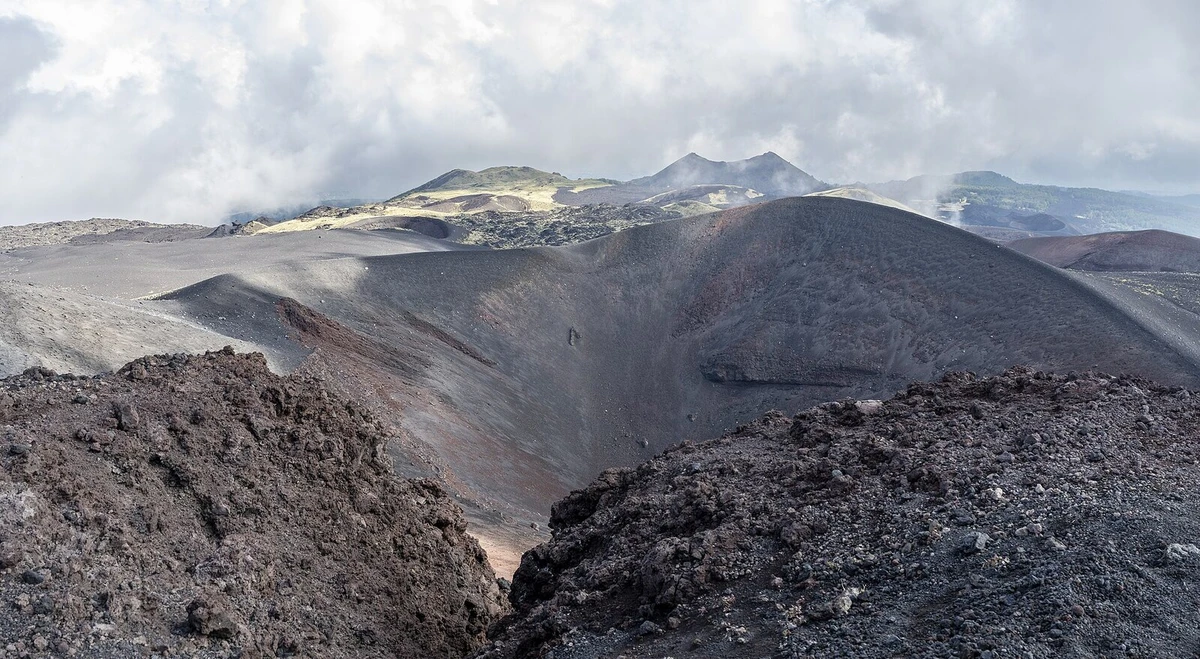
Photos show the places you visit; the boat or vehicle on the day may differ. Photos: Dean Hochman from Overland Park, Kansas, U.S. (CC BY 2.0) · Cayambe (CC BY 4.0), via Wikimedia Commons
Some images are AI-generated for illustration. While we confirm your booking, just ask and we will send you the original photos.
- Fair, honest prices
- Real people, not bots
- Confirm, then pay
- Secure payment

Overview
This 6-hour guided hike takes moderately fit walkers to the summit craters of Mount Etna, Europe's highest active volcano, with a certified volcano guide. From the meeting point at Rifugio Sapienza on the south side, you ride the cable car to about 2,500 m and a 4x4 vehicle to about 2,800 m; the cable car and 4x4 tickets are paid in cash on site. Then comes a roughly 2-hour climb over lava sand to the rim of the Central Crater at around 3,350 m, with views of the Northeast and Southeast craters, steaming fumaroles and sulphur-coloured ground. The descent passes the Barbagallo craters, a lava channel and the Valle del Bove. It is a shared small-group trek, with helmet, walking sticks and, outside winter, boots provided.
Highlights
- Hike to the summit craters of Mount Etna at around 3,350 m
- Walk the rim of the Central Crater with a certified volcano guide
- Views of the Northeast and the very active Southeast craters
- Steaming fumaroles, volcanic bombs and sulphur-coloured ground
- Cable car and 4x4 ride up to about 2,800 m
- Descent past the Barbagallo craters and a lava channel
- Panorama over the Valle del Bove and the Ionian coast
- Helmet, walking sticks and boots (outside winter) included
Full Description
Mount Etna, Europe's Highest Active Volcano
Mount Etna rises above Catania on Sicily's east coast and is the highest active volcano in Europe, its summit height changing with each new eruption, currently around 3,300 to 3,400 m. Its slopes cover roughly 1,200 square kilometres, from orange groves and orchards near the coast to a bare black summit, and the volcano was named a UNESCO World Heritage Site in 2013 for its exceptional activity and long record of eruptions.
For most visitors, an Etna summit tour is the only way to see the top safely, because the area above about 2,900 m may only be entered with an authorised guide. The best time to visit Etna's summit is from late spring to early autumn, when snow has melted from the trails; in winter conditions change fast and some equipment is not provided.
Rifugio Sapienza and the Ride Up
The day starts at Rifugio Sapienza, the mountain station on Etna's south side at about 1,900 m, surrounded by old craters and souvenir shops. If you are wondering how to get to Etna from Catania, it is about an hour by car up a winding road, and a public bus usually runs once a day from Catania in the morning; we can advise on timings when you book.
From the station, the cable car lifts you over black lava fields to around 2,500 m, and a 4x4 vehicle continues up a track to about 2,800 m. These tickets are not included and are paid in cash on site, so bring enough cash. Already at this height the air is cooler and thinner, and the views stretch over the Silvestri craters, the coast and, on clear days, Calabria across the strait.
The Summit Craters
From the end of the 4x4 track, the guide leads a steady climb of roughly 2 hours on volcanic sand and loose stone to the summit area. You walk along the rim of the Central Crater, a huge pit that drops away into steam and shadow, with views of the steep Northeast Crater and the Southeast Crater, the most active vent of recent decades and the source of many of Etna's spectacular lava fountains.
The landscape up here feels like another planet: gas vents hiss, volcanic bombs lie scattered across the slopes and the ground glows yellow, orange and white where sulphur and other minerals crystallise around fumaroles. Your guide explains the geology and the latest activity. Seeing lava is never guaranteed, and if activity is high the route is changed or the hike stops lower, always for safety.
The Barbagallo Craters and the Lava Channel
The descent follows a different line, past the Barbagallo craters, a row of cones formed during the flank eruptions of the early 2000s. Walking around them shows how quickly Etna reshapes itself: slopes that were smooth a generation ago are now cones, ridges and fields of fresh black lava.
The route then crosses an old lava channel, the natural chute through which molten rock once flowed downhill, its walls still rough and twisted where the lava cooled. This is a good place for photos and for the guide's stories about how eruptions are monitored and how villages on the lower slopes have lived with the volcano for centuries. Expect loose stones underfoot here, so take your time and use the walking sticks.
The Valle del Bove
The final highlight is the view over the Valle del Bove, an immense horseshoe-shaped depression on Etna's eastern flank, around 5 km wide and some 7 km long, with walls up to roughly 1,000 m high. It was formed by the collapse of ancient volcanic cones thousands of years ago, and many recent lava flows have poured into it, painting its floor in layers of black and grey.
Standing on its rim is one of the most memorable moments of any Etna trekking day, with the Ionian coast stretching beyond the valley. From here you walk back toward the 4x4 and cable car stations at about 2,500 m and ride down to Rifugio Sapienza, tired, dusty and with photos few visitors to Sicily ever take.
Itinerary
- Meeting at Rifugio SapienzaMeet the guides at their info point on Etna's south side, check equipment and pay the cable car and 4x4 tickets in cash.
- Cable car to about 2,500 mA ride of around 25 minutes over the lava fields.
- 4x4 to about 2,800 mAbout 30 minutes by off-road vehicle up the volcano's track.
- Ascent to the summit cratersA guided climb of roughly 2 hours on volcanic sand to the Central Crater at around 3,350 m.
- Summit crater rimAbout an hour on the rim with views of the craters, photo stops and a break.
- Descent via the Barbagallo craters and the Valle del BoveAbout an hour on foot past the lava channel and the valley viewpoint.
- Return by cable carRide down from about 2,500 m to Rifugio Sapienza, where the tour ends.
What's included
- Certified volcano/Alpine guide
- Guided hike to the summit craters at 3,350 m
- Rock helmet
- Walking sticks
- Hiking boots (not available in the winter period)
- Liability insurance
Not included
- Cable car and 4x4 jeep tickets, paid in cash on the spot
- Food and water
- Transport to Rifugio Sapienza
Is this right for you?
Great for
- Travellers who want a proven choice — rated 4.7/5 by past travellers
Think twice if
- You want a private tour — this one is shared with other travellers
- Walking is difficult for you — expect active parts
Not suitable for
- Children under 11 years
- Pregnant women
- People with back problems
- People with heart problems
- People with vertigo
- People with respiratory issues
- People with high blood pressure
Meeting point
Meet at the volcano guides' info point at Rifugio Sapienza, on the south side of Mount Etna, close to the large panoramic terrace restaurant at the cable car station; the exact spot is sent with your booking. Transport from Catania is not included, so plan about an hour's drive or check the morning public bus. Arrive early to pay the cable car and 4x4 tickets in cash and collect your equipment. Because Etna is an active volcano, the meeting point or time can occasionally change, and we will message you on WhatsApp if it does.
Important information
- Cable car and 4x4 tickets are not included and must be paid in cash on site
- Suitable for moderately trained hikers used to sandy or uneven ground
- Wear long trousers, a T-shirt and bring a warm jacket; it is cold and windy at the summit even in summer
- Bring a 10 to 20 litre backpack with water, snacks, a packed lunch, sunglasses, a sun hat and sunscreen
- Helmet and walking sticks are provided; boots are provided except in winter
- The route can change or stop lower because of weather, wind, gas or volcanic activity
- If the summit is closed, the tour continues to the highest permitted point using the cable car only
- Not suitable for children under 11, pregnant women or people with heart, back, breathing or blood-pressure problems or vertigo
- Stay reachable on WhatsApp the day before in case of changes
Good to know
Frequently Asked Questions
Straight answers to what travellers ask us most, before they book.
Is this a shared or a private experience?
It is a shared small-group trek led by a certified volcano guide, in English, Italian or French.
How long does it take?
About 6 hours from the meeting at Rifugio Sapienza, including the cable car, 4x4 ride and about 3 hours of hiking.
Is hotel pickup included?
No. You meet the guides at Rifugio Sapienza on Etna's south side, about an hour's drive from Catania.
What is included?
The certified volcano guide, the guided hike to the summit craters, a helmet, walking sticks, hiking boots outside winter and liability insurance. Cable car and 4x4 tickets are paid in cash on site.
Is the price per person or per group?
The price is per person. The booking panel on this page shows the current price; the cable car and 4x4 tickets are paid separately on site.
How hard is the Etna summit trek?
It is moderate: about 550 m of climbing at high altitude on loose volcanic sand. You need good basic fitness and should be used to walking on uneven ground.
Is it suitable for children or people with reduced mobility?
No. It is not suitable for children under 11, pregnant women, people with reduced mobility or anyone with heart, back, breathing or blood-pressure problems or vertigo.
Will we see lava?
Seeing lava is never guaranteed. You will see steaming fumaroles, colourful mineral deposits and the craters, and the guide explains the current activity.
What should I bring?
A warm jacket, long trousers, a spare T-shirt, socks, sunglasses, a sun hat, sunscreen, water, snacks, a packed lunch and cash for the cable car and 4x4.
What is the best time of year to climb Etna?
Late spring to early autumn is best. Summer days are warm at the base but still cold and windy at the summit, and in winter snow can change the route.
What happens in bad weather or high volcanic activity?
The guides decide on the day. The route may be changed, shortened or limited to the highest permitted point, and we contact you on WhatsApp about any change.
How do I book and confirm?
Book on this page and our team confirms your date and meeting time on WhatsApp within minutes.
More in Catania
Getting to & around Catania
Popular across Italy
-
-
-
-
-
-