Angkor Wat Small Group Sunrise or Sunset Tour Siem Reap
Overview
This small-group Angkor Wat tour from Siem Reap lets you choose how your day begins or ends: a pre-dawn start to watch the sunrise over Angkor Wat, or a later departure that follows the temples through the day and finishes at sunset. Along the way you visit Angkor Thom and the Bayon, Ta Prohm and Banteay Kdei with an English-speaking guide, travelling in an air-conditioned vehicle with hotel pickup and drop-off in the Siem Reap city area.
Highlights
- Choose a sunrise start at Angkor Wat or a sunset finish at Angkor
- Small group with an English-speaking guide who explains the Khmer Empire
- See the giant smiling faces of the Bayon in Angkor Thom
- Walk among the tree roots of Ta Prohm, the jungle temple
- Visit Banteay Kdei, a quieter temple from the late twelfth century
- Air-conditioned vehicle, cold water and a cold towel on board
- Hotel pickup and drop-off in the Siem Reap city area
Full Description
Angkor Wat, the world's largest religious monument
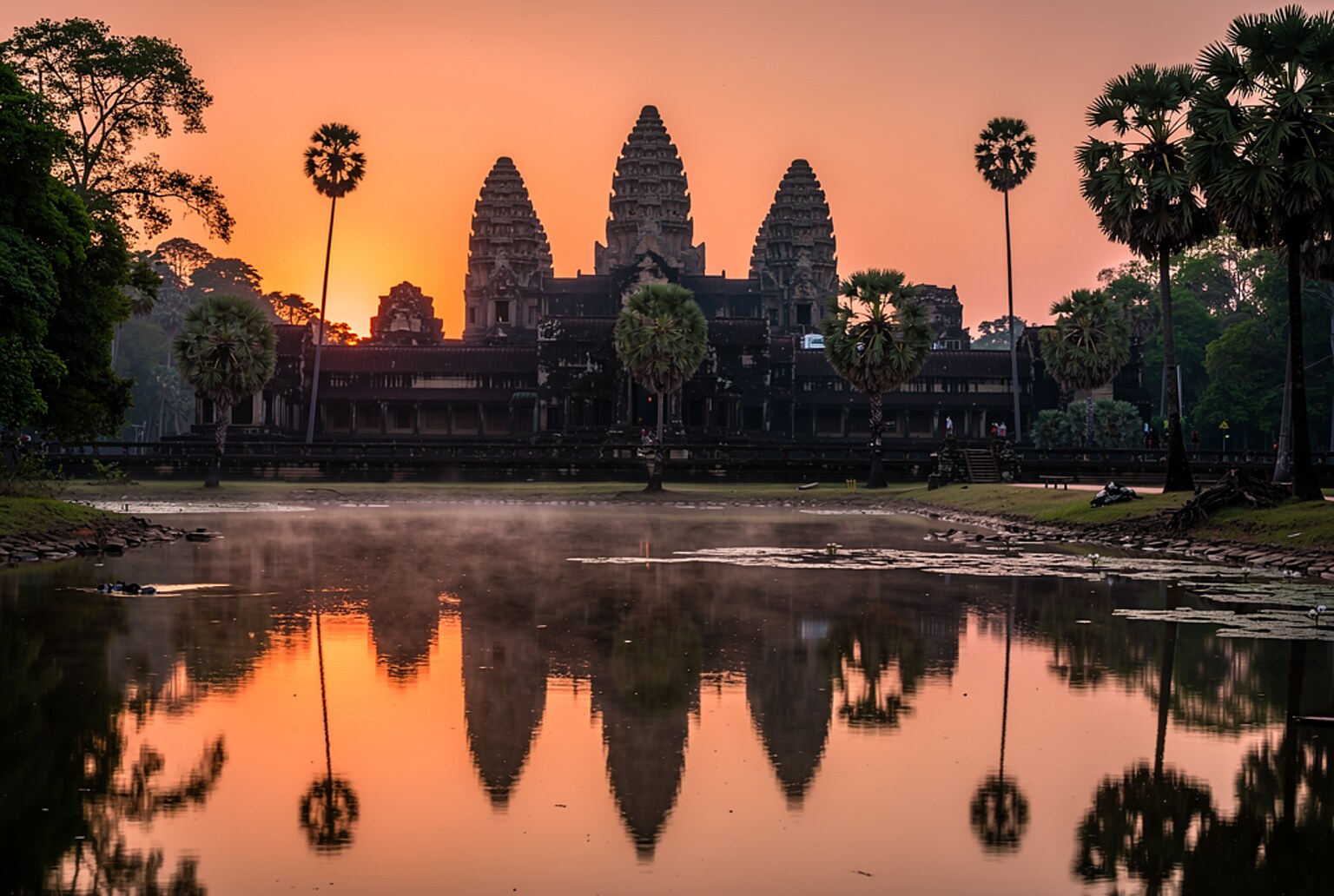
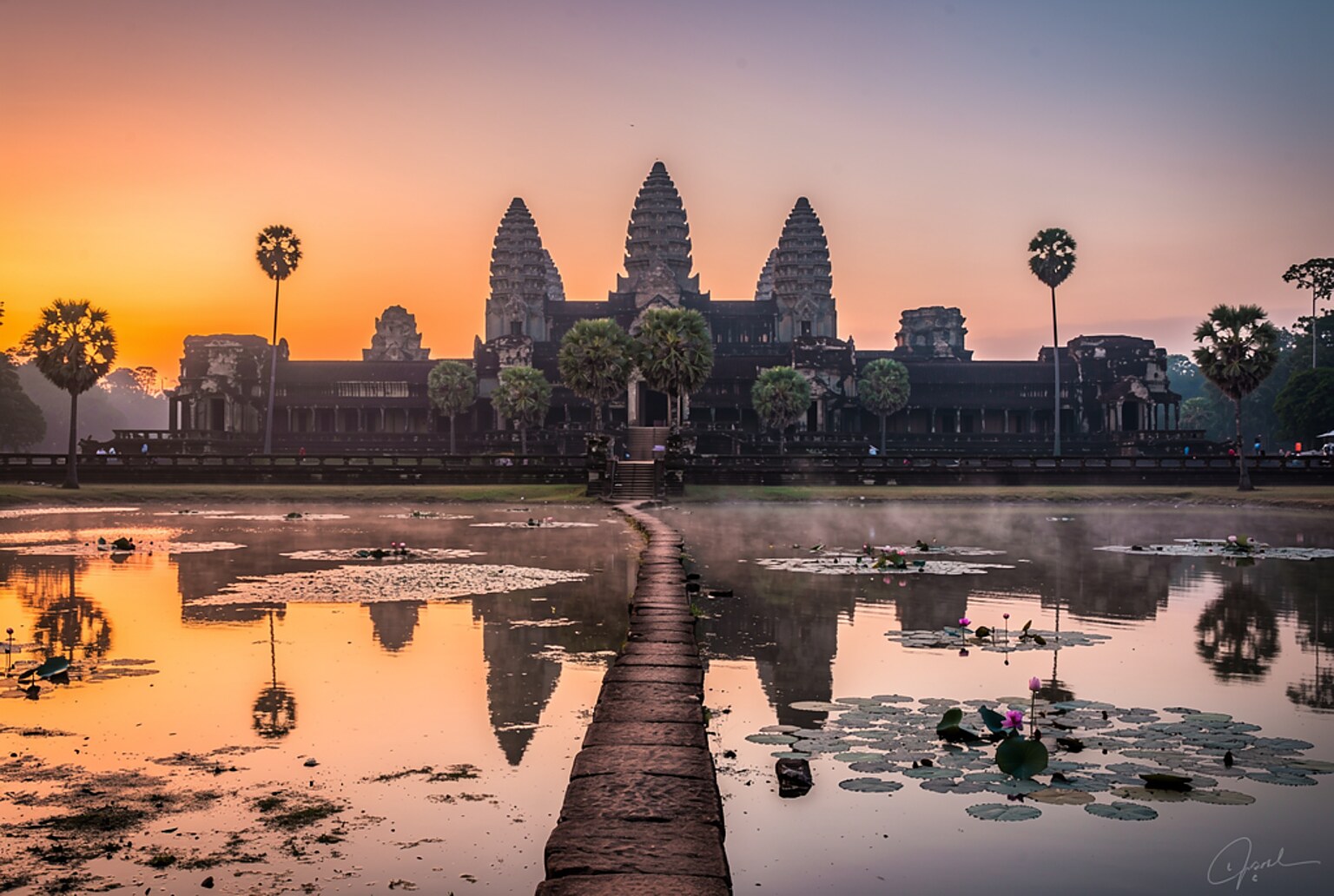
Angkor Wat was raised in the early twelfth century by King Suryavarman II as a temple to Vishnu and later became a Buddhist shrine, so monks still walk its galleries. Travellers who search for an Angkor Wat sunrise tour want one picture: five lotus-bud towers standing dark against a colouring sky, doubled in the reflecting pond. On the sunrise option your guide leads you there in the dark to settle at a good spot.
Once the light is up, you go inside. You cross the moat on the long causeway and follow the bas-relief galleries, where the Churning of the Ocean of Milk and scenes from the Battle of Kurukshetra run along the walls. Many people ask whether Angkor Wat is worth visiting beyond the sunrise photo; the carving, the scale and the guide's explanations are the answer, and the tour gives you time to see them properly.
Angkor Thom and the Bayon Temple
Angkor Thom was the last great capital of the Khmer Empire, built by Jayavarman VII in the late twelfth century and enclosed by a moat and a wall. You enter through the South Gate, lined with rows of stone gods and demons holding a giant serpent. At the centre stands the Bayon, whose towers carry hundreds of serene, smiling faces that people often call the most memorable image of Angkor after the main temple.
Your guide explains who the faces may represent and how to read the scenes of daily life carved into the outer gallery, from markets and fishing to naval battles. Nearby, the Terrace of the Elephants and the Terrace of the Leper King formed the edge of the royal viewing platform. If you are comparing a Bayon Temple tour with other options, this stop is why a guided visit beats walking alone.
Ta Prohm, the jungle temple
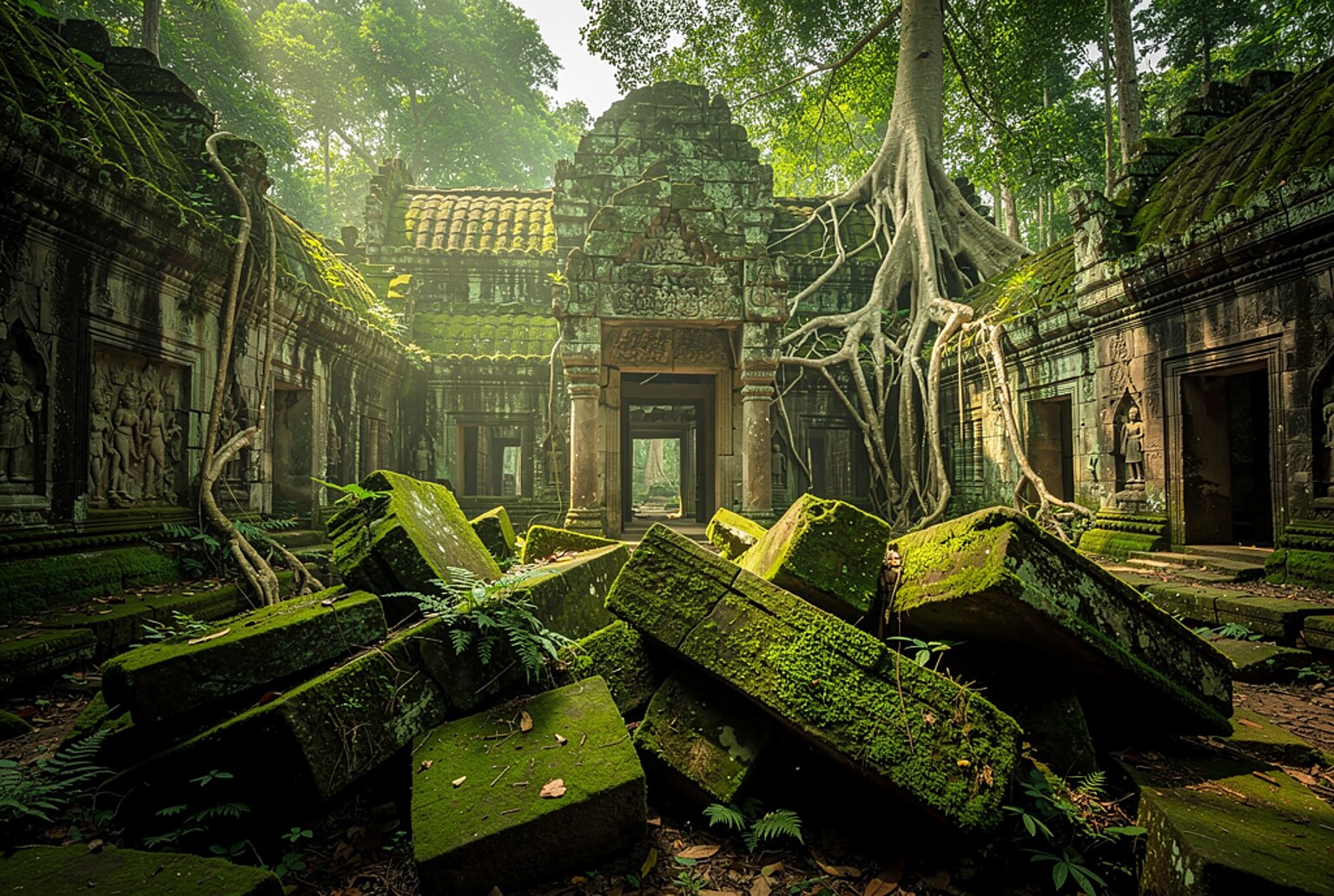
Ta Prohm was dedicated in the late twelfth century as a monastery and university, and it is the temple most travellers picture when they think of ruins wrapped in the forest. Conservators chose to leave it partly as it was found, so huge silk-cotton and strangler-fig roots pour over the walls and doorways. A Ta Prohm tour is as much about the atmosphere as the stonework: the light is soft, and it is quiet enough to hear the leaves.
Expect narrow passages, uneven stone and a lot of photo opportunities. Your guide will point out the best angles for the famous root-covered doorway and explain why some collapsed sections are propped up rather than rebuilt. Allow about an hour here; the tour is planned so you are not rushed.
Banteay Kdei
Banteay Kdei is a Buddhist monastery temple built under Jayavarman VII in the late twelfth century, close to the large Srah Srang pool. Its name is often translated as the Citadel of the Chambers, and its long corridors, carved doorways and half-restored towers make it feel more private than the main temples.
On this tour it is a calmer stop, useful for slowing down after Angkor Wat and the Bayon. Depending on the day and the route your guide chooses, you may have a coffee or breakfast break nearby, which is bought locally and is not included in the price.
Planning your visit: Angkor pass, timing and how to get there
People often ask how to get to Angkor Wat from Siem Reap: it is only a short drive north of the city, and on this tour the vehicle collects you at your hotel and brings you back, so you do not need to arrange a tuk-tuk. The Angkor pass is not included in the tour price. You can buy it at the official Angkor ticket office, and your guide can help with this on the day if you have not bought one in advance.
The best time to visit Angkor Wat for cooler weather is generally the drier months from November to February, but temples are open all year and opening hours change by season. Sunrise starts very early, so sleep well the night before and bring a light layer, since the pre-dawn air can feel cool.
Itinerary
- Hotel pickup in Siem ReapYour driver collects you in an air-conditioned vehicle; the pickup time is confirmed after booking and is around 4:30 AM for the sunrise option or 9:00 AM for the sunset option.
- Angkor WatWatch the sunrise on the sunrise option, then explore the causeway, galleries and towers with your guide for around three hours.
- Ta ProhmWalk through the jungle temple and its giant roots, about an hour.
- Banteay KdeiVisit the monastery temple and take a short break, about 45 minutes.
- Angkor Thom and the BayonEnter by the South Gate and see the smiling faces of the Bayon, about an hour.
- Sunset at Angkor (sunset option)On the sunset option the day is planned through the temples and ends with the sunset at Angkor; the route order can change.
- Return to your hotelThe drive back to the Siem Reap city area takes around 45 minutes.
What's included
- Air-conditioned vehicle
- English-speaking tour guide
- Cold water and cold towel
- Hotel pick-up and drop-off in the Siem Reap city area
Not included
- Angkor Archaeological Park pass (one-day pass)
- Food
- Tips
Not suitable for
- Children under 4 years
- People with back problems, because of the early start, the steps and the vehicle time
- Anyone who cannot climb steps or walk on uneven stone
Meeting point
Hotel pickup and drop-off are included in the Siem Reap city area. Tell us your hotel name when you book and the pickup time is confirmed afterwards. The sunrise option leaves very early, at around 4:30 AM, and the sunset option leaves at 9:00 AM. Please wait in your hotel lobby a few minutes before the confirmed time.
Important information
- The Angkor pass is not included; bring your own pass or let your guide help you buy it at the ticket office on the day.
- Cover your shoulders and knees for the temples; light long trousers or a skirt and a T-shirt are best.
- Wear comfortable walking shoes and bring sun protection, a hat and a camera.
- Food is not included, so bring cash for breakfast or lunch and for optional tips.
- Cold water and a cold towel are provided in the vehicle.
- Children must be accompanied by an adult.
- Sunrise is weather dependent; on cloudy mornings the colours may be softer, but the visit still goes ahead.
Good to know
Frequently Asked Questions
Straight answers to what travellers ask us most, before they book.
How much does the Angkor Wat sunrise or sunset tour cost?
The price depends on the option you choose. The booking panel on this page shows the current price for each option and for each traveller.
Is hotel pickup included?
Yes. Both options include hotel pickup and drop-off in the Siem Reap city area, and the pickup time is confirmed after booking.
Is the Angkor pass included?
No. The Angkor Archaeological Park pass is not included in either option. You can buy it in advance or your guide can help you buy it on the day.
How long is the tour?
The sunrise option lasts about 8 hours and the sunset option about 9 hours, including the drives.
What is the difference between the sunrise and sunset options?
The sunrise option starts around 4:30 AM so you watch the sunrise over Angkor Wat, while the sunset option starts at 9:00 AM and follows the temples through the day, ending with the sunset at Angkor. Both include the guide, vehicle, water and hotel pickup.
What is the best time to visit Angkor Wat?
Early morning and late afternoon are cooler and give softer light. The drier months, roughly November to February, are the most comfortable, but the tour runs all year.
What should I wear at Angkor Wat?
Cover your shoulders and knees, wear comfortable shoes and bring a hat and sunscreen. Some areas of the temples may be closed to people who are not modestly dressed.
Is the tour suitable for children?
Older children who can manage the early start and the walking usually enjoy it, but it is not suitable for children under 4, and children must be with an adult.
Can I book for today or tomorrow?
The calendar in the booking panel shows the dates that are open. The sunrise option leaves very early, so book as soon as you can; if you need a last-minute date, contact us and we will check.
Is Angkor Wat worth visiting on a small-group tour rather than alone?
Many travellers find a guide makes the difference: you learn what the carvings show, avoid queuing and guessing, and reach each temple in a sensible order.