
Private Warsaw Ghetto History Walking Tour with Hotel Pickup
- Duration3 hours
- Daily
- Private
- Pickup available
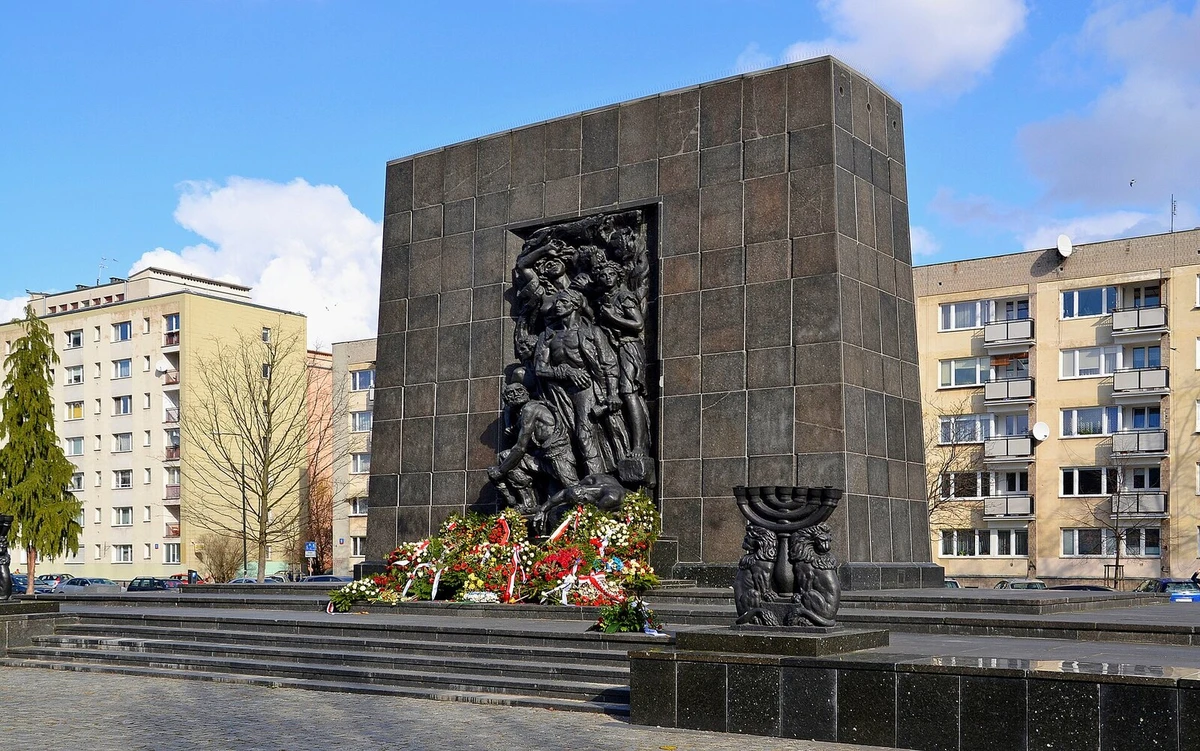
Photos show the places you visit; the boat or vehicle on the day may differ. Photos: Pudelek (CC BY-SA 4.0), via Wikimedia Commons
Some images are AI-generated for illustration. While we confirm your booking, just ask and we will send you the original photos.
- Fair, honest prices
- Real people, not bots
- Confirm, then pay
- Secure payment

Overview
This private 3-hour walking tour tells the history of the Warsaw Ghetto, the largest ghetto in occupied Europe, at the real places where it happened. Your licensed guide, in English or German, walks with your group only. Our default option includes hotel pickup and drop-off by car; you can also meet the guide on Próżna Street, or choose a private car tour with shorter walks. You see surviving fragments of the ghetto wall, the last street of the ghetto, the Nożyk Synagogue, the former ghetto neighbourhoods, the Umschlagplatz memorial and the Monument to the Ghetto Heroes, and you hear how the ghetto was created in 1940, what daily life was like and why the 1943 uprising broke out. Recommended for travellers aged 14 and over.
Highlights
- Private licensed guide for your group only, in English or German
- Hotel pickup and drop-off by car included in the default option
- Surviving fragments of the Warsaw Ghetto wall
- Próżna Street, the last street of the ghetto
- The Nożyk Synagogue, the only Warsaw synagogue to survive the war
- The Umschlagplatz memorial and the Monument to the Ghetto Heroes
- The story of the 1943 Warsaw Ghetto Uprising told on the spot
- City plan and information booklets to keep
Full Description
The Warsaw Ghetto and its history
Before the Second World War Warsaw had the second largest Jewish community in the world, about 30 percent of the city's population. In 1940 the German occupiers sealed off an area of roughly four square kilometres in the heart of the city and forced more than 400,000 Jews from Warsaw and the surrounding region inside. Hunger, overcrowding and disease killed about 100,000 people, and in the summer of 1942 more than 300,000 were deported to the Treblinka extermination camp.
When the final liquidation began in April 1943, the remaining inhabitants rose up, and the unequal fight between the fighters and the German forces lasted nearly a month before the ghetto was razed. Almost nothing of the district survived, which is why a guided Warsaw Ghetto tour matters: the places are hidden among post-war streets and only a knowledgeable guide can show you where they are and explain the logic of destruction and the courage of resistance.
The ghetto wall fragments and Próżna Street
Your walk begins among the few physical traces that remain. In quiet courtyards off the busy streets of central Warsaw stand surviving fragments of the brick wall that enclosed the ghetto, marked today with memorial plaques and, in several places, a line set into the pavement that traces the former boundary. Standing beside the wall makes the scale of the enclosure, and the isolation of the people inside it, suddenly real.
Nearby lies Próżna Street, the last surviving street of the ghetto, where a row of pre-war tenement houses stood through the war and the demolition that followed. Some have been restored and others keep their bare, scarred brick, and the street is the best place in Warsaw to picture how the Jewish quarter looked before 1939. It is also the meeting point for the option without hotel pickup, and your guide uses it to introduce everyday life inside the ghetto.
The Nożyk Synagogue
A few steps from Próżna Street stands the Nożyk Synagogue, built in 1902 in neo-Romanesque style and the only synagogue in Warsaw to survive the Second World War; the occupiers used it as a stable and a storehouse, which spared it from destruction. Restored after the war, it is once again the main synagogue of the Warsaw Jewish community and is in regular use, so visits are made respectfully and quietly.
Inside you see the restored prayer hall with its gallery, and your guide explains the religious and community life of pre-war Jewish Warsaw and how the community rebuilt itself after 1945. Men are asked to cover their heads; a head covering or kippah is available at the entrance if you do not bring one. A small donation for the synagogue is paid in cash on site and is not included in the tour.
The former ghetto neighbourhoods and the Umschlagplatz
From the synagogue the route crosses the neighbourhoods that lay inside the ghetto, now the Muranów district, rebuilt after the war on the rubble of the destroyed quarter, in places literally on top of it. Your guide points out where the ghetto gates, the footbridge between the two parts of the ghetto, the hospitals and the children's homes stood, and tells the stories of individuals who lived, worked and resisted here.
The walk reaches the Umschlagplatz, the collection point beside the railway siding from which the deportation trains left for Treblinka in 1942. A white marble memorial in the shape of an open cattle wagon marks the spot, with the first names of the victims carved on its walls. Your guide explains the symbolism of the monument and the events of the deportation, a moment of the tour that many travellers find the most moving.
The Monument to the Ghetto Heroes
The tour ends at the Monument to the Ghetto Heroes, unveiled in 1948 on the fifth anniversary of the uprising on the site where the first armed clashes took place. The bronze relief of fighters emerging from the stone, flanked by menorah-shaped lamps, has become the symbol of the uprising and the place where heads of state lay wreaths when they visit Warsaw.
Your guide tells the story of the Warsaw Ghetto Uprising of April and May 1943, why the young fighters took up arms knowing they could not win, who helped them from outside the walls, and how the memory of the ghetto is kept alive in the city today. The monument faces the modern museum of the history of Polish Jews, which you may wish to visit on your own afterwards. With the default option, our driver then returns you to your hotel.
Itinerary
- Hotel pickupOur driver collects you at your Warsaw hotel at 10:00 and brings you to the start of the walk in the former ghetto area (default and car options).
- Ghetto wall fragments and Próżna StreetIntroduction to the history of the ghetto beside the surviving wall fragments and on the last street of the ghetto, about 40 minutes.
- The Nożyk SynagogueVisit the only Warsaw synagogue to survive the war, about 30 minutes; a small donation is paid on site.
- Through the former ghettoWalk through the rebuilt neighbourhoods inside the former ghetto boundary, hearing stories of daily life and resistance, about 45 minutes.
- The Umschlagplatz memorialStop at the memorial marking the deportation point of 1942, about 20 minutes.
- The Monument to the Ghetto Heroes and returnThe story of the 1943 uprising at the monument, then drop-off at your hotel by car, about 3 hours after pickup.
What's included
- Private licensed guide for your group only
- 3-hour guided walk through the former ghetto area
- City plan and information booklets
- Visit to the Nożyk Synagogue (donation paid on site)
Not included
- Hotel pickup and drop-off
- Donation for the synagogue entrance (cash)
- Food and drinks
- Gratuities
Amounts shown for items not included (such as entrance tickets, park fees, boat rides or optional extras) are set by the attractions and local suppliers, can change without notice and are given as a guide only. Please confirm the current amounts with us on WhatsApp before your tour. Haqqi Tours has no control over these third-party prices; they are paid by you on the day unless they are listed as included.
Is this right for you?
Great for
- Travellers without a car — hotel pickup is included
- Couples, families and friends who want a private tour, just your group
- First-time visitors who want the highlights
- A half-day plan — about 3 hours
Think twice if
- Walking is difficult for you — expect active parts
Not suitable for
- Children under 14 years
- People with mobility impairments
Meeting point
With the default option and the car option, our driver picks you up at your Warsaw hotel at 10:00 and drops you back after the tour. With the meeting-point option you meet your guide at 10:30 on Próżna Street 9 in central Warsaw, in the former ghetto area; look for the guide holding a sign with the tour name.
Important information
- Bring comfortable shoes; the walking options cover about 3 kilometres on pavements
- Men need a head covering or kippah for the synagogue; one can be borrowed at the entrance
- Bring a little cash for the synagogue donation, which is paid on site
- Bring a hat and sunscreen in summer, and warm layers in winter
- Oversize luggage and large bags are not allowed
- The tour is recommended for travellers aged 14 and over because of the subject
- The private car option is ideal if you prefer short walks at each stop
- The tour runs in all weather; bring an umbrella if rain is forecast
Good to know
Frequently Asked Questions
Straight answers to what travellers ask us most, before they book.
Is this a shared or a private experience?
All options are private: the guide walks or drives with your group only, so you can ask questions and set the pace.
How long does the tour take?
About 3 hours, including pickup and drop-off with the default option.
Is hotel pickup included?
Yes, with the default option and the car option our driver collects you at your Warsaw hotel at 10:00. The meeting-point option starts on Próżna Street at 10:30.
What is included?
A private licensed guide, hotel pickup and drop-off by car (default and car options), a city plan and information booklets, and the visit to the Nożyk Synagogue. The synagogue donation, food and tips are not included.
Is the price per person or per group?
Per group, by group size: the booking panel on this page shows the current price for the number of travellers in your party.
Is it suitable for children or people with reduced mobility?
The tour is recommended for ages 14 and over because of its subject. The walking options are not suitable for people with mobility impairments; the private car option reduces the walking considerably.
What is the difference between the three options?
The default option is a walking tour with hotel pickup by car; the meeting-point option is the same walk without transfers; the car option visits the same sites by private car with short walks.
What should I bring?
Comfortable shoes, a hat and sunscreen in summer, a head covering for the synagogue and a little cash for the synagogue donation.
Can the tour be given in German?
Yes. The guides lead the tour in English or German; tell us your preferred language when you book.
What is the best time of year?
The tour runs all year. Spring and autumn are the most comfortable for walking; in winter the car option is a good choice.
What happens in bad weather?
The tour goes ahead in all weather. The synagogue visit is indoors, and in heavy rain the guide shortens the outdoor sections or the car option can be chosen.
How do I book and confirm?
Choose your option, date and group size in the booking panel and send the request; our team confirms your booking on WhatsApp within minutes with the pickup or meeting details.
More in Warsaw

Getting to & around Warsaw
Popular across Poland
-
-
-
-
-
-