Gothic Quarter, La Rambla and Gaudí Houses Walking Tour Barcelona
- DurationAbout 2.5 hours
- Daily
- Group
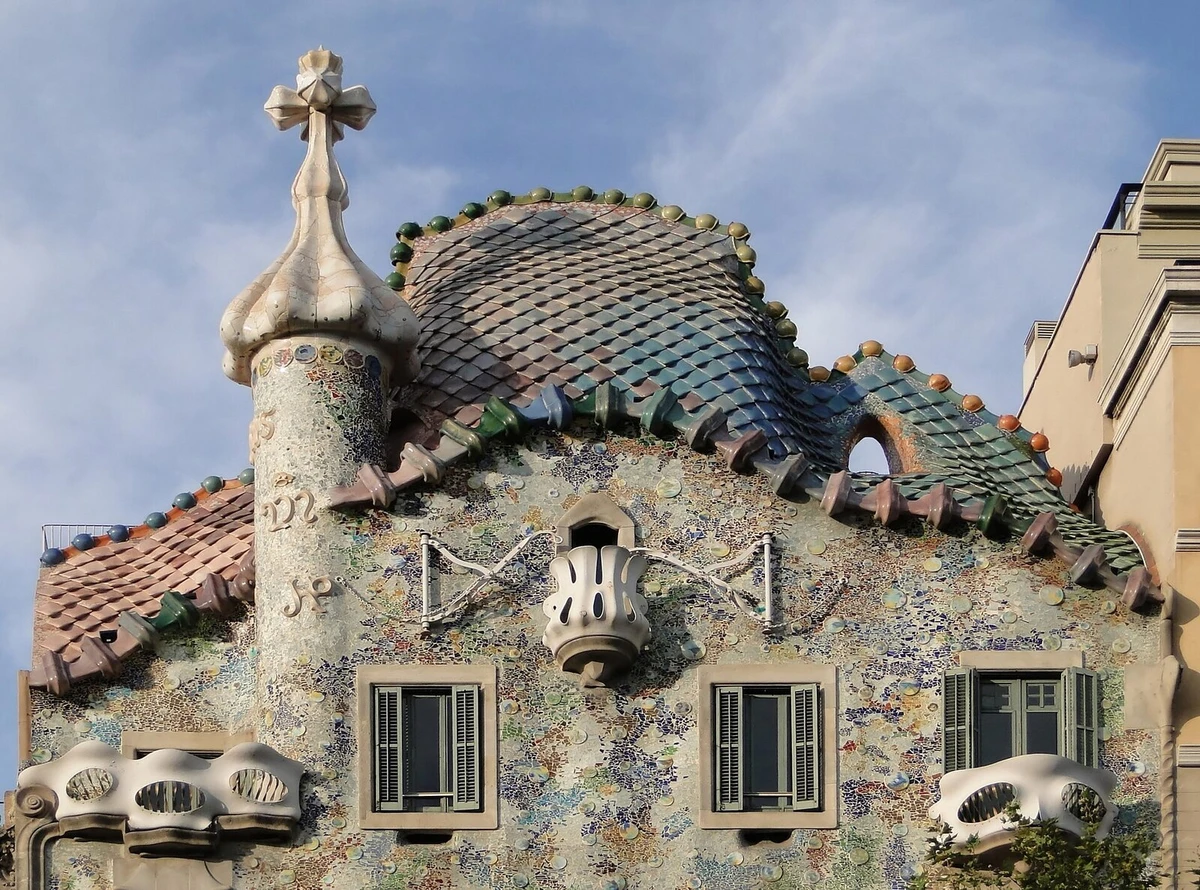
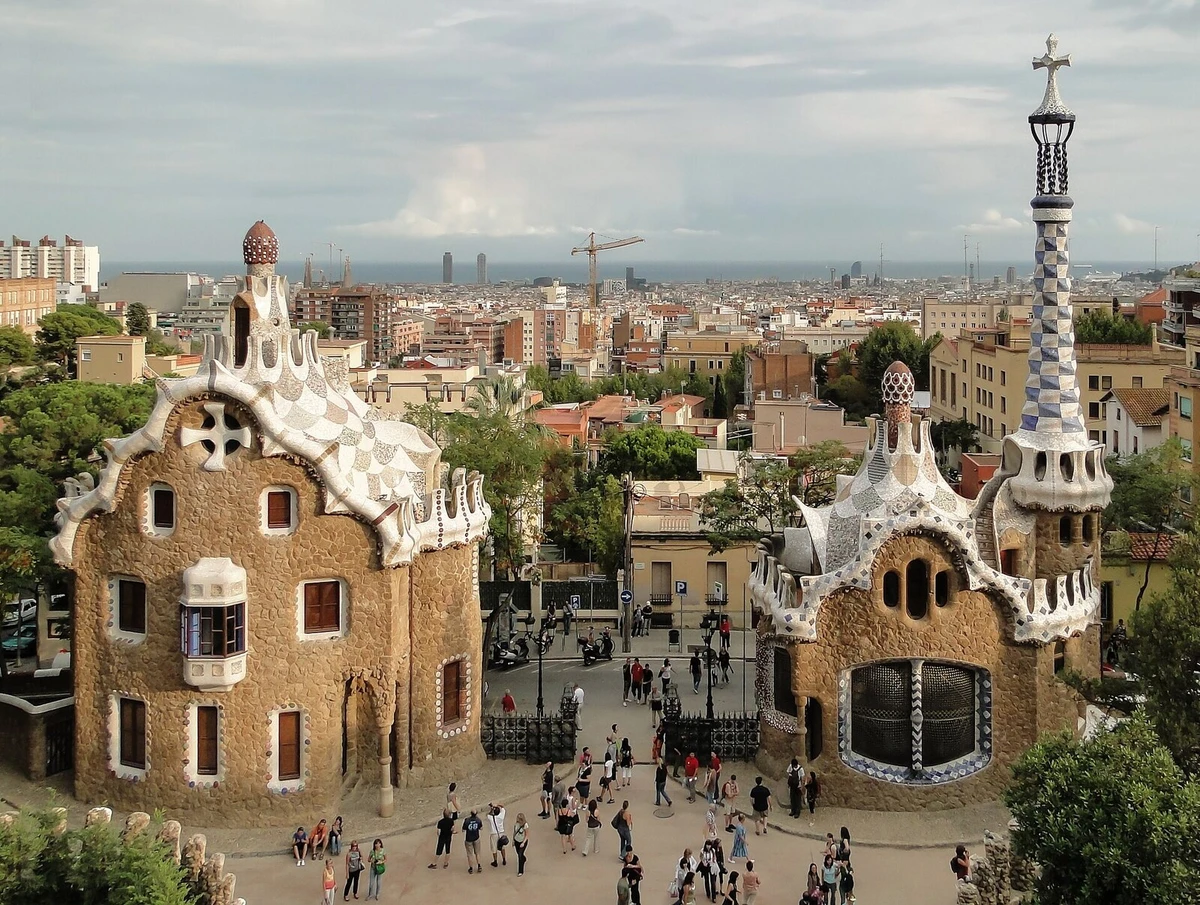
Photos show the places you visit; the boat or vehicle on the day may differ. Photos: Bernard Gagnon (CC BY-SA 3.0), via Wikimedia Commons
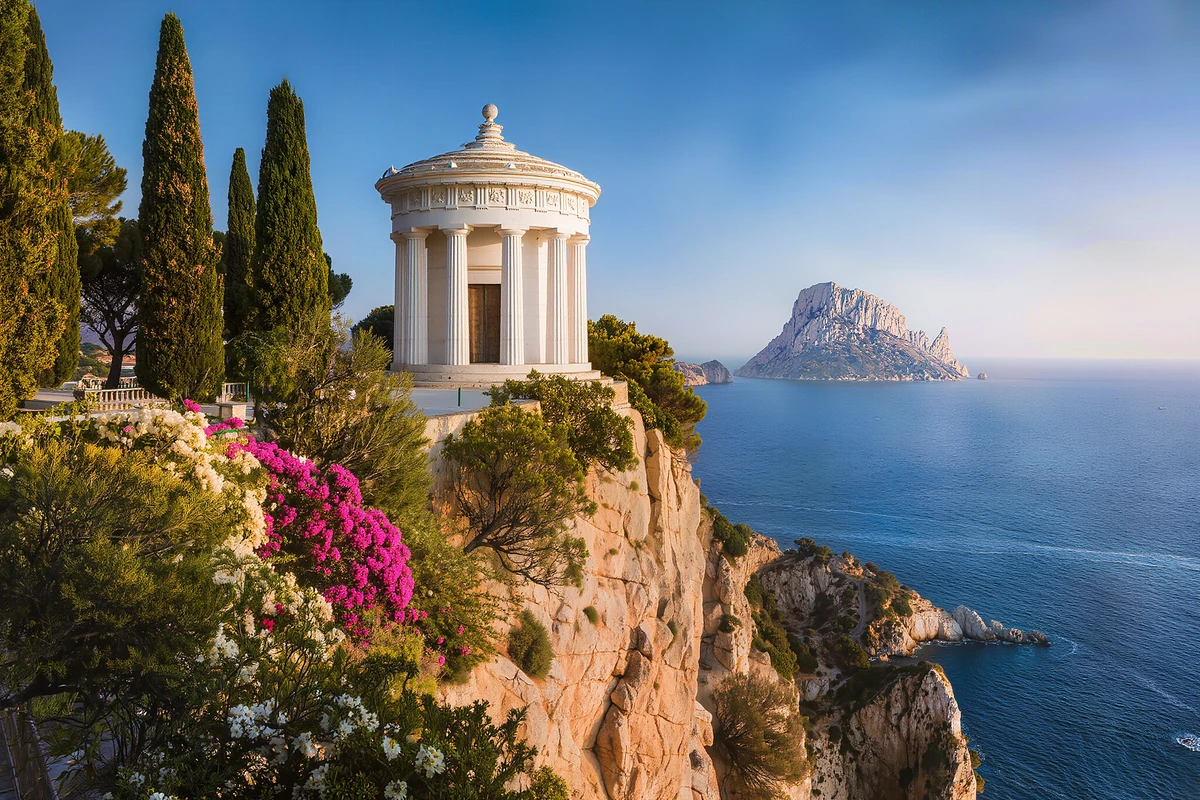
Some images are AI-generated for illustration. While we confirm your booking, just ask and we will send you the original photos.
- Fair, honest prices
- Real people, not bots
- Confirm, then pay
- Secure payment

Overview
This Barcelona walking tour covers the two areas every first-time visitor wants to see in one 2.5-hour guided walk. It begins on Plaça de Catalunya and spends about an hour and a quarter in the Gothic Quarter, the medieval old town, with its hidden squares, the cathedral, Plaça Sant Jaume and Plaça Reial, before stepping onto La Rambla. After a short café break and a quick metro ride you walk up Passeig de Gràcia, the elegant avenue of the modernist era, to see Casa Milà and Casa Batlló from outside and learn what Gaudí's designs mean. The default option is a shared group of up to 20 with an English-speaking guide; semi-private and private options are available. There is no hotel pickup, and the tour ends beside Casa Batlló.
Highlights
- Barcelona's two most famous areas, the Gothic Quarter and Passeig de Gràcia, in one walk
- Hidden squares, Roman walls and medieval streets of the old town
- Barcelona Cathedral, Plaça Sant Jaume and the arcaded Plaça Reial
- La Rambla, the city's most famous promenade
- Casa Milà (La Pedrera) and Casa Batlló, with the stories behind Gaudí's designs
- Expert local guide with history, legends and food and shopping recommendations
- Small-group and private options for a more personal pace
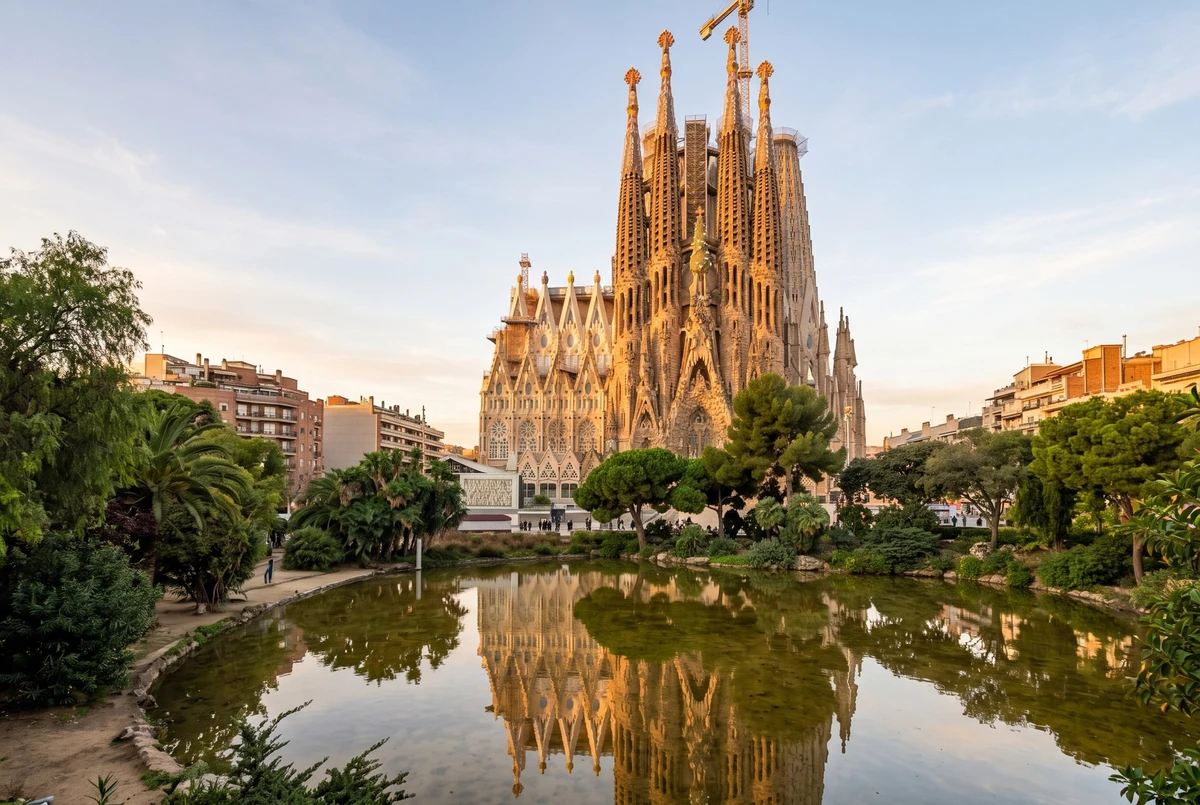
- Ends near the centre, shops and restaurants, about 30 minutes from the Sagrada Família
Full Description
The Gothic Quarter
The Gothic Quarter, the Barri Gòtic, is the oldest part of Barcelona, built on the Roman colony of Barcino founded around 15 BC and still enclosed in places by Roman walls and towers. Within its maze of narrow streets are the medieval palaces of the Catalan counts, quiet squares such as Plaça Sant Felip Neri with its shrapnel-scarred church wall, the remains of the Temple of Augustus hidden in a courtyard, and workshops, bookshops and cafés in buildings that are many centuries old. A Gothic Quarter walking tour with a guide makes sense of it all, since the streets were laid out long before maps and the best corners are easy to miss.
This tour spends about an hour and a quarter here, the longest stop of the day, walking from Plaça de Catalunya down through the lanes towards the cathedral and the civic heart of the city. Mornings are quieter; the 16:00 departure has softer light for photographs.
Barcelona Cathedral and Plaça Sant Jaume
At the centre of the old town stands Barcelona Cathedral, the Cathedral of the Holy Cross and Saint Eulalia, built mainly between the thirteenth and fifteenth centuries with a neo-Gothic façade added in the nineteenth. The tour pauses in front of it for the story of Eulalia, the city's young patron saint, and a look at the gargoyles and spires; the cloister with its thirteen white geese can be visited on your own afterwards. A few steps away is Plaça Sant Jaume, the square where the Palau de la Generalitat, seat of the Catalan government, faces the City Hall, on the site of the Roman forum.
Both stops are short photo and story stops of about ten minutes each, and the guide explains how to return later for Barcelona Cathedral tickets and opening hours if you want to go inside. Casual dress is fine for the exterior visit.
Plaça Reial and La Rambla
Plaça Reial is the most elegant square in the old town, a nineteenth-century arcaded square of palm trees, a central fountain and lamp posts designed by a young Gaudí, his first public commission in the city. It opens off La Rambla, the tree-lined promenade that runs for more than a kilometre from Plaça de Catalunya to the port, famous for its flower stalls, street performers, the Boqueria market and the mosaic by Miró set into the pavement. The tour walks a stretch of La Rambla with the guide pointing out what to come back for, since the market and the opera house deserve their own time.
After the old town there is a five-minute café break and then a short metro ride of about ten minutes to the Eixample district. You need a valid public transport ticket for this ride; bring one or buy a single from the guide.
Passeig de Gràcia
Passeig de Gràcia is the grand avenue of the Eixample, the nineteenth-century expansion of Barcelona designed on a grid of chamfered blocks. Wealthy families competed here to build the most striking modernist houses, and the result is the richest concentration of art nouveau architecture in the city, lined today with designer stores, cafés and the famous hexagonal pavement tiles and wrought-iron lamp benches. The tour spends about forty-five minutes walking the avenue, with the guide decoding the symbols, materials and rivalries behind the façades and the Block of Discord, where three leading architects built side by side.
The avenue is also the best place to end the day: it is close to the centre, shopping and restaurants, and the Sagrada Família is about thirty minutes away on foot or a short metro ride, which makes an easy afternoon plan after the walk.
Casa Milà and Casa Batlló
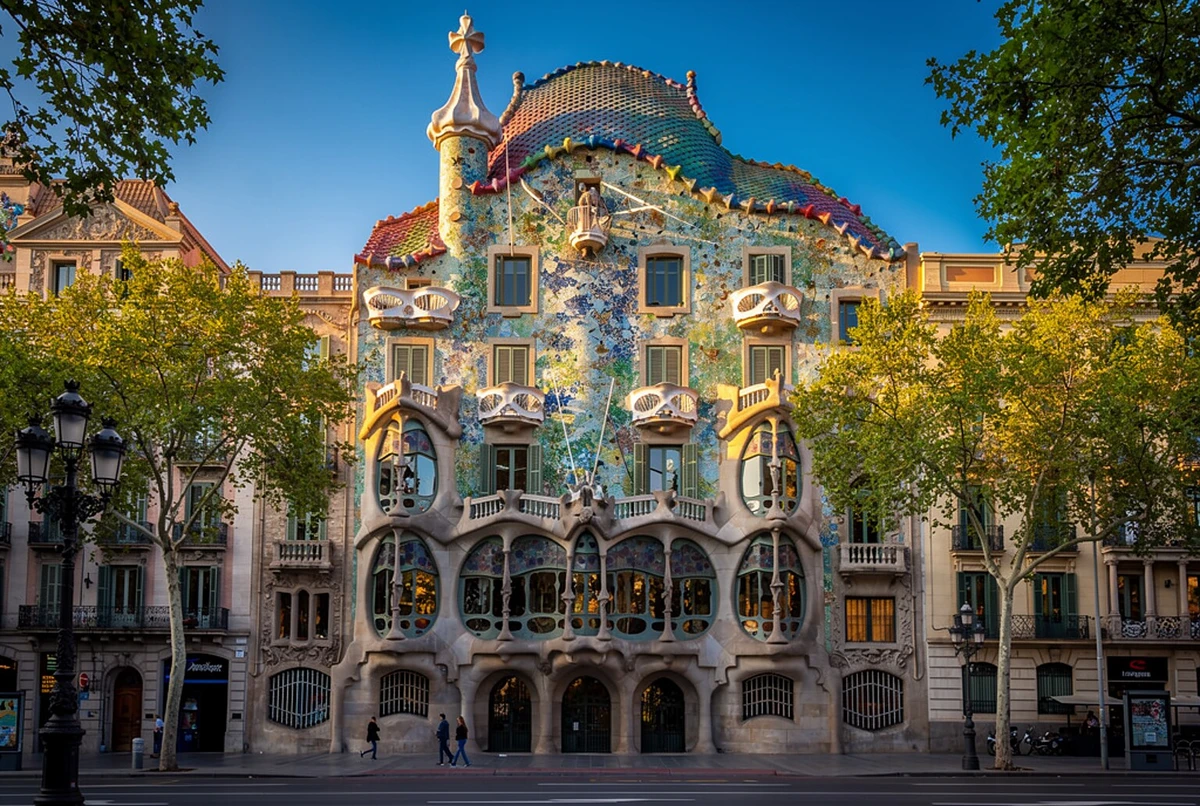
The two Gaudí houses on Passeig de Gràcia are the highlight of the second half. Casa Milà, known as La Pedrera or the stone quarry, was built between 1906 and 1912 as an apartment building with an undulating limestone façade, twisted iron balconies and a rooftop of sculpted chimneys that is now a UNESCO World Heritage Site. A few blocks down, Casa Batlló, remodelled by Gaudí in 1904 to 1906, has a façade of coloured glass and ceramic fragments, bone-like balconies and a roof shaped like the back of a dragon. The tour stops outside each for about ten minutes and explains the hidden meanings of the designs.
Entry is not included, but the guide can advise on Casa Batlló tickets and Casa Milà tickets and the best times to visit, since both houses sell out and are easier in the late afternoon or evening. The walk ends beside Casa Batlló.
Itinerary
- Meet on Plaça de CatalunyaMeet the guide with the white umbrella on the pavement of the square at your chosen start time.
- Gothic QuarterAbout seventy-five minutes through the medieval streets and hidden squares of the old town.
- Barcelona Cathedral and Plaça Sant JaumeShort stops of about ten minutes each at the cathedral façade and the square of the Catalan government and City Hall.
- Plaça Reial and La RamblaThe arcaded square with Gaudí's lamp posts and a stretch of the famous promenade, about fifteen minutes in total.
- Café break and metro rideA five-minute break and a ten-minute metro ride to the Eixample; bring a valid transport ticket.
- Passeig de GràciaAbout forty-five minutes along the modernist avenue with the stories of its architects.
- Casa Milà and Casa BatllóExterior stops of about ten minutes at each Gaudí house; the tour ends next to Casa Batlló.
What's included
- English-speaking local guide
- Guided walk through the Gothic Quarter and along La Rambla
- Exterior visit of Barcelona Cathedral, Plaça Sant Jaume and Plaça Reial
- Guided walk along Passeig de Gràcia with Casa Milà and Casa Batlló from outside
- Local tips on food, shopping and what to see next
Not included
- Metro ticket for the short ride between the two areas
- Headset rental (optional, on site)
- Entrance to the cathedral and the Gaudí houses
- Food and drinks
Is this right for you?
Great for
- Groups who want privacy — a private option is available
- First-time visitors who want the highlights
- Travellers who want a proven choice — rated 4.9/5 by past travellers
Think twice if
- Walking is difficult for you — expect active parts
Meeting point
On the pavement of Plaça de Catalunya in front of the large sports-shoe shop on the square; your guide holds a white umbrella. Shared departures are at 10:30, 11:00, 14:00 and 16:00, semi-private at 10:30, 14:00 and 16:00, and private tours hourly from 09:00 to 19:00. The walk ends on Passeig de Gràcia next to Casa Batlló. Hotel pickup is not included.
Important information
- The tour runs rain or shine; bring an umbrella or light rain jacket if the forecast is uncertain
- Wear comfortable walking shoes: about two hours on foot on cobbles and pavements
- Bring a valid public transport ticket for the short metro ride, or buy a single from the guide
- Headsets to hear the guide better can be rented on site for a small fee
- Entrance to the cathedral and the Gaudí houses is not included; the guide advises on tickets
- The route is wheelchair accessible; tell us in advance so the guide can plan the metro connection
- Youths aged 12 to 17 have a reduced rate on the semi-private option; children under 5 join free of charge
- Food and drinks are at your own expense during the café break
Good to know
Frequently Asked Questions
Straight answers to what travellers ask us most, before they book.
Is this a shared or a private experience?
The default is a shared group of up to 20 travellers. A semi-private option of at most 10 and a private tour for your group only are also offered on this page.
How long does the Barcelona walking tour take?
About two and a half hours, from Plaça de Catalunya to Casa Batlló on Passeig de Gràcia.
Is hotel pickup included?
No. You meet the guide on Plaça de Catalunya, the central square served by metro, buses and the airport train.
What is included?
The guided walk and the local guide. The metro ticket, optional headsets, entrance fees and food and drinks are not included.
Is the price per person or per group?
The shared and semi-private options are per person and the private tour is per group; the booking panel on this page shows the current price of each.
Do we go inside the cathedral or the Gaudí houses?
No, this is an exterior walking tour; the guide explains the buildings from outside and advises on tickets and opening hours for later.
Why is there a metro ride?
The Gothic Quarter and Passeig de Gràcia are about two kilometres apart; a ten-minute metro ride saves your legs and keeps the tour to two and a half hours.
Is the tour suitable for children and wheelchair users?
Yes. Children of all ages are welcome and the route is wheelchair accessible; let us know in advance so the guide can plan step-free access.
What should I bring?
Comfortable shoes, water, sun protection in summer, a transport ticket and a camera. An umbrella if rain is forecast.
What is the best time of day for the walk?
Morning departures are quieter in the Gothic Quarter; the 16:00 slot has softer light on Passeig de Gràcia and ends in time for an evening in the Eixample.
What happens in bad weather?
The walk goes ahead rain or shine, with the route adapted to sheltered streets; only in extreme weather would we move you to another date or refund you.
How do I book and confirm?
Choose the shared, semi-private or private option and your start time on this page; our team confirms on WhatsApp within minutes.
More in Barcelona
Getting to & around Barcelona
Popular across Spain
-

-
-

-
-

-