Top Sights E-Bike or Classic Bike Tour Seville
- DurationAbout 2.5 hours
- Daily
- Group
Photos show the places you visit; the boat or vehicle on the day may differ. Photos: Diliff (CC BY-SA 3.0) · Dmitry Dzhus from London (CC BY 2.0) · CivArmy (CC BY-SA 4.0), via Wikimedia Commons
Some images are AI-generated for illustration. While we confirm your booking, just ask and we will send you the original photos.
- Fair, honest prices
- Real people, not bots
- Confirm, then pay
- Secure payment

Overview
Discover Seville the easy way on a guided bike tour of about two and a half hours that links the city's great monuments, its riverside and its green parks. Starting from our bike shop in Nervión, you ride past the Murillo Gardens, the walls of the Royal Alcázar, the Cathedral and the Giralda, then out to Isla de la Cartuja and back along the Guadalquivir with views of Triana, the Isabel II Bridge and the Torre del Oro. The finale is María Luisa Park and the dazzling Plaza de España. The default option is a shared small-group tour on a classic city bike; you can also choose a premium e-bike or a private tour for your group. Helmets are included and the pace is relaxed, ideal for families.
Highlights
- Ride into the vast tiled Plaza de España for photos
- Pedal through the shady paths of María Luisa Park
- Pass the Cathedral, the Giralda and the walls of the Royal Alcázar
- Follow the Guadalquivir with views of Triana and the Isabel II Bridge
- See the Torre del Oro and San Telmo Palace on the riverbank
- Visit Isla de la Cartuja, the island of the 1992 World Expo
- Choose a classic bike or a premium e-bike, shared or private
- Helmet and local tips for food and flamenco included
Full Description
Plaza de España, the grand finale
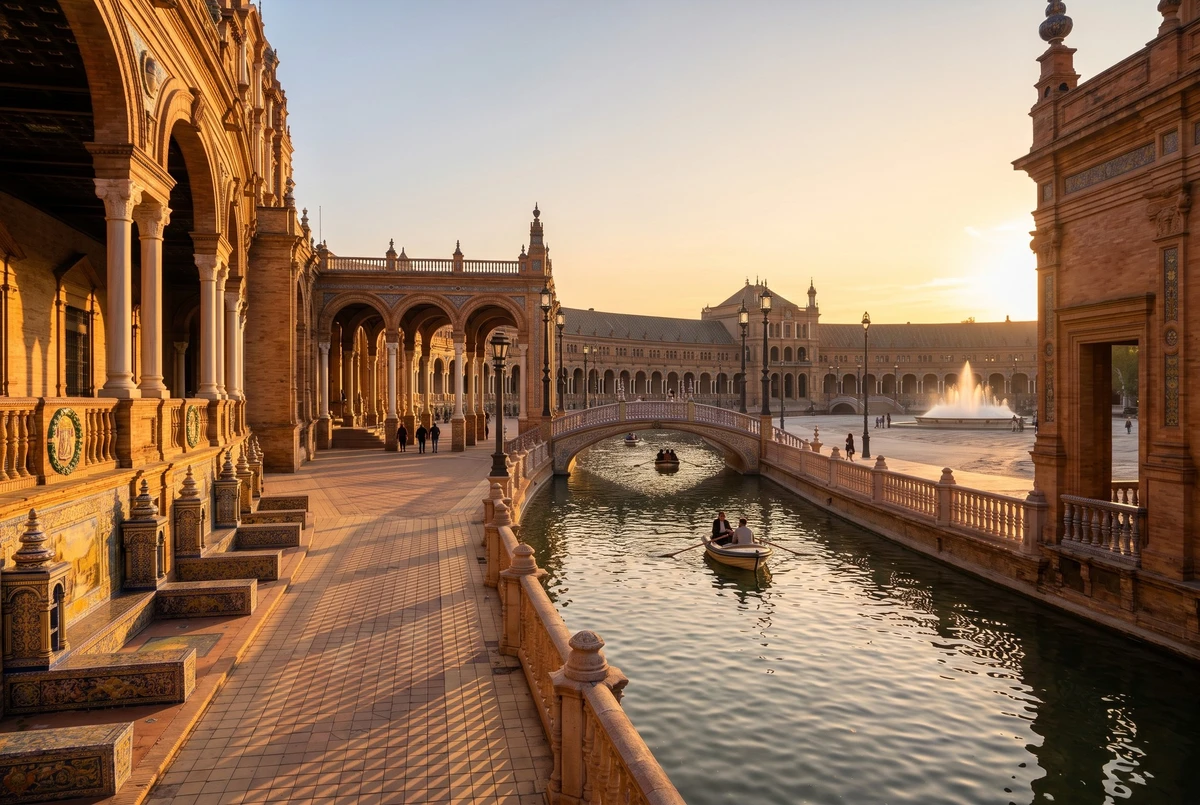
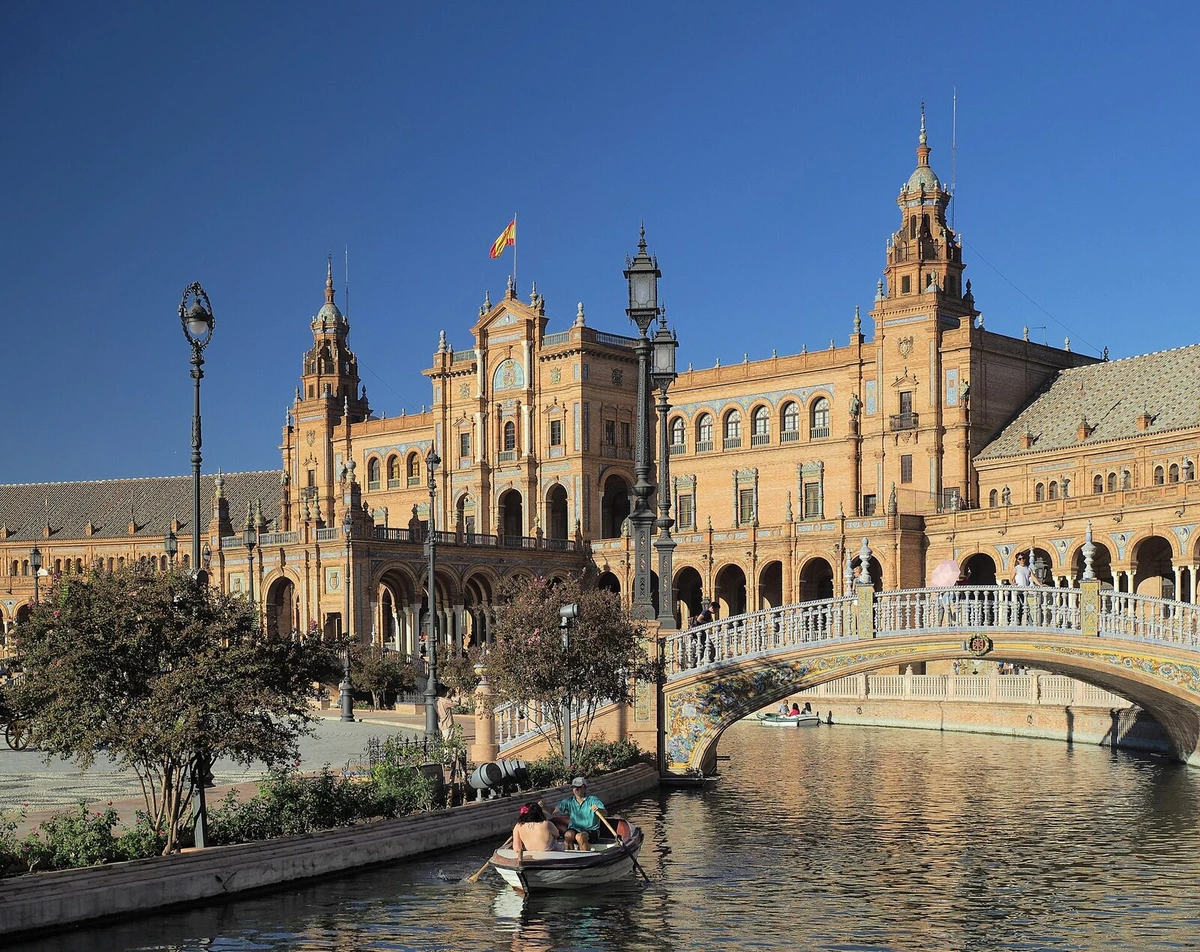
Plaza de España is the most spectacular square in Seville and the highlight of this bike tour. It was built for the Ibero-American Exposition of 1929 as a huge half-circle of brick and marble arcades, with two tall towers at the ends and a canal crossed by graceful bridges. Along the walls, colourful ceramic tile benches show the maps and history of the provinces of Spain, and families love hunting for their favourite region.
Arriving by bike is the perfect way to take in its scale: you roll in from María Luisa Park and stop for photos by the canal and the central fountain. Is Plaza de España worth visiting? Without doubt, and it is open all day with no ticket. The best time to visit Plaza de España is the morning or the hour before sunset, when the brick glows warm and the crowds are lighter.
María Luisa Park and Plaza de América
María Luisa Park is the green heart of Seville, a former palace garden that was given to the city in the late nineteenth century and redesigned for the 1929 exposition. Its paths wind between tall palms, orange trees, ponds, tiled fountains and pavilions, and on a bike you can cover much more of it than on foot while enjoying the cool shade on a hot Andalusian day.
At the southern end you ride into Plaza de América, framed by three exposition pavilions in different styles. The Mudéjar pavilion holds the Museum of Popular Arts and Traditions and the Renaissance-style pavilion holds the Archaeological Museum, and the square is famous for its white doves. Your guide explains how the park and its buildings were created for the exposition before you continue to the Plaza de España next door.
Seville Cathedral, the Giralda and the Royal Alcázar
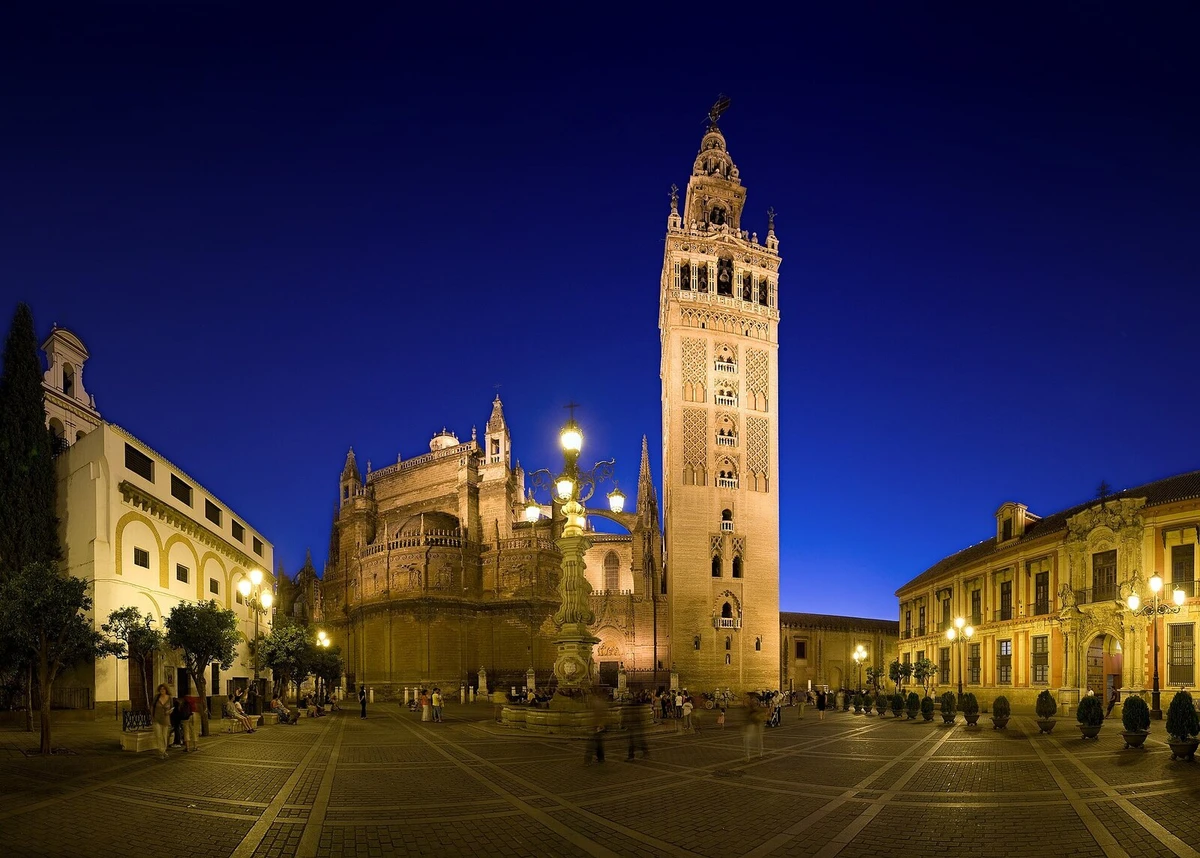
Early in the ride you pass the Murillo Gardens beside the walls of the Royal Alcázar, the palace complex that kings of Castile built on Moorish foundations, with Mudéjar halls and gardens still in royal use today. Nearby rise Seville Cathedral, the largest Gothic cathedral in the world, and the Giralda, its bell tower, which began life in the twelfth century as the minaret of the Almohad great mosque.
Together with the Archive of the Indies, these monuments form a UNESCO World Heritage Site, and the guide gives you time for photos and stories at each one. This tour shows them from outside; if you want to go in, check the Royal Alcázar opening hours and buy Seville Cathedral tickets in advance, as queues can be long. Your guide will gladly suggest the best time to visit.
The Guadalquivir, Triana and the Torre del Oro
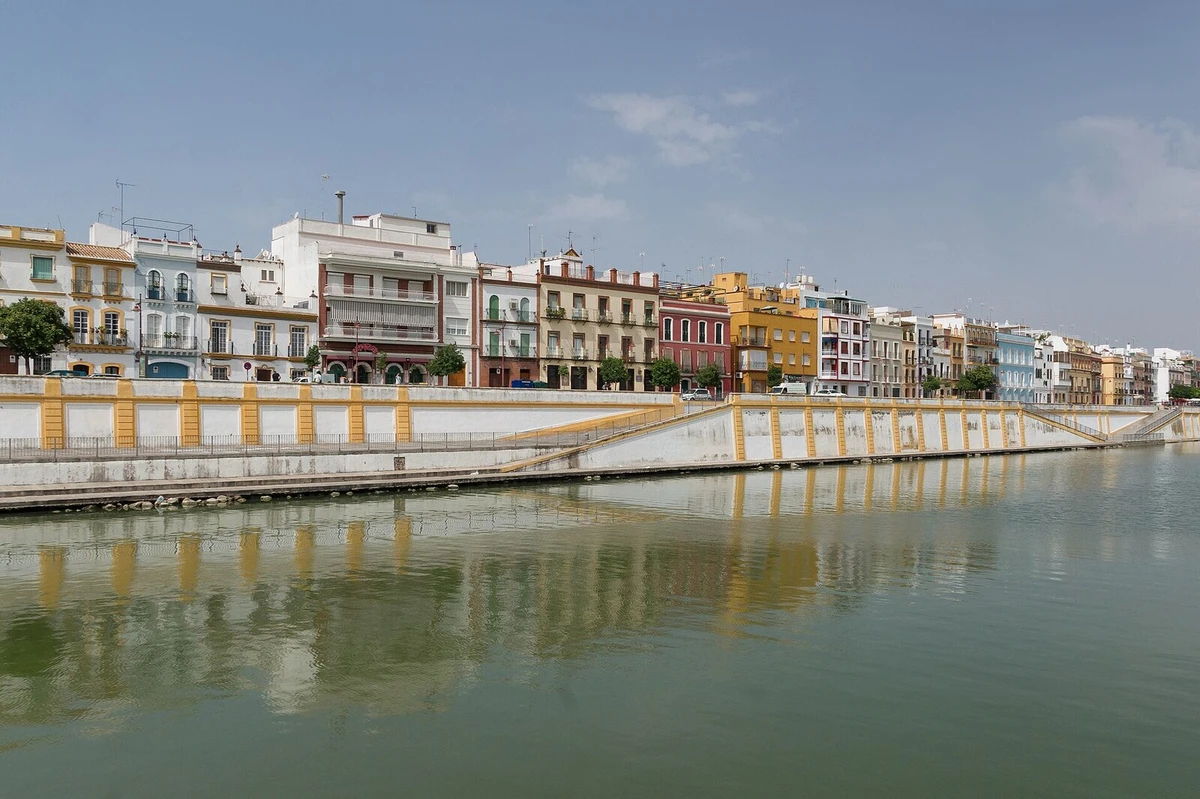
A long stretch of the route follows the Guadalquivir River, the waterway that made Seville the richest port of Spain when ships sailed to and from the Americas. From the riverside path you look across to Triana, the old quarter of potters, sailors and flamenco singers, with its colourful houses, its ceramic workshops and the Triana Market built on the ruins of a medieval castle.
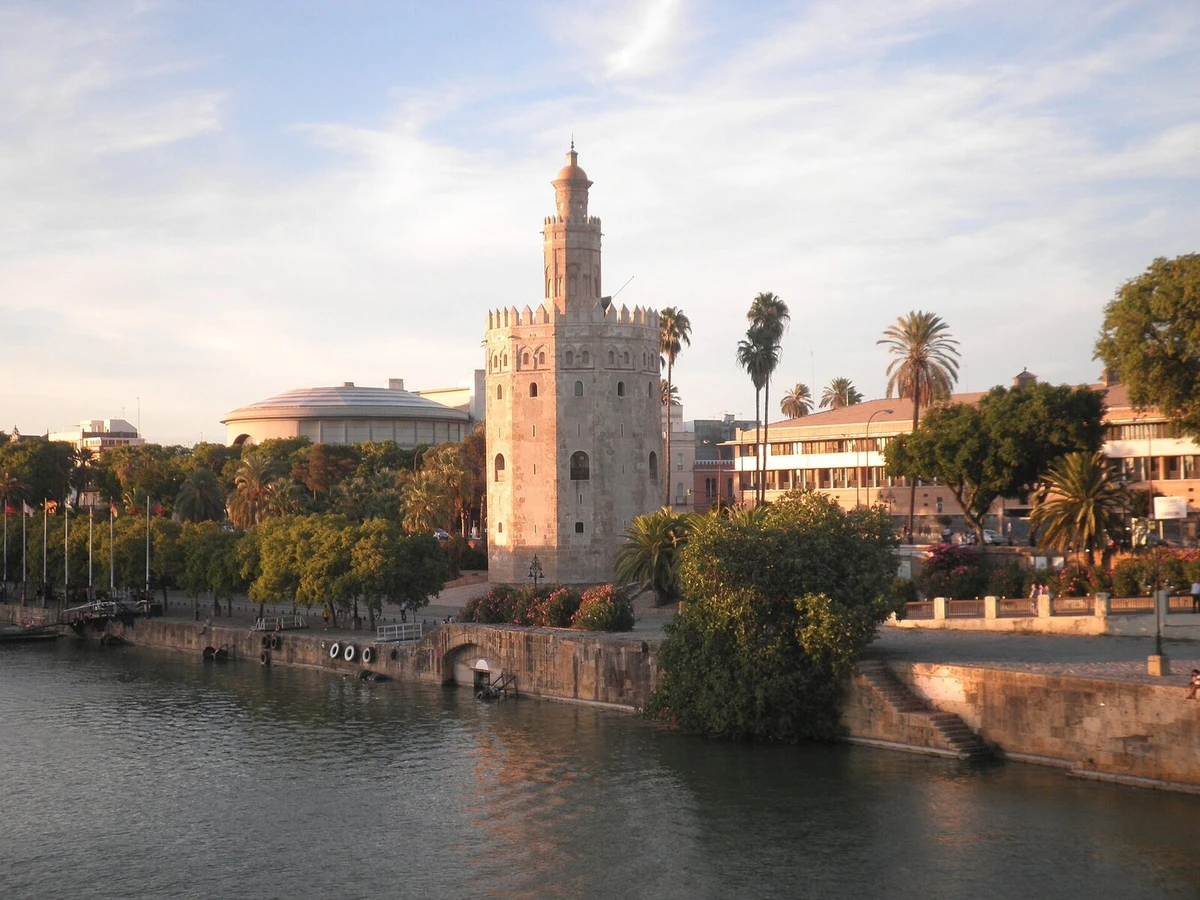
You pass the Isabel II Bridge, known as the Triana Bridge, the oldest surviving iron bridge in Spain, opened in the middle of the nineteenth century. Further on stands the Torre del Oro, a twelve-sided watchtower built by the Almohads in the thirteenth century to guard the harbour, and the baroque San Telmo Palace, seat of the regional government of Andalusia. Flat, wide paths make this the most relaxing part of the ride.
Isla de la Cartuja and the Expo 92 legacy
Crossing the river, the tour heads to Isla de la Cartuja, the island where Seville hosted the World Expo of 1992. You ride past the harp-shaped Alamillo Bridge, the green expanse of Alamillo Park and the modern Torre Sevilla, the tallest building in Andalusia. It is a side of the city that many visitors miss, and it shows how Seville reinvented itself at the end of the twentieth century.
The island also keeps a much older treasure: the Monastery of Santa María de las Cuevas, a medieval Carthusian monastery that later became a ceramics factory, whose brick kilns still stand. Today it houses the Andalusian Centre of Contemporary Art. This open, car-free area is where the e-bike option really shines, but on a classic bike the ground is flat and easy too.
The University of Seville and the bike shop start
The ride begins at our bike shop on Avenida Eduardo Dato in the Nervión district, about five minutes on foot from Nervión metro station and ten minutes from Santa Justa train station. After a short safety briefing and helmet fitting, you set off on quiet streets towards the historic centre, so you can get comfortable on your bike before reaching the busier areas.
One of the first photo stops is the University of Seville, housed in the enormous eighteenth-century Royal Tobacco Factory, once one of the largest industrial buildings in Europe, with moats, watchtowers and grand courtyards. Nearby is the grand hotel built for the 1929 exposition, a jewel of neo-Mudéjar architecture. Along the way your guide shares tips on where to eat tapas, see flamenco and find hidden corners after the tour.
Itinerary
- Bike shop in NerviónCheck-in, choice of bike or e-bike, helmet fitting and a short safety briefing, about 15 minutes.
- Murillo Gardens and Royal AlcázarRide past the gardens and the walls of the Alcázar with the first stories from your guide.
- University of SevillePhoto stop at the former Royal Tobacco Factory and the neo-Mudéjar exposition hotel nearby.
- Seville Cathedral and the GiraldaPhoto stop and short free time in front of the cathedral and its bell tower.
- Isla de la CartujaRide across the river to the Expo 92 island, Alamillo Park, the contemporary art centre and Torre Sevilla.
- Isabel II Bridge and Triana viewsRiverside ride with views of Triana and its market across the Guadalquivir.
- Torre del Oro and San Telmo PalacePass the medieval watchtower and the baroque palace on the riverbank.
- María Luisa Park and Plaza de AméricaRide through the shady park to the pavilions of Plaza de América.
- Plaza de EspañaFinale with photo time in the great tiled square; the tour lasts about 2.5 hours in total.
What's included
- Guided bike tour of about 2.5 hours
- City bike
- Helmet
- Photo stops at the main sights
- Local tips for food, flamenco and hidden corners
Not included
- Food and drinks
- Hotel pickup and drop-off
- Entry to monuments
Is this right for you?
Great for
- Groups who want privacy — a private option is available
Think twice if
- Walking is difficult for you — expect active parts
Not suitable for
- People who cannot ride a bike
Meeting point
The tour starts at our bike shop at Avenida Eduardo Dato 27, 41018 Seville, in the Nervión district. The nearest metro station is Nervión (about 5 minutes on foot); the shop is around 10 minutes on foot from Santa Justa train station, about 10 minutes by metro from Puerta de Jerez in the centre and roughly 20 minutes on foot from Plaza de España. Please arrive 10–15 minutes before the start time for bike fitting.
Important information
- Wear comfortable shoes and clothes you can ride in
- Bring a camera, sunscreen and water, especially in summer
- You must be able to ride a bike confidently
- Children under 3 ride free in a child seat on a parent's bike
- The shared e-bike option is for adult riders only
- Private tours: tell us the number of riders and children's ages after booking
- Monuments are seen from outside; entry tickets are not included
- Food and drinks are not included
Good to know
Frequently Asked Questions
Straight answers to what travellers ask us most, before they book.
Is this a shared or a private experience?
The default option is a shared small-group tour. You can also book a private bike or e-bike tour with a guide for your group only, with more start times through the day.
How long does the Seville bike tour take?
About 2.5 hours, including photo stops at Plaza de España, the Cathedral, the riverside and Isla de la Cartuja.
Is hotel pickup included?
No. The tour starts and ends at our bike shop in Nervión, a short walk from Nervión metro and Santa Justa station.
What is included?
A city bike or e-bike (depending on the option), a helmet, a local guide, photo stops and tips for food, flamenco and hidden corners. Food, drinks and monument tickets are not included.
Is the price per person or per group?
Shared options are priced per person and private options per group. The booking panel on this page shows the current price of each option.
Is it suitable for children or reduced mobility?
The classic-bike tour is family-friendly, with youth prices for ages 4 to 12 and free child seats for under-3s. Riders must be able to cycle, so it is not suitable for reduced mobility.
Should I choose the e-bike or the classic bike?
Seville is flat, so a classic bike is easy for most people. The e-bike makes the longer riverside and Cartuja stretches effortless, especially on hot days.
What should I bring?
Comfortable shoes and clothes, sunscreen, a hat, water and a camera.
What is the best time of day for a bike tour in Seville?
Morning starts are coolest and best in summer; the afternoon departures give golden light at Plaza de España in spring, autumn and winter.
What happens in bad weather?
The tour runs in light conditions. If heavy rain makes riding unsafe, we offer you another time or a full refund.
Do we go inside the Cathedral or the Royal Alcázar?
No, this tour shows them from outside with stories and photo stops. You can visit them separately with tickets bought in advance.
How do I book and confirm?
Pick your option, date and time in the booking panel and send your request. Our team confirms your booking on WhatsApp within minutes.
More in Seville
Getting to & around Seville
Popular across Spain
-
-
-
-
-
-