Vietnam War History Walking Tour with Train Street Hanoi
- DurationAbout 3 hours
- Daily
- Group
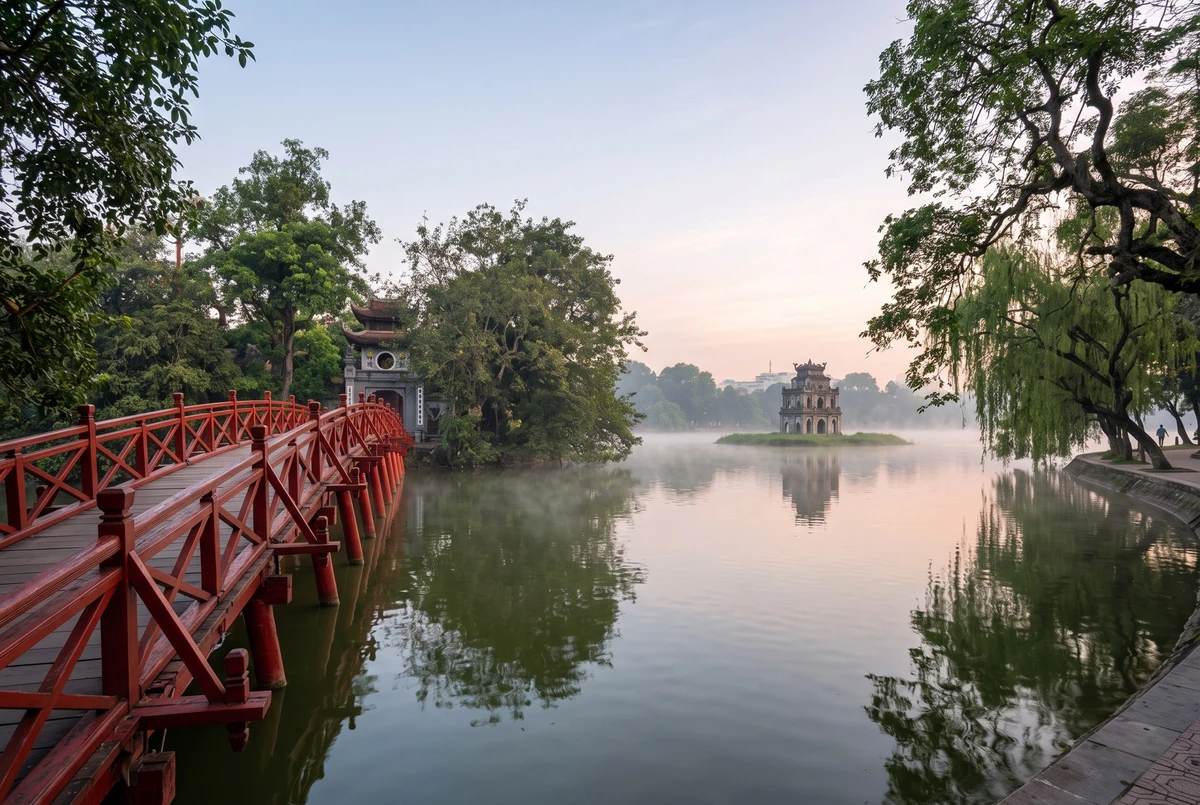
Some images are AI-generated for illustration. While we confirm your booking, just ask and we will send you the original photos.
- Fair, honest prices
- Real people, not bots
- Confirm, then pay
- Secure payment

Overview
This Vietnam War history walking tour takes you into the Hanoi that guidebooks rarely cover. For about three hours a local host walks with you through the Nguyen Cong Tru collective housing blocks and the Cho Gioi second-hand market, explaining daily life under the planned economy and what the war years meant for families in the North and the South. After a break for coffee or tea and a short taxi ride, you stand at the Kham Thien memorial, built where a street was destroyed in December 1972, and finish on Hanoi Train Street. It is a shared small-group walk told as a conversation rather than a lecture, for curious travellers aged 3 and over; a private version with your own host is also available. There is no hotel pickup.
Highlights
- Walk the Nguyen Cong Tru collective housing blocks, one of Hanoi's oldest state housing estates
- See the Cho Gioi second-hand market area, a survivor of the subsidy era
- Stand at the Kham Thien B52 memorial and hear what happened in December 1972
- Visit Hanoi Train Street with a host who knows the safe spots and timings
- Hear real stories of families from both the North and the South of Vietnam
- Relaxed conversation-style walk with a coffee or tea break at a hidden local spot
- Short taxi ride included between the two halves of the route
- Morning departure recommended to avoid the heat; shared or private option
Full Description
Chua Vua Street and the Hai Ba Trung district
The walk begins on Chua Vua Street in the Hai Ba Trung district, about 2.5 km south of Hoan Kiem Lake and 3.5 km from the Old Quarter. This is a working residential part of Hanoi, with a secondary school, a coffee shop and a cluster of second-hand bicycle shops around the meeting point, and almost no visitors. Starting here is deliberate: the stories of the war years and the planned economy belong to ordinary streets like this, not to the monuments most Hanoi history walking tours circle around.
Your host meets you in front of the school at 09:00 or 14:00 and sets the tone straight away: questions are welcome, and the three hours are built as a conversation. A taxi from the Old Quarter takes about fifteen minutes, so plan to arrive a little early. The morning slot is the easier choice in Hanoi's heat, and the route is flat and easy on foot.
Nguyen Cong Tru collective housing blocks
The Nguyen Cong Tru estate is one of the first collective housing areas built in Hanoi after 1954, a cluster of low blocks put up for state workers in the years when housing, food and goods were allocated rather than bought. Decades of residents have extended the flats with iron-caged balconies, added staircases and opened tiny shops on the ground floor, and a lively neighbourhood market still fills the lanes between the blocks. Few Hanoi hidden gems tours come here, which is exactly why it is so revealing.
You spend the longest part of the morning in this area, around two hours of unhurried sightseeing and photo stops. Your host explains how a family lived on ration coupons, how a shared kitchen and tap worked, and how people on both sides of the divided country coped during the war years. It is the heart of the tour's 'untold stories', told in the places where they happened.
Cho Gioi, Hanoi's second-hand market
Cho Gioi, literally the 'sky market', grew up on the streets near Thinh Yen after the mid-1950s as the place where Hanoians sold and bought what the planned economy could not supply: spare parts, tools, bicycles, radios and later every kind of electronic component. In the subsidy years it was the city's informal answer to shortage, and it still trades today in a maze of stalls and pavement displays only a few minutes' walk from the Nguyen Cong Tru blocks.
On this walk the Cho Gioi area is where the economics of wartime and post-war Hanoi become concrete: your host points out what was once worth a month's salary, how goods moved between North and South after unification, and how the market survived into the market-economy era. It is a photo stop as much as a history stop, so keep your camera ready and your bag closed in the crowd.
Kham Thien B52 memorial
Kham Thien Street was an ordinary, densely populated shopping street until the night of 26 December 1972, when bombs dropped during the twelve-day air campaign over Hanoi flattened a long stretch of it, killing hundreds of residents and destroying more than a thousand houses. The memorial that now stands on the street shows a mother holding her child, on the site of a house whose family did not survive. It is a quiet, moving place that many visitors searching for Vietnam War sites in Hanoi never find.
After the coffee break and a short taxi ride, you spend about thirty minutes here. Your host describes what happened that night, how the street was rebuilt, and how the memory is kept today, factually and with respect for the victims. Fresh flowers and incense are usually at the base of the statue; visitors are asked to keep voices low.
Hanoi Train Street
Hanoi Train Street is a narrow residential lane just north of Le Duan Street where the railway built in the French colonial period runs within a metre or two of people's doorsteps. Residents cook, dry laundry and sit on tiny stools beside the rails, and when a train is due everything is pulled inside in seconds. It has become one of the most photographed places in the city, and access is sometimes restricted, so visiting with a local host who knows the current rules and the timings is the sensible way to see it.
Your walk ends here with about twenty minutes to take photos and rest. If a train is scheduled you watch it pass from a safe spot; if not, the lane itself, with its cables, plants and improvised balconies, is the picture. Drop-off is on Le Duan Street, a few minutes' walk from Hanoi Railway Station and easy for taxis.
Itinerary
- Meet on Chua Vua StreetMeet your host in front of the Doan Ket secondary school at 24B Chua Vua Street at 09:00 or 14:00.
- Nguyen Cong Tru housing blocks and marketAbout two hours of walking, photo stops and stories of life under the planned economy in one of Hanoi's oldest collective housing estates.
- Cho Gioi second-hand market areaA short guided stretch through the stalls that supplied the city during the shortage years.
- Hidden-gem breakAbout fifteen minutes for coffee or tea at a local spot, then a short taxi ride to the second half of the route.
- Kham Thien memorialAbout thirty minutes at the memorial to the bombing of December 1972, told factually and with respect.
- Hanoi Train StreetAbout twenty minutes beside the tracks, with a train passing if one is scheduled.
- Drop-off on Le Duan StreetThe walk ends on Le Duan Street, close to Hanoi Railway Station.
What's included
- English-speaking local guide
- Stories of Hanoi residents during the war years and the planned economy
- Coffee or tea at a local stop
- Short taxi ride between the two halves of the walk
- Visit to the Kham Thien memorial and Train Street
Not included
- Tips (optional)
- Personal expenses
- Hotel pickup and drop-off
Is this right for you?
Great for
- Groups who want privacy — a private option is available
- First-time visitors who want the highlights
- Travellers who want a proven choice — rated 4.9/5 by past travellers
Think twice if
- Walking is difficult for you — expect active parts
Not suitable for
- People with vertigo
- People with epilepsy
Meeting point
Meet in front of the Doan Ket secondary school (Truong Trung hoc co so Doan Ket) at 24B Chua Vua Street, Hai Ba Trung district, Hanoi, about 2.5 km from Hoan Kiem Lake and 3.5 km from the Old Quarter; there is a coffee shop and several second-hand bicycle shops next to it. Start times are 09:00 and 14:00. Hotel pickup is not included, and the walk finishes on Le Duan Street, so you return by taxi.
Important information
- Wear comfortable shoes and light, breathable clothing; the route is about three hours on foot with one taxi ride
- The morning departure is recommended to avoid the daytime heat in Hanoi
- The walk runs rain or shine: check the forecast and bring an umbrella or raincoat if needed
- Coffee or tea at the break is included; meals are not
- Not suitable for people with vertigo or epilepsy
- At Train Street follow your host's instructions and stay off the tracks when a train is due
- Keep voices low and cameras discreet at the Kham Thien memorial
- Children aged 3 to 14 are welcome at the youth rate; the content is historical and told calmly
- Tips for the host are optional
Good to know
Frequently Asked Questions
Straight answers to what travellers ask us most, before they book.
Is this a shared or a private experience?
The default option is a shared small-group walk with a local host. A private option, with the same route and a host just for your group, is also offered on this page.
How long does the Hanoi war history walking tour take?
About three hours, including roughly two hours around the Nguyen Cong Tru and Cho Gioi area, a break, a short taxi ride and the stops at Kham Thien and Train Street.
Is hotel pickup included?
No. You meet your host at 24B Chua Vua Street, about fifteen minutes by taxi from the Old Quarter, and the walk ends on Le Duan Street.
What is included?
An English-speaking local host, the stories and sites on the route, a coffee or tea at the break and the short taxi ride between the two halves of the walk. Meals and tips are not included.
Is the price per person or per group?
Both options are priced per person; the booking panel on this page shows the current price of each option for adults and youths.
Is it suitable for children or people with reduced mobility?
Youths aged 3 to 14 are welcome and the walking is flat and easy, but it is a history-focused tour that suits older children best. It is not recommended for people with vertigo or epilepsy; please contact us about mobility needs before booking.
What should I bring?
Comfortable shoes, breathable clothing, sun protection in the morning and an umbrella or raincoat if rain is forecast. A camera is worth having for Train Street.
What is the best time of day to go?
The 09:00 departure is cooler and the markets are busiest; the 14:00 walk works if you prefer softer light at Train Street.
Does the tour visit the Hoa Lo Prison or the Military History Museum?
No. This walk focuses on everyday neighbourhoods: the Nguyen Cong Tru housing blocks, the Cho Gioi market, the Kham Thien memorial and Train Street, places most museum-based tours skip.
Will I see a train at Hanoi Train Street?
Only if one is scheduled during your visit; trains pass a few times a day and timings change. Your host knows the current situation and the safe places to stand.
What happens in bad weather?
The walk operates rain or shine. In heavy rain the route can be adjusted slightly, and the coffee break offers shelter.
How do I book and confirm?
Choose the shared or private option and your date on this page and send the request; our team confirms your booking on WhatsApp within minutes with the exact meeting details.
More in Hanoi


Getting to & around Hanoi
Popular across Vietnam
-

-

-
-
-

-