Muong Hoa Valley Trek and Local Ethnic Villages Sapa
- Duration6 hours
- Daily
- Group
- Pickup available
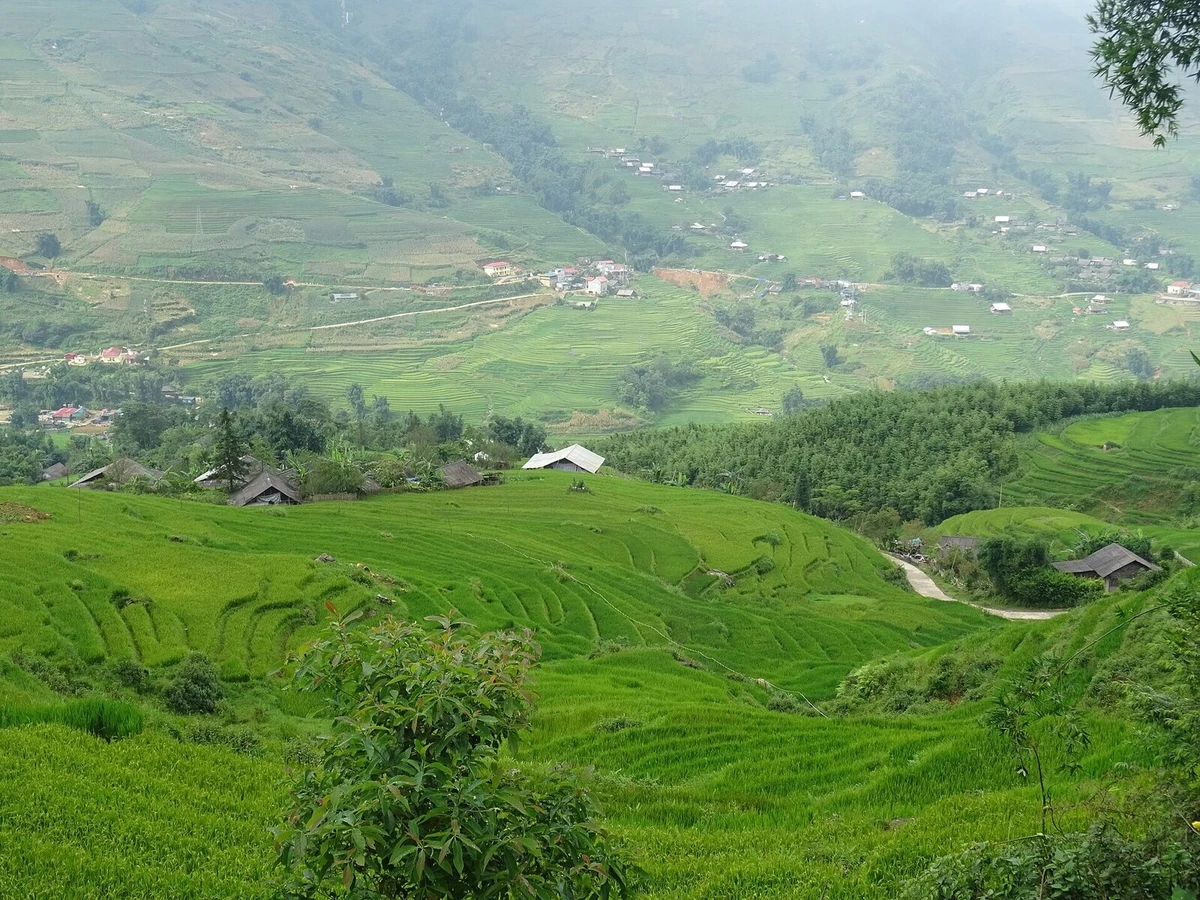
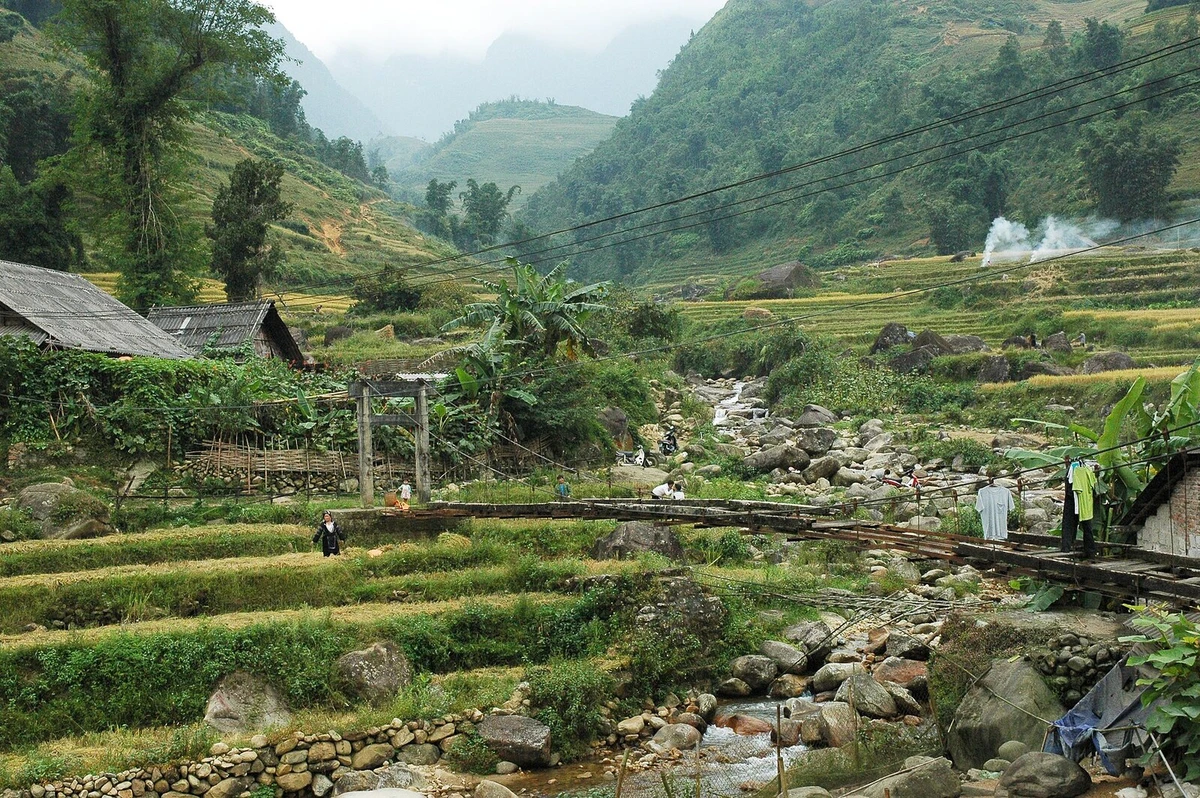
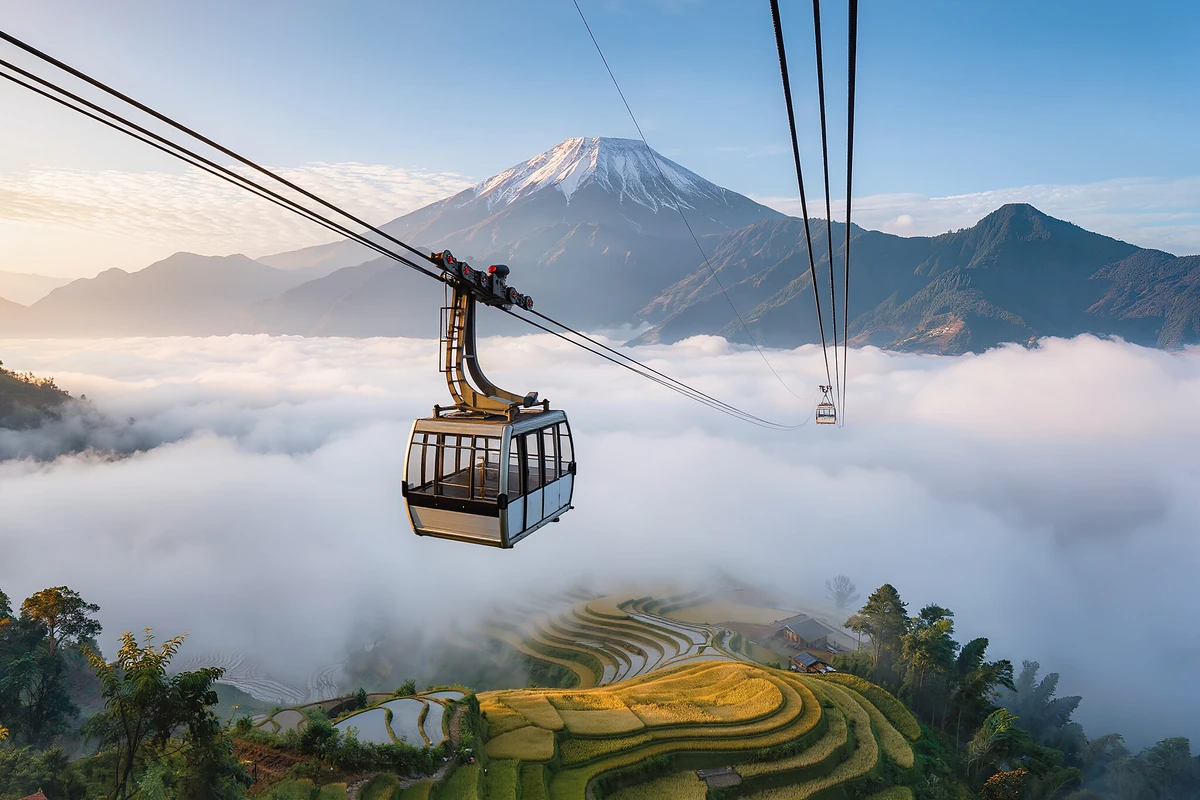
Photos show the places you visit; the boat or vehicle on the day may differ. Photos: Christophe95 (CC BY-SA 4.0) · Lori_NY (CC BY-SA 2.0), via Wikimedia Commons
Some images are AI-generated for illustration. While we confirm your booking, just ask and we will send you the original photos.
- Fair, honest prices
- Real people, not bots
- Confirm, then pay
- Secure payment

Overview
This Sapa trekking tour is a guided day walk of about six hours and 10–12 km through the Muong Hoa Valley, the classic rice-terrace landscape below Sapa town. In a small shared group of up to eleven, you follow footpaths down to the Muong Hoa River and on to three villages: Lao Chai of the Black Hmong, Ta Van of the Giay and Giang Ta Chai of the Red Dao, passing a suspension bridge, ancient rock carvings, a bamboo forest and a waterfall. Lunch is served at a local house in the village. Pickup from hotels in Sapa town centre, an English-speaking guide, entry tickets, water and the drive back are included. The trail can be demanding in wet weather, so reasonable fitness is needed.
Highlights
- Guided trek of 10–12 km through the Muong Hoa Valley
- Small shared group of up to eleven with an English-speaking guide
- Sweeping views over Sapa's rice terraces
- Lao Chai, a village of the Black Hmong
- Ta Van, a village of the Giay, and a suspension bridge over the river
- Ancient rock carvings of the Muong Hoa Valley
- Lunch at a local house in the village
- Bamboo forest, the Red Dao village of Giang Ta Chai and a waterfall
Full Description
Muong Hoa Valley and the rice terraces of Sapa
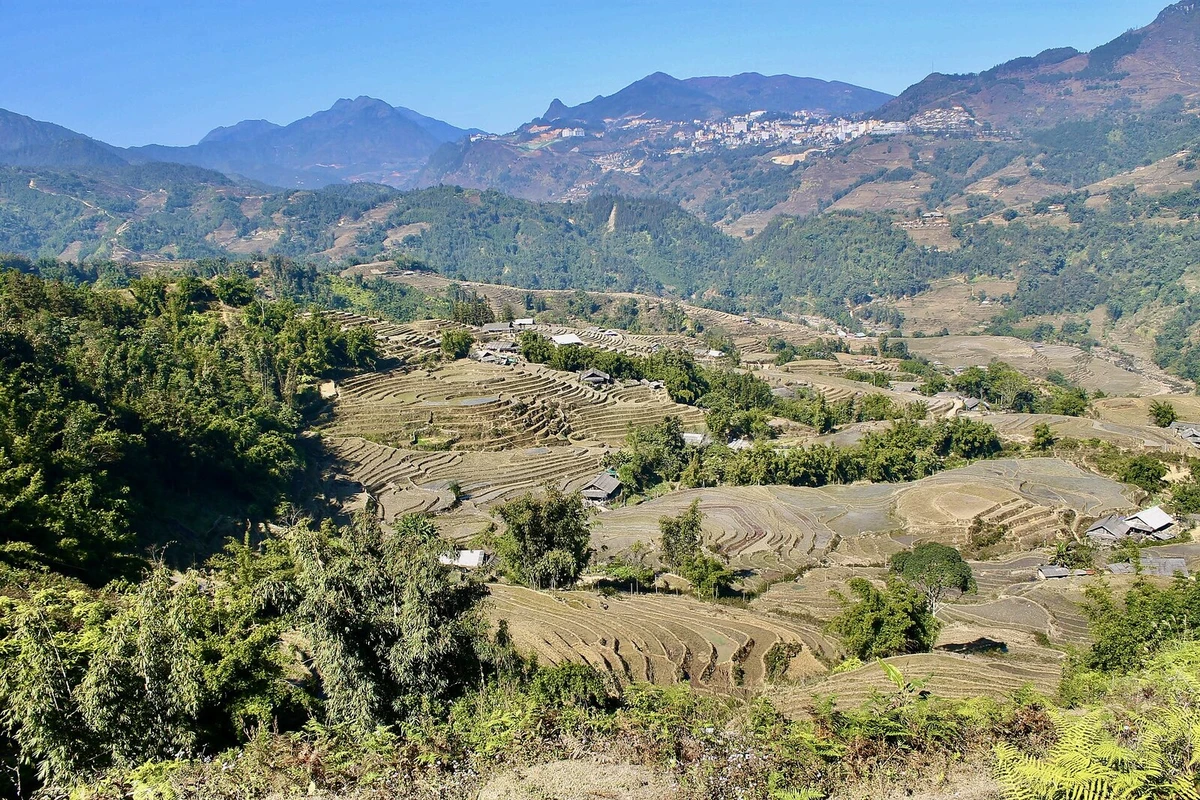
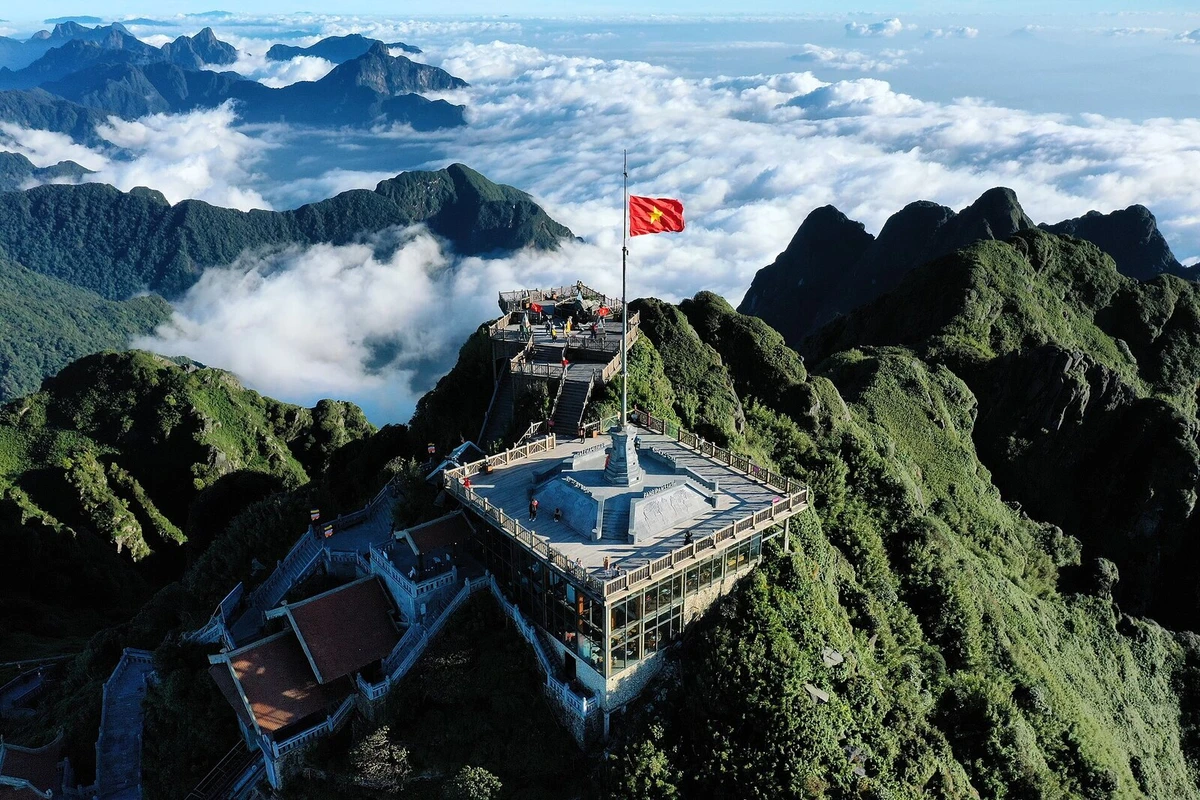
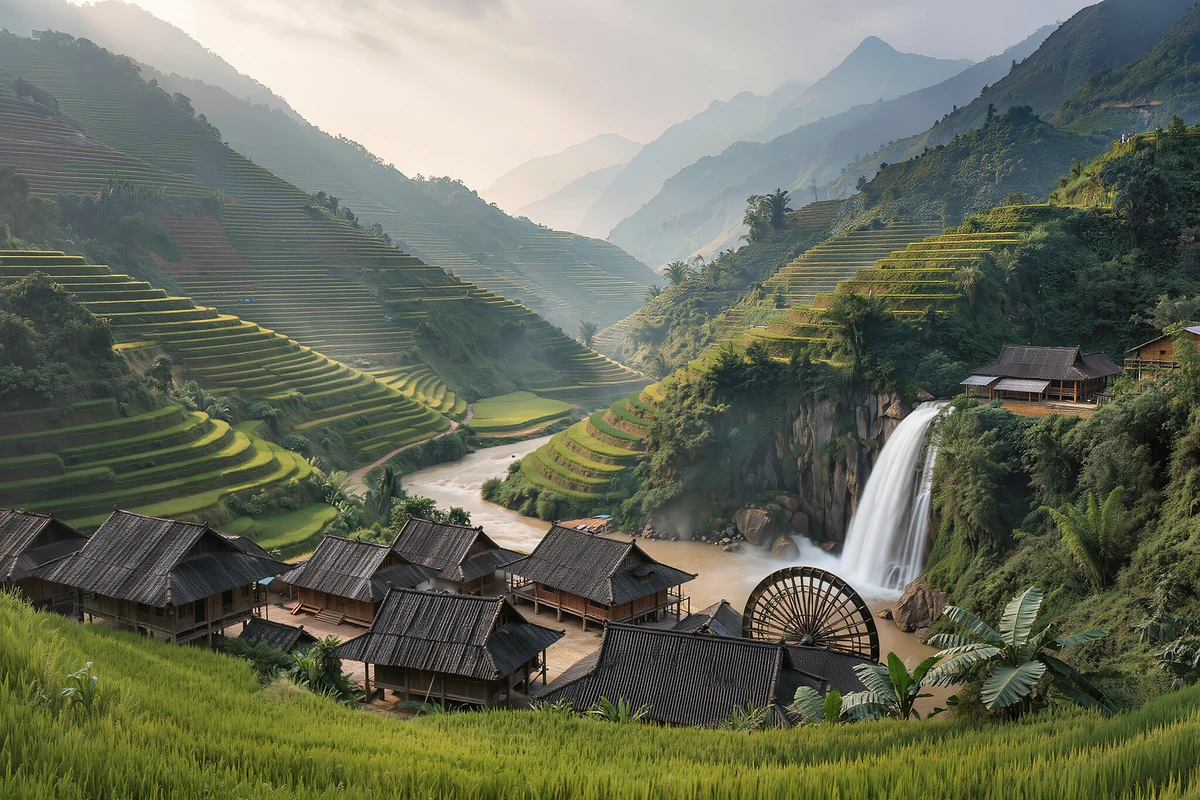
The Muong Hoa Valley begins just below Sapa town and runs south-east beneath the Hoang Lien Son range, whose highest summit, Fansipan, rises to more than 3,100 metres. Over many generations the Hmong, Dao and Giay peoples have cut its slopes into thousands of narrow rice terraces that follow every curve of the hills, and this is the landscape that made Sapa trekking famous.
Your walk starts on a small trail that drops through the terraces, often with morning mist still lying in the valley, and crosses the Muong Hoa River. The best time to visit Sapa for the terraces depends on what you want to see: flooded, mirror-like fields at planting time in late spring, deep green in summer, and gold in late August and September just before the harvest. Winter is clear but cold, with bare fields and wide mountain views.
Lao Chai, village of the Black Hmong
The first village on the route is Lao Chai, strung along the valley floor among well-tended terraced fields. It is inhabited by the Black Hmong, named for their dark clothing: hemp cloth woven on household looms and dyed again and again in indigo until it turns almost black, then finished with fine embroidery. You may see lengths of dyed cloth drying outside the houses and vats of indigo standing by the doors.
Your guide explains how the Hmong farm the terraces, with a single rice crop a year because of the altitude, and how houses, kitchens and granaries are arranged. Women from the village often walk alongside trekking groups and offer handicrafts for sale; a friendly no is perfectly acceptable, and buying a small piece directly supports the family that made it. Please ask before photographing people, especially children.
Ta Van, the Giay village, and lunch in a local house
From Lao Chai the path continues to Ta Van, the valley's best-known village of the Giay, a small ethnic group related to the Tay and Thai peoples of northern Vietnam. Their houses are low and solid, built for the mountain cold, and their fields fill the widest and flattest part of the valley, so the scenery opens out as you arrive. The trail then follows the Muong Hoa River to a small suspension bridge about two kilometres beyond the settlement.
Lunch is included and served at a local house in the village rather than in a restaurant: a simple, freshly cooked meal that usually centres on rice with vegetables and other local dishes. It is a welcome rest roughly halfway through the trek and a chance to see a family kitchen. Tell us in advance about any dietary needs and we will pass them on. Drinks other than the included water are at your own expense.
The ancient rock carvings of the Muong Hoa Valley
Scattered among the terraces of the valley is a field of large boulders engraved with mysterious designs. The carvings show human figures, stilt houses, stepped lines that look like terraced fields, and decorative patterns whose meaning is still debated. They first came to the attention of researchers in the 1920s and are protected today as a national heritage site.
No one can say with certainty who made them or when. Some scholars see maps of fields and settlements, others ritual symbols or an early form of record-keeping. On this trek you stop to look at a group of the stones with your guide, who points out the clearest figures, which are easy to miss without help because wind and rain have softened the lines. It is a short pause, but it adds a layer of deep history to a day that is otherwise all about living culture.
Bamboo forest, Giang Ta Chai of the Red Dao and the waterfall
After lunch the trail leaves the open fields and climbs into a bamboo forest, cool and green, where the path can be slippery after rain. On the far side lies Giang Ta Chai, a village of the Red Dao. Dao women are recognised by their red headdresses, often trimmed with tassels and silver coins, and the community is known for its embroidery and its knowledge of medicinal forest plants, used in traditional herbal baths.
Just beyond the village a waterfall offers a short rest, and then comes the last effort of the day: an uphill climb to the main road, where our driver is waiting to take you back to Sapa. The trek ends at about 3:30 PM. Is Sapa trekking worth it for a single day? This route is a good answer, combining three different cultures, river, forest and terraces in one manageable walk.
Itinerary
- Hotel pickup in Sapa town centreMorning pickup from your hotel in the centre of Sapa and a meeting with your guide and the group.
- Muong Hoa Valley trailStart the trek on a small path down through the rice terraces and cross the Muong Hoa River.
- Lao Chai villageWalk past terraced fields to the Black Hmong village and learn about indigo dyeing and daily life.
- Ta Van villageContinue to the Giay village in the widest part of the valley.
- Suspension bridge and ancient rock carvingsFollow the river to a small suspension bridge and stop at boulders engraved with figures, houses and patterns.
- Lunch at a local houseA freshly cooked lunch in the village, with time to rest; about an hour.
- Bamboo forest and Giang Ta ChaiHike through a bamboo forest to the Red Dao village of Giang Ta Chai.
- Waterfall rest stopA short break at a nearby waterfall before the final climb to the road.
- Drive back to SapaOur driver meets you on the main road and returns you to Sapa; the tour ends at about 3:30 PM.
What's included
- Hotel pickup (hotels in Sapa town centre)
- English-speaking guide
- Entry tickets
- Lunch at a local house in the village
- Mineral water (500 ml per person)
- Return drive from the end of the trek to Sapa
Not included
- Beverages
- Personal purchases
- Soft drinks
- Tips
- French-speaking guide: 19 USD per person, payable upon confirmation
Amounts shown for items not included (such as entrance tickets, park fees, boat rides or optional extras) are set by the attractions and local suppliers, can change without notice and are given as a guide only. Please confirm the current amounts with us on WhatsApp before your tour. Haqqi Tours has no control over these third-party prices; they are paid by you on the day unless they are listed as included.
Is this right for you?
Great for
- Families with children — a child price for ages 5–14
- Travellers without a car — hotel pickup is included
- Nature and wildlife lovers
- Travellers who want a proven choice — rated 4.7/5 by past travellers
Think twice if
- You want a private tour — this one is shared with other travellers
- Walking is difficult for you — expect active parts
Not suitable for
- People with mobility impairments
- Children under 6 years
Meeting point
Hotel pickup is included for hotels in Sapa town centre, in the morning before the trek begins. If you are staying outside the centre, tell us your hotel when you book and we will advise the nearest pickup point in the centre. Our team confirms the exact pickup time on WhatsApp. The trek ends at about 3:30 PM on the main road beyond Giang Ta Chai, where our driver collects the group and drives you back to Sapa.
Important information
- The trek is 10–12 km long and can be challenging, especially in wet weather; make sure your fitness is suitable before booking.
- Wear proper hiking or trekking shoes with good grip; the paths are steep and muddy in places.
- Warm clothes are recommended from October to March, when Sapa is cold and often misty.
- Bring sunglasses, sunscreen and insect repellent, and a light rain jacket in the summer months.
- Carry only a small daypack; oversize luggage is not allowed on the trek.
- One 500 ml bottle of mineral water per person is included; bring extra water and some cash for drinks or handicrafts.
- Not suitable for people with mobility impairments or for children under 6.
- The guide speaks English; a French-speaking guide can be requested in advance at a surcharge.
- Ask permission before photographing villagers, and dress modestly out of respect for local customs.
Good to know
Frequently Asked Questions
Straight answers to what travellers ask us most, before they book.
Is this a shared or a private experience?
It is a shared trek in a small group of up to eleven participants, led by an English-speaking guide.
How long does the Sapa trek take?
About six hours in total, including lunch and rest stops. You walk between 10 and 12 km, and the tour ends at around 3:30 PM with the drive back to Sapa.
Is hotel pickup included?
Yes, for hotels in Sapa town centre. If your accommodation is outside the centre, we advise the nearest pickup point in the centre on WhatsApp. The return drive to Sapa at the end of the trek is included.
What is included?
Hotel pickup in Sapa town centre, an English-speaking guide, entry tickets, lunch at a local house in the village, a 500 ml bottle of mineral water per person and the drive back to Sapa. Other drinks, personal purchases and tips are not included.
Is the price per person or per group?
The price is per person, with a reduced rate for children aged 5 to 14. The booking panel on this page shows the current price.
Is it suitable for children or travellers with reduced mobility?
Active children from 6 years can manage the walk with breaks, but it is not suitable for children under 6. The trail is unpaved, with steep and slippery sections, so it is not suitable for people with mobility impairments.
How difficult is the Muong Hoa Valley trek?
It is a moderate walk for anyone with reasonable fitness: mostly downhill and along the valley, with some climbs, including the final uphill stretch to the road. Rain makes the clay paths slippery, which is when it becomes more demanding.
What should I bring?
Hiking shoes, a small daypack, extra water, sunglasses, sunscreen, insect repellent and a rain jacket. From October to March add warm layers, a hat and gloves. A little cash is useful for drinks and local handicrafts.
What is the best time for trekking in Sapa?
September is the favourite month, when the terraces turn gold before the harvest. March to May is mild and clear, and summer is brilliantly green but rainy. From December to February the valley is cold and sometimes foggy, yet quiet and atmospheric.
What happens in bad weather?
The trek normally goes ahead in light rain and mist, which are common in Sapa. In heavy rain the guide may adjust the route for safety. Good shoes and a waterproof jacket make all the difference.
Do I need to buy tickets for the villages?
No. The entry tickets for the villages on this route are included in the tour, so there is nothing extra to pay at the checkpoints.
How do I book and confirm?
Select your date in the booking panel and send your request with the name of your hotel in Sapa. Our team confirms on WhatsApp within minutes and sends your pickup time.
More in Sapa
Getting to & around Sapa
Popular across Vietnam
-

-
-

-
-

-